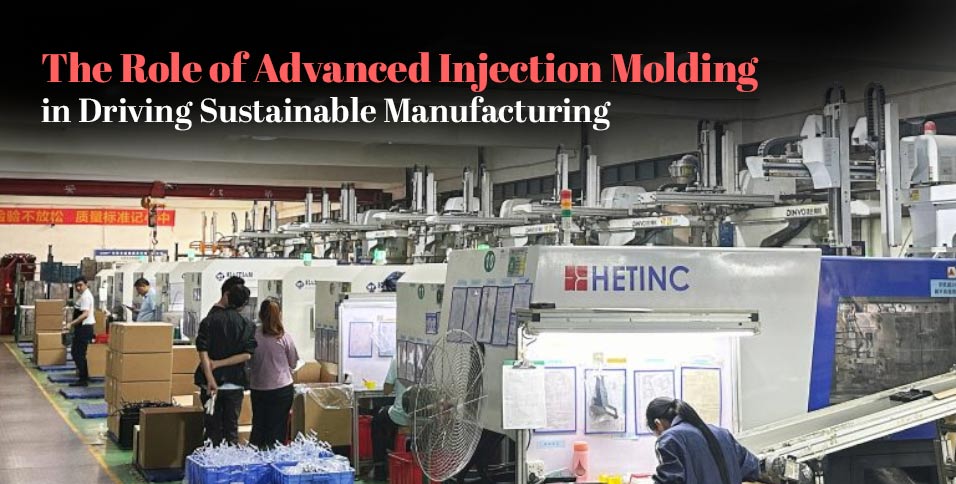
Around the world, companies are under pressure to reduce waste, cut carbon emissions, and make better use of resources. Yet, at the same time, customers still expect high-performance products delivered at scale and at the right cost. This tension between efficiency and environmental responsibility is where injection molding finds itself today.
Injection molding is one of the most widely used processes for producing plastic parts, from automotive components to consumer electronics. Its efficiency is unmatched, but traditional methods often raise questions about energy use, material waste, and long-term sustainability. That’s why advanced injection molding technologies are gaining attention. They promise not only faster cycles and lower costs but also measurable improvements in sustainability.
In this article, we’ll explore how these innovations—ranging from smarter material choices to energy-efficient machinery—are shaping the future of manufacturing. More importantly, we’ll look at what these changes mean for you if you’re considering injection molding as part of your production strategy.
Why Sustainability Matters in Modern Manufacturing
If you’ve been watching the manufacturing sector over the past decade, you’ll know the pressure to “go green” is no longer optional. Governments are tightening regulations on carbon emissions, plastic waste, and energy use. At the same time, consumers are getting more selective. They don’t just want durable and affordable products—they want products made responsibly.
For manufacturers, this creates a tricky balance. On one side, you’re expected to deliver at the same speed and cost that global supply chains demand. On the other, you’re asked to reduce environmental impact without sacrificing performance. It’s not a minor adjustment; it’s a shift that affects how you source materials, run production, and even design parts in the first place.
The challenge is whether traditional production methods can really keep up with these expectations. Can conventional molding processes handle the twin goals of efficiency and sustainability? Or does the industry need to lean more heavily on advanced injection molding technologies to close that gap? These are the questions driving manufacturers to rethink their strategies, and why sustainability has become such a central issue in the way we make things today.
The Evolution of Injection Molding Toward Sustainability
Traditional injection molding earned its reputation for speed and repeatability. Once the mold is made, you can produce thousands—or even millions—of identical parts with minimal variation. The problem is that this efficiency often came at the cost of energy consumption and material waste. Machines ran on outdated systems, cooling cycles were longer than necessary, and scraps from setup or errors went straight into the bin.
That picture is changing. Over the last decade, injection molding has moved into a new phase, shaped by digital tools and smarter equipment. Mold-flow simulation, for example, allows engineers to predict how plastic will fill a mold before production even starts. That means fewer trial-and-error runs and less wasted resin. Automation is another game-changer, handling everything from part removal to quality checks with precision that cuts down on human error. Modern presses are now designed with servo-driven systems, reducing energy usage while improving consistency.
For companies that don’t have the resources to keep up with every new upgrade, partnering with a reliable injection molding service provider becomes a practical way forward. These suppliers invest in the latest technologies and pass those benefits on to you—faster cycles, lower defect rates, and processes designed with sustainability in mind. In many cases, outsourcing is the shortcut to adopting greener, more efficient manufacturing without bearing the heavy upfront cost of new equipment.
Material Choices and Their Environmental Impact
No matter how advanced the machines become, sustainability in injection molding always comes back to one fundamental decision: the material you choose. Every resin has its own footprint in terms of energy use, recyclability, and durability. That means the right choice can make the difference between a product that supports a circular economy and one that quickly becomes landfill.
In recent years, we’ve seen a shift toward more sustainable options. Recycled resins are making their way into mainstream production, helping manufacturers reduce virgin plastic consumption. Bio-based plastics, derived from renewable sources like corn or sugarcane, are also gaining traction for applications where biodegradability or a lower carbon footprint is a priority. Lightweighting is another trend—choosing materials that maintain strength while using less volume, which not only saves raw material but also reduces shipping emissions.
Among the traditional engineering plastics, ABS remains a standout. Its balance of impact resistance, stability, and ease of processing makes it suitable for everything from automotive interiors to consumer electronics. What makes it particularly interesting in the sustainability discussion is its ability to be reprocessed and recycled without significant loss of performance. With custom ABS plastic molding, manufacturers can fine-tune designs for strength and durability, which extends product life and reduces the frequency of replacement. In other words, using the right grade of ABS in the right way isn’t just cost-effective—it’s a sustainability strategy in itself.
Energy Efficiency and Process Optimization
Energy has always been one of the hidden costs in injection molding. Each cycle involves heating plastic to its melting point, injecting it into a mold, and cooling it down again—all of which require power. In older systems, much of that energy was wasted through inefficient motors, poor cooling designs, and long cycle times. For manufacturers under pressure to reduce both cost and carbon footprint, this is no longer acceptable.
Modern injection molding machines address this directly. Servo-driven motors and closed-loop control systems adjust energy use in real time, drawing only what is needed instead of running at full capacity around the clock. This shift alone can reduce energy consumption by 30–70% compared to traditional hydraulic presses. Beyond the machines themselves, smart mold design also plays a role. Cooling channels engineered for faster and more uniform heat transfer shorten cycle times, which means the same number of parts can be produced with less energy.
When these improvements are scaled across thousands of cycles, the results are significant. A factory that cuts cycle time by just a few seconds per shot may end up reducing total energy use by 10–20%. That reduction doesn’t just show up in lower utility bills—it directly impacts a manufacturer’s carbon footprint, making their operations more aligned with sustainability targets. For you as a buyer, this means your parts are not only cost-competitive but also produced under cleaner, more responsible conditions.
Waste Reduction Through Smart Manufacturing
If there’s one area where sustainability and profitability align perfectly, it’s in reducing waste. Every kilogram of resin that ends up as scrap represents lost money and unnecessary environmental impact. In traditional molding setups, waste often comes from long setup times, poor material handling, or inconsistent processing that leads to defective parts. These are problems you can’t ignore if you want to stay competitive.
Smart manufacturing technologies are changing this picture. Mold-flow simulation lets engineers see how material will fill a cavity before production begins, predicting defects like air traps or warpage and eliminating them in the design stage. Real-time monitoring systems track pressure, temperature, and cooling across every cycle, catching issues before they turn into entire batches of rejected parts. Automation takes this even further by standardizing repeat tasks, reducing the margin for human error.
Of course, not every company has the resources to invest in all of these technologies at once. That’s where working with an experienced injection molding service partner makes sense. Instead of bearing the full cost of trial-and-error, you gain access to processes that are already optimized to minimize waste. For you, that means more predictable quality, fewer returns, and a stronger case for sustainability in your own supply chain.
Balancing Cost and Sustainability in Outsourcing Decisions
One of the biggest hesitations I hear from companies is the belief that “going green” automatically means spending more. At first glance, it makes sense—recycled resins might carry a premium, energy-efficient machines cost more upfront, and sustainable packaging doesn’t look cheap either. But here’s the reality: when you look beyond the first purchase order, sustainable practices often reduce costs instead of adding to them.
Think about it this way—shorter cycle times cut electricity bills. Optimized molds reduce scrap, which means you’re not paying for material that ends up in the trash. Longer-lasting parts, made from the right material, lower warranty claims and replacement costs. These savings don’t always show up on day one, but they compound over the lifetime of a product line.
For procurement and design teams, the takeaway is clear: don’t frame sustainability as a cost burden, frame it as a long-term investment. The smarter move is to partner with suppliers who not only understand the technical side of injection molding but also take sustainability seriously. That way, you’re not forced to choose between competitive pricing and responsible manufacturing—you get both.
Future Trends: Where Injection Molding and Sustainability Meet
Looking ahead, the role of injection molding in sustainable manufacturing is only going to grow stronger. We’re already seeing how digital factories—where machines, molds, and sensors are all connected—create a level of visibility that was impossible a decade ago. With AI-driven process optimization, manufacturers can analyze thousands of cycles in real time, automatically adjusting parameters to cut energy use, reduce defects, and extend tool life. This isn’t science fiction; it’s happening right now in forward-looking plants.
The rise of the circular economy is another major force. Instead of treating plastic as a single-use material, more companies are designing products with end-of-life recovery in mind. Injection molding is well-positioned for this shift because it can work with recycled and reprocessed materials while still delivering consistent quality. Expect to see recycled ABS, nylon, and other engineering plastics take a larger share of production in the next decade.
All signs point to sustainable injection molding becoming a competitive advantage rather than a niche option. Regulations will tighten, customers will continue to demand greener products, and the companies that adapt early will be the ones leading the market five or ten years from now. For you, this means that choosing partners who are already investing in sustainable technologies is less about following a trend and more about securing your position in the future of manufacturing.
Conclusion
Advanced injection molding is no longer just about speed and cost efficiency—it’s becoming the backbone of sustainable manufacturing. The way you select materials and the partners you work with can make the difference between a product that simply performs and one that also meets the growing demand for environmental responsibility.
If you’re serious about building products that compete in today’s markets and remain relevant tomorrow, sustainability has to be part of your strategy from the start. The good news is, with the right approach and the right partners, it’s possible to achieve cost savings, product reliability, and environmental responsibility all at once.