Key Takeaways
- Brief monthly inspections can reveal small plumbing problems before they create extensive water damage.
- New Braunfels homes benefit from close attention to mineral buildup, water heaters, outdoor connections, and changing seasonal weather.
- Knowing the location of the main water shutoff can make a major leak far less disruptive.
- Simple upkeep is often appropriate for homeowners, but gas lines, sewer backups, hidden leaks, and water heater replacement require qualified help.
Table of Contents
- Why a plumbing calendar helps
- Monthly plumbing checks
- Quarterly maintenance tasks
- Seasonal plumbing calendar
- Hard water and plumbing
- Water heater care
- Drains, toilets, and fixtures
- Outdoor plumbing checks
- Emergency warning signs
- Printable plumbing checklist
Plumbing maintenance is easier when it becomes a routine instead of a response to a sudden problem. For homeowners in New Braunfels, Texas, a few organized checks throughout the year can help protect cabinets, floors, fixtures, appliances, and the home’s water supply.
Whether you handle the basic checks yourself or contact a new Braunfels plumber for a persistent issue, the goal is the same: catch changes early, prevent avoidable damage, and know when a repair should not wait.
Why a Plumbing Calendar Helps
A slow leak beneath a sink, behind a washing machine, or near a water heater may not be obvious until it stains a wall or damages flooring. A calendar gives each part of the plumbing system regular attention. It also makes it easier to notice changes in water pressure, drain speed, fixture noise, water color, or a higher-than-expected utility bill.
Leaks matter beyond the home as well. The EPA notes that household leaks can waste nearly 1 trillion gallons of water annually nationwide, which is a useful reminder to take a dripping or running toilet seriously.
Monthly Plumbing Checks
Look Under Sinks and Around Fixtures
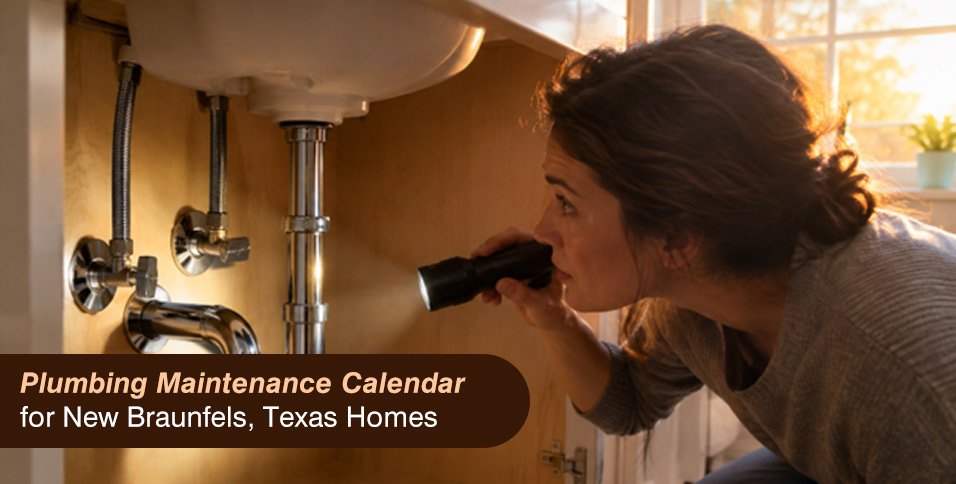
Open every kitchen, bathroom, and laundry cabinet. Check supply lines, shutoff valves, drain connections, and the cabinet floor for moisture, corrosion, staining, or mineral residue. Run each faucet briefly and look underneath while water is flowing.
Test Toilets for Silent Leaks
Add a few drops of food coloring to the toilet tank, then wait about 10 minutes without flushing. If color reaches the bowl, water is passing through the toilet, and a flapper or fill-valve issue may be present. Also listen for a toilet that refills when no one has used it.
Check the Water Meter and Faucet Flow
With faucets, ice makers, irrigation, and water-using appliances turned off, check whether the meter continues to register use. A moving meter can indicate a leak. At sinks and showers, note new drips, weak flow, mineral crust, or water temperatures that have become inconsistent.
Quarterly Maintenance Tasks
Inspect Hoses, Screens, and Valves
- Examine washing machine hoses for bulges, cracking, dampness, or corrosion at the connections.
- Clear hair from tub and shower strainers, and rinse faucet aerators to remove trapped debris.
- Gently operate fixture shutoff valves so they are less likely to be stuck when needed. Do not force a valve that resists movement.
- Keep grease, coffee grounds, wipes, and paper products out of household drains.
Inspect the Water Heater Area
Look for puddles, rust, wet insulation, or corrosion around water connections. Rumbling or popping can point to sediment inside some tank-style units. Keep the area around a water heater clear, and keep flammable materials away from gas-fired equipment.
Seasonal Plumbing Calendar
Winter: Prepare Before a Freeze
Disconnect and drain garden hoses, protect exposed outdoor faucets and pipes, and locate the main shutoff valve before cold weather arrives. During severe cold, opening cabinet doors below sinks on exterior walls can help warm indoor air reach vulnerable pipes. New Braunfels Utilities recommends steps such as protecting outdoor faucets, disconnecting hoses, and preparing the home before freezing temperatures are in the forecast.
Spring: Look for Cold-Weather Damage
Test outdoor faucets after the last freeze risk has passed. Look for drips at hose bibs, wet soil near irrigation lines, and slow drains that may have become more noticeable over winter. Keep accessible cleanouts visible and clear of leaves, mulch, and heavy landscaping.
Summer: Monitor Outdoor Water Use
Summer is a good time to inspect irrigation connections, pool-area plumbing, outdoor kitchens, and hose connections. Compare water bills from month to month, particularly if water use has not obviously changed. A sharp, unexplained increase deserves a closer inspection.
Fall: Reset for Rain and Colder Weather
Test the main shutoff valve, remove unused hoses, and inspect exposed piping. Make sure outdoor drainage routes move water away from the foundation. Addressing a slow drain, loose toilet, or leaking fixture in the fall can prevent a small concern from becoming more urgent later.
How Hard Water Affects Home Plumbing
Dissolved minerals can leave white scale on faucets, showerheads, glassware, and appliance connections. Over time, buildup may reduce flow through aerators and contribute to reduced efficiency in equipment that heats water. If scale is recurring, consider water testing before choosing a treatment system. The right option depends on the water conditions and the needs of the household.
Water Heater Care
For a tank water heater, inspect the tank, connections, and temperature-and-pressure relief valve discharge pipe for visible leaks or corrosion. For a tankless model, watch for reduced hot-water flow or error messages. Follow the manufacturer’s maintenance guidance, especially for flushing or descaling. Internal repairs, gas connections, and replacement work are better handled by a qualified professional.
Drains, Toilets, Faucets, and Fixtures
Drain strainers are a practical first defense against hair and food debris. Avoid relying on harsh chemical drain cleaners as routine maintenance, since repeated clogs need diagnosis rather than a temporary workaround. A rocking toilet, water around its base, frequent clogs, gurgling drains, or sewage odors should be investigated promptly.
Outdoor Plumbing Checks
Run outdoor faucets long enough to check for leaks while water is flowing and after it is shut off. Walk irrigation zones looking for unusually wet patches, pooling water, or damaged sprinkler components. Keep roots, soil, and landscaping materials away from accessible cleanouts so the area remains easy to reach if service is needed.
Signs of a Plumbing Emergency
Do not wait for a burst pipe, a rapidly spreading leak, sewage entering tubs or drains, a heavily leaking water heater, or water near electrical equipment. If you smell gas near an appliance or gas line, leave the area, avoid switches and flames, and contact the appropriate emergency utility service from a safe location.
For a major water leak, shut off the nearest fixture valve if it is safe and clearly connected to the problem. If the source is unclear, turn off the main water supply. Keep people away from wet electrical areas, move valuables out of harm’s way when possible, and arrange qualified help.
Printable Plumbing Checklist
- Locate and test the main water shutoff.
- Check beneath sinks for moisture and staining.
- Test toilets for silent leaks.
- Inspect washing machine hoses and drain screens.
- Clean aerators and shower strainers.
- Inspect the water heater area every quarter.
- Check outdoor faucets and irrigation zones each season.
- Protect exposed pipes before freezing weather.
- Review unexplained changes in water use or bills.
- Schedule professional service for hidden leaks, sewer issues, gas work, or repeated backups.