Mirror Review
August 8, 2025
“Why should taxpayers fund programs that don’t serve their interests?”
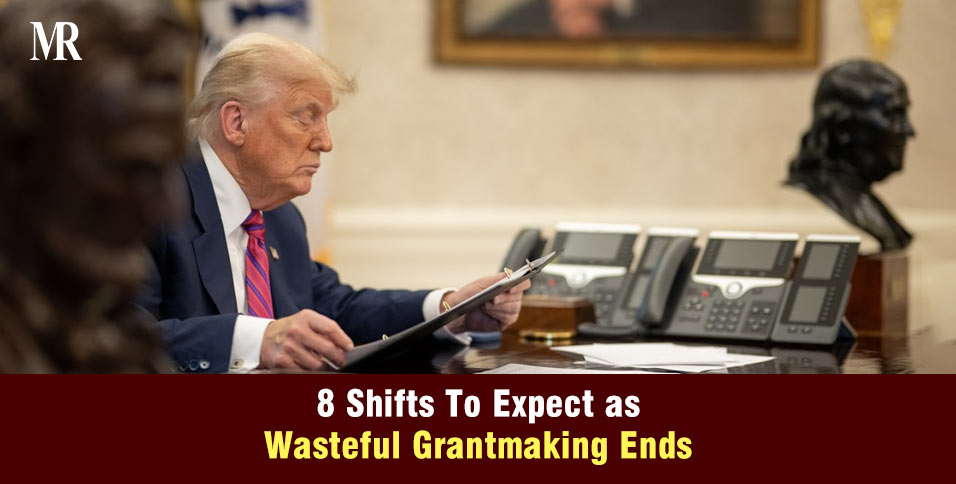
That’s how President Trump introduced his new plan to stop what he calls wasteful grantmaking.
On August 7, 2025, the White House rolled out a fact sheet and an executive order that change how federal agencies approve and monitor grants.
The policy’s aim: cut spending on projects that don’t match current priorities and direct funds toward security, energy, and infrastructure.
What Is Wasteful Grantmaking?
In simple terms, wasteful grantmaking is when the government gives out money for projects that:
- Don’t benefit taxpayers,
- Have little proof of results, or
- Fund activities outside stated priorities
Until now, many government agencies could approve large grants without political oversight. Some of that money went to programs critics saw as misaligned with national goals, such as certain climate initiatives, diversity programs, or international projects.
What’s changed now?
- Political appointees will review major grants before approval
- Funding priorities will be narrowed to a smaller set of approved areas
- Existing grants can be cut if they no longer match policy goals
This comes just after a judge blocked the administration from redirecting FEMA disaster-prevention funds. Therefore, the new approach is designed to pass tougher legal tests.
1. More centralized control
Previously, many federal agencies had the freedom to approve grants within their program budgets.
Under the new rules, huge grants, especially those above certain dollar thresholds, will need sign-off from political appointees.
This change puts the White House in control, ensuring that funding decisions align with the president’s policy agenda.
While it increases accountability from the administration’s perspective, it also reduces agencies’ independence and could slow down decision-making for complex projects.
2. Tighter priority lists
Agencies will get more specific “do and don’t fund” lists.
Likely high-priority areas include border security, domestic energy production (oil, gas, nuclear), defense research, and traditional infrastructure like roads and ports.
On the flip side, programs tied to DEI, climate change mitigation under the “Green New Deal” framework, or transgender-related initiatives will be deprioritized or blocked entirely.
This narrower focus makes it easier to direct funds strategically. But critics argue it politicizes scientific and social program funding.
3. Retroactive cuts
The policy doesn’t just apply to new grants.
Multi-year projects already underway could be reviewed and terminated if they no longer match the administration’s current priorities.
For example, a five-year climate resilience project funded in 2023 could be shut down in 2025 if deemed outside the updated funding scope.
This could free up funds for new priorities, but it also risks wasting money already invested in partially completed programs.
4. Shift toward state and business funding
Rather than channeling funds primarily through NGOs, universities, or international organizations, more grants will go to state governments and private-sector partners.
The administration views this as a way to boost local control and private investment.
In practice, this could mean a larger share of infrastructure or energy grants going to private contractors or state-run initiatives, bypassing nonprofits that previously relied on federal grants to operate.
5. Faster approval for aligned projects
Projects that clearly match the administration’s stated goals could move through the approval process more quickly.
For example, a defense technology research proposal that directly supports military readiness might get expedited review and funding, while unrelated projects face longer vetting or rejection.
This “fast lane” approach could benefit aligned industries but risks creating bottlenecks for other sectors.
6. Bundling into broader budget cuts
The wasteful grantmaking crackdown is expected to be folded into a larger budget reform plan that proposes over $160 billion in program reductions for 2026.
Framing it as part of deficit reduction makes it harder for opponents to reject without voting against the entire budget.
7. Legal battles ahead
Several states, advocacy organizations, and affected grant recipients are likely to sue.
The core legal argument will be that the exclusions discriminate against certain groups or violate existing statutes requiring funding for specific initiatives.
Courts will also look at whether mid-term cancellation of grants violates contractual obligations.
Past grant freezes have faced similar challenges, making this a high-stakes legal experiment for the administration.
8. Possible creation of a central grants office
The Office of Management and Budget (OMB) may create a specialized unit to review all major grants before approval.
This would formalize centralized control and make oversight a permanent part of the funding process, potentially outlasting the current administration.
It would also give the White House more real-time data on where federal funds are flowing, making it easier to adjust priorities mid-year.
Why It Matters
Trump has used funding controls before, but this plan is larger, comes earlier in his term, and is tied to budget negotiations.
If it survives court challenges, it could change how every future administration controls federal grant money.
Conclusion
The end of wasteful grantmaking marks a turning point in federal funding.
The administration is moving from broad, agency-led grantmaking to a centralized, politically aligned system.
Whether this results in efficiency or sparks prolonged legal fights will shape the funding landscape for years to come.