Mirror Review
March 23, 2026
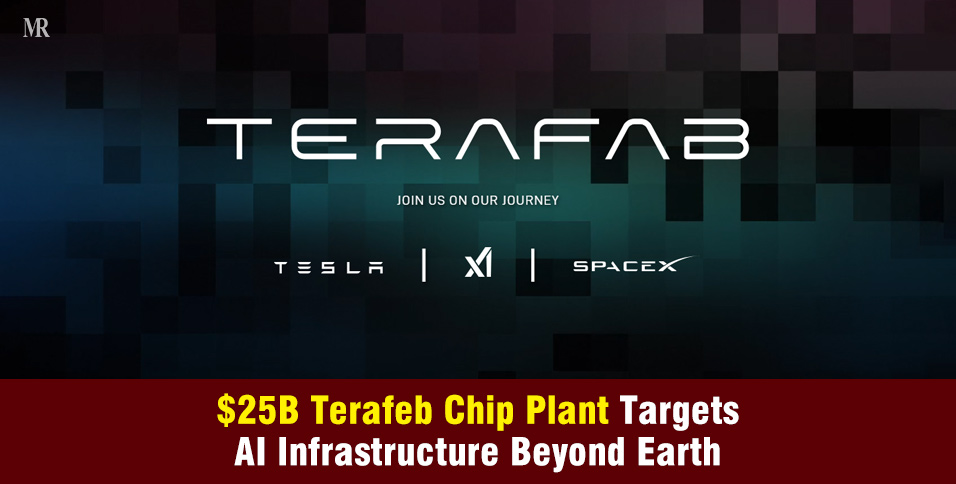
On March 21, 2026, Elon Musk officially unveiled the Terafeb chip plant, a massive $25 billion semiconductor facility designed to revolutionize AI compute.
Speaking from the Seaholm Power Plant in Austin, Musk described the project as a joint venture between Tesla, SpaceX, and xAI.
This Terafeb announcement marks a pivotal shift toward total vertical integration, with the facility intended to handle everything from chip design to advanced packaging under one roof.
Why Musk is Building the Terafeb Chip Plant
The main reason for the Terafeb project is a simple supply chain problem.
Musk says that the current top semiconductor companies, like Samsung Technologies and TSMC, cannot grow fast enough to meet his future needs.
- Massive Demand: Musk claims all current factories on Earth only produce about 2% of what his projects will eventually require.
- Vertical Integration: The Terafeb Chip Manufacturing Plant will handle design, fabrication, and testing under one roof to speed up development.
- Reducing Reliance: Tesla wants to stop depending on external suppliers for the silicon used in its self-driving systems and robots.
- Control: Owning the factory means no other company can hold Musk’s empire hostage on pricing or chip allocation.
The Vision: From Earth to Orbit
The Terafeb Chip Manufacturing Plant isn’t just about powering cars; it’s about building a “galactic civilization”. The project aims for a staggering output of one terawatt of AI computing power annually.
- Terrestrial Compute: Approximately 100–200 gigawatts will support Earth-based deployments like Tesla’s Full Self-Driving and the Optimus humanoid robot line.
- Space Infrastructure: Roughly 80% of the output is destined for “orbital data centers”. These space-based systems will use D3 radiation-hardened chips and rely on Starlink technology for data exchange.
The Two Types of AI Chips
The Terafeb AI Chip Plant will produce two very specific categories of hardware to support Musk’s terrestrial and orbital goals.
| Chip Category | Primary Use Case | Key Features |
| 1. Edge Inference | Tesla vehicles, Robotaxis, and Optimus robots. | Optimized for real-world tasks and power efficiency. |
| 2. D3 Space Chips | SpaceX and xAI orbital data centers. | Radiation-hardened and designed to run hot in a vacuum. |
The Terafab SpaceX Collaboration
The most ambitious part of the plan involves the Terafab SpaceX collaboration to put AI in orbit.
Musk wants to launch a million satellites to create an orbital data center, and about 80% of the factory’s output will go toward these space-based systems.
He argues that since solar energy is five times stronger in space, orbital computing could become cheaper than Earth-based options within a few years.
Risks and Technical Hurdles
While Elon Musk’s vision is grand, the Terafeb chip plant project faces certain challenges, according to industry experts.
- Technical Difficulty: The plant targets 2-nanometer technology, which is the most advanced and difficult process in the world.
- The Cost: While the official estimate is $25 billion, some analysts think it could cost up to $40 billion.
- The Timeline: Experts doubt the Terafeb Chip Factory will actually produce working chips until at least 2028.
- Previous Delays: Musk has a history of overpromising on timelines, such as with the Cybertruck and the 4680 battery cells.
Growth and Terafab Jobs in Austin
Despite the risks, the Terafeb Chip Plant project is already creating a local impact in Texas.
Construction activity is visible near Giga Texas, and the company is actively hiring for Terafab jobs in engineering and legal departments.
Moreover, Texas Governor Greg Abbott attended the launch, suggesting the state is providing strong support for this massive industrial effort.
Mirror Review’s Takeaway
The Terafeb Chip Plant is more than just a chip manufacturing factory; it is the foundation for Musk’s entire future empire.
If it succeeds, it will give him total control over the AI economy from Earth to the moon.
As Musk told his audience in Austin, “We either build the Terafab, or we don’t have the chips”.
While the timelines might shift, the scale of Elon Musk’s Terafeb ambition is unlike anything the tech world has seen before.
Maria Isabel Rodrigues