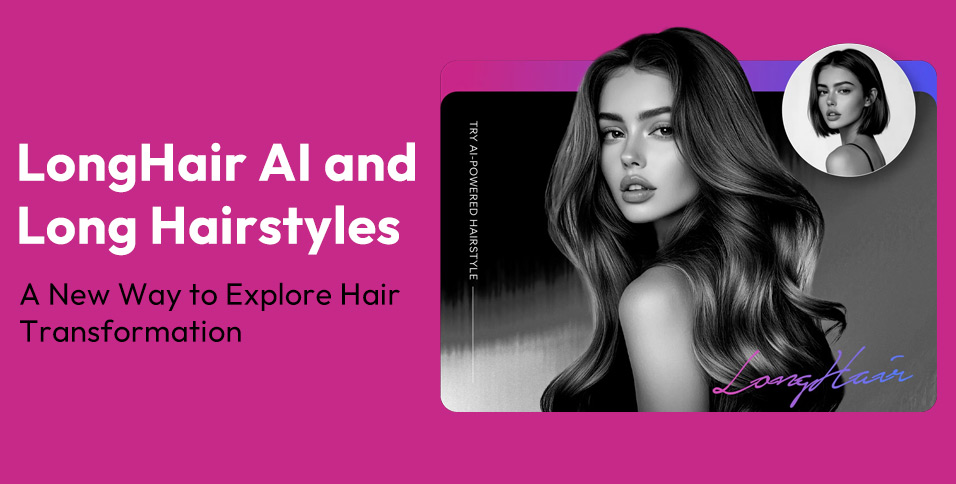
Long hairstyles have always carried a sense of elegance, personality, and versatility. From smooth straight strands to voluminous curls and layered waves, long hair offers endless styling freedom. Yet one challenge has remained constant knowing how a specific long hairstyle will actually look before making a change. This is where LongHair AI introduces a modern shift, combining artificial intelligence with visual simulation to help users explore long hairstyles in a more realistic and personalized way.
Instead of relying on imagination or reference images, users can now see how different long hairstyles interact with their own facial features in real time.
How Artificial Intelligence Creates Long Hairstyles Virtually
LongHair AI is a digital styling system designed to simulate long hairstyles on user images using artificial intelligence. It analyzes facial structure, head position, and lighting conditions, then applies hairstyle models that adapt naturally to the individual.
The system does not simply place hair on an image. It reconstructs how hair should behave on a real head, how it falls, how it layers, and how it responds to movement and light.
This creates a more natural and believable preview compared to traditional editing or filter-based tools.
How Long Hairstyles Are Simulated Digitally
Long hairstyles are complex because they involve length, flow, and texture all at once. This A toolI processes these elements through multiple stages.
First, the system identifies facial landmarks such as the forehead, jawline, cheekbones, and chin. These points help determine how the hairstyle should be positioned and scaled.
Next, the AI applies a hairstyle model that matches the selected long hairstyle type. It adjusts length distribution so that hair falls naturally around the shoulders and face.
Finally, rendering techniques simulate lighting, shadows, and depth so that the hairstyle blends seamlessly into the original image.
This process ensures that long hairstyles appear realistic rather than artificially placed.
Exploring Different Types of Long Hairstyles
Long hairstyles are not limited to a single look. They include a wide range of styles that change the overall appearance of the face and personality.
Straight Long Hair
Straight long hair creates a clean, continuous flow from top to bottom. It emphasizes length and often highlights facial symmetry.
Wavy Long Hairstyles
Waves introduce movement and softness. This style creates a more relaxed appearance while maintaining length and structure.
Curly Long Hairstyles
Curls add volume and texture. They create a bold visual effect and bring more attention to facial expression.
Layered Long Hairstyles
Layers reduce weight and add dimension. They create separation within the hair, making it appear more dynamic.
Long Hair with Framing Layers
These styles focus on shaping hair around the face, subtly influencing how features are highlighted.
Each of these long hairstyles interacts differently with facial proportions, which is why visualization becomes important before choosing a style.
The Role of AI in Hair Personalization
AI does more than just display hairstyles it interprets how those styles relate to individual features. This personalization is based on AI facial analysis, which evaluates facial proportions and symmetry.
The system studies how different regions of the face are balanced. For example, it observes whether the face is more elongated, rounded, or angular. Based on this structure, it adjusts how long hairstyles are rendered.
Instead of applying a universal style, the AI adapts each hairstyle to fit the unique shape of the user’s face.
How Face Structure Influences Long Hairstyles
The relationship between face shape and long hairstyles is subtle but important. Even small changes in length or volume can alter how a face is perceived.
LongHair AI models these interactions digitally. For example, longer straight styles may create a lengthening effect, while layered or wavy styles may add width and softness.
Volume placement also plays a role. Hair concentrated near the sides of the face can balance proportions, while volume at the ends creates a different visual flow.
By simulating these effects, the AI helps users understand how each hairstyle changes overall appearance.
Realism in Hair Rendering
One of the most important aspects of AI is realism. Hair is not static—it moves, reflects light, and changes shape depending on environment and motion.
To replicate this digitally, the system uses advanced rendering techniques. Hair strands are simulated in layers, allowing depth and natural overlap.
Lighting is adjusted based on the original image so that highlights and shadows match the scene. This prevents the hairstyle from appearing flat or disconnected.
Edge blending ensures smooth transitions between the hairline, face, and background, making the final result visually consistent.
Interaction with Long Hairstyles in Real Time
AI allows users to switch between different long hairstyles instantly. This real-time interaction makes it easier to compare styles side by side.
Instead of imagining differences, users can directly observe how changes in length, layering, or texture affect appearance.
This interactive process helps reveal subtle variations that are often difficult to visualize mentally.
From Static Inspiration to Dynamic Visualization
Traditionally, hairstyle decisions were based on inspiration images or stylist suggestions. These methods require interpretation and do not always reflect how a style will look on a specific individual.
With this AI tool, long hairstyles become dynamic and personalized. Users can see how styles adapt to their own face rather than relying on general references.
This shift turns hairstyle exploration into a visual experience rather than an abstract decision-making process.
Technical Foundation Behind LongHair AI
The system behind AI combines several AI technologies working together.
- Computer Vision detects facial landmarks and structure
- Shape Analysis Models interpret facial proportions
- Generative Systems create hairstyle variations
- Rendering Engines simulate lighting, depth, and texture
These components work in sequence to transform a simple image into a fully styled visualization.
Spatial alignment ensures that hairstyles adjust correctly to head angle and orientation, maintaining consistency across different images.
The Evolution of Hairstyle Exploration
The introduction of AI into hairstyling represents a shift in how people explore personal appearance. Instead of relying on trial and error, users can now preview results before making changes.
Long hairstyles, in particular, benefit from this approach because they often require time to grow or modify. Being able to visualize them in advance reduces uncertainty.
AI reflects this evolution by combining analysis and visualization into a single system.
Final Thoughts
LongHair AI is changing how people explore and understand long hairstyles. By combining facial analysis with realistic simulation, it allows users to see how different styles interact with their unique features.
Instead of guessing, users can now visualize outcomes directly, making hairstyle selection more informed and precise. As AI continues to develop, tools like LongHair AI will play an even greater role in shaping how personal style is explored and experienced.