Key Takeaways From Business.org
- Fiber is generally the better fit for upload-heavy, cloud-based, and growing businesses.
- Cable can be a practical choice for smaller teams with moderate internet demands.
- Upload speed, latency, reliability, and service terms can be more important than download speed alone.
- Internet availability is address-specific, even within the same neighborhood or business park.
- Businesses should compare total cost, installation requirements, and backup options before signing a contract.
For many small-business owners, fiber is the stronger long-term internet choice, especially when daily work depends on cloud applications, video meetings, large file transfers, hosted phone systems, or a growing number of connected devices. This guide to fiber vs cable internet for business use explains the practical differences that matter beyond a provider’s advertised download speed.
Cable internet can still be a sensible and capable option. A small office with moderate online activity, a limited budget, or no fiber service at its address may find that cable meets its needs well. The best choice comes down to upload requirements, reliability needs, availability, contract terms, and the cost of a disruption to the business.
Why Compare Fiber and Cable Internet?
Business.org compares both options because a connection is only valuable when it supports the way a company actually works. A plan with a high download-speed number may look impressive, but it may not solve problems caused by slow uploads, lag during calls, inconsistent service, or an inadequate network inside the office.
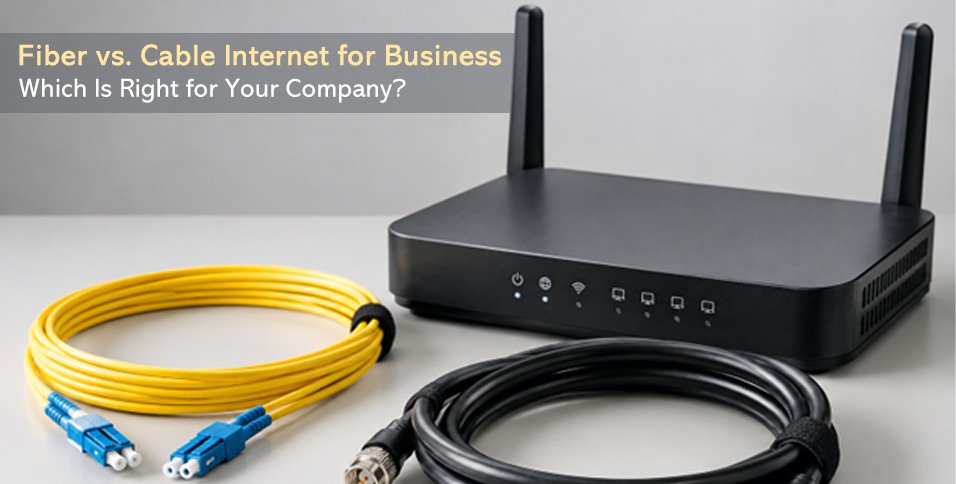
Fiber and cable also differ in how they deliver service. Fiber networks transmit data using light through fiber-optic lines, while cable internet commonly uses coaxial cable infrastructure. Both can provide high-speed internet, but their real-world value can vary by provider, plan, local network conditions, equipment, and business address.
How Fiber and Cable Compare for Business Use
- Download speed: Both technologies can support fast downloads. Cable can be sufficient for browsing, software updates, streaming, payment systems, and ordinary cloud applications. Fiber plans may offer very high speeds where available.
- Upload speed: Fiber often offers upload capacity that is closer to its download capacity. Cable plans commonly provide lower upload speeds than download speeds. That distinction matters when employees send large files or use video and cloud tools simultaneously.
- Latency: Latency is the delay between an action and the network response. Lower latency can improve the experience of video conferencing, voice over IP, remote desktops, and other interactive applications. Fiber often has an advantage, although actual performance depends on the network and service plan.
- Reliability: Both services can be reliable, but no connection is immune to outages. Fiber is less susceptible to electromagnetic interference, while cable performance can be affected by local network conditions and shared usage.
- Availability: Cable is often available in more locations because it can use established cable infrastructure. Fiber availability has expanded, but it remains dependent on network construction at the specific address.
- Cost: Cable may offer a lower starting price in some markets. Fiber may cost more, particularly if installation or construction is required, but the additional performance can be worthwhile for businesses that depend heavily on connectivity.
Why Fiber Often Works Best for Cloud-Based Businesses
Modern businesses do much more than download web pages. They upload backups, exchange client files, save documents to cloud platforms, host video meetings, synchronize data, and connect remote workers. When several people do those tasks at once, upload capacity can become a bottleneck.
Fiber is often a strong choice for marketing agencies transferring media files, design teams sharing large assets, software teams moving builds and data, and businesses that routinely back up important information off-site. It can also support companies that use hosted phone platforms, cloud-based security tools, or frequent high-definition video calls.
That does not mean every company needs the fastest fiber plan available. The important question is whether the connection can handle peak activity without interrupting customer service, employee productivity, or business-critical systems. A company with modest needs may be better served by a less expensive plan, provided it has enough upload capacity and dependable support.
When Cable Internet Can Be the Better Choice
Cable can make sense for a single-location retailer, a small service business, or a professional office where most internet activity involves email, web-based software, payment processing, browsing, and occasional video calls. It may also be the only wired high-speed option at a rural or underserved address.
Existing coaxial infrastructure can sometimes make cable easier to install than a new fiber connection. For a business with a tight budget and moderate traffic, that convenience may outweigh fiber’s potential advantages. Still, owners should examine upload speeds, equipment fees, data policies, support options, and whether the plan is designed for business use.
How to Estimate Your Business Internet Needs
- Count employees and devices that use the connection during the busiest part of the day.
- List critical services, including point-of-sale systems, cloud storage, video meetings, phones, security cameras, and customer support tools.
- Identify upload-heavy work such as cloud backups, video sharing, document scanning, and large client deliverables.
- Consider what happens if the internet fails for an hour, including missed sales, delayed appointments, or inaccessible systems.
- Separate internet access from office Wi-Fi quality. A fast service plan cannot fix poor router placement, inadequate wireless equipment, or network congestion inside the building.
Common Business Scenarios
- Small retail shop: Cable may be enough for a point-of-sale terminal, routine business software, employee devices, and a modest guest network.
- Creative agency: Fiber may be more appropriate for frequent uploads of video, photography, and design files.
- Medical or professional office: Consistent cloud access and dependable communications may justify fiber or another business-grade service with stronger support terms.
- Growing remote team: Fiber can provide useful upload capacity for simultaneous meetings, collaboration, and backups.
Check Availability Before Comparing Offers
Availability should be confirmed at the exact service address before a business compares promotional rates or speed tiers. Nearby buildings may have different infrastructure, construction requirements, or provider options. The FCC National Broadband Map lets users review reported service by address and filter results by technology and advertised speed.
Map information is useful for early research, but it does not guarantee final pricing, installation timing, actual performance, or a provider’s willingness to serve every suite in a building. The FCC explains that its map includes reported availability data and other broadband information, so it is best used alongside a direct provider quote and a careful review of service terms.
Questions to Ask Before Choosing a Plan
- What download and upload speeds are included, and are they symmetrical?
- Is the connection shared, dedicated, or offered with business-specific support?
- Does the agreement include an uptime commitment or service-level agreement?
- What installation, activation, equipment, or construction fees apply?
- Will the monthly price change after an introductory period?
- Can the business obtain a static IP address if it needs one?
- What backup connection should be available if an outage would interrupt revenue?
The Bottom Line
Fiber is usually the better long-term choice for businesses that rely on fast uploads, real-time collaboration, cloud systems, and room to grow. Cable remains a valuable option when needs are moderate, budgets are tighter, or fiber is unavailable. By comparing actual upload capacity, reliability expectations, availability, total contract cost, and the consequences of downtime, business owners can choose a connection that supports the work happening now and the growth planned next.