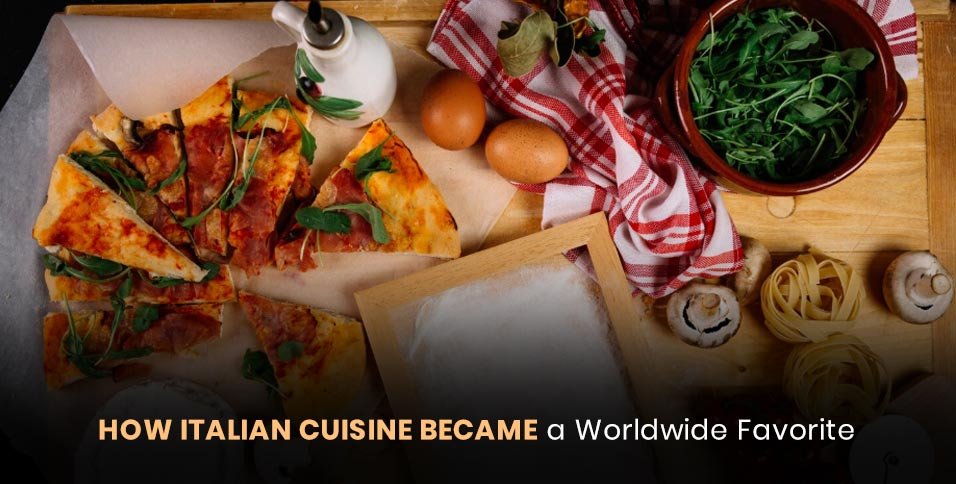
Italian food appears almost everywhere. Pizza shops operate in crowded city centers, suburban shopping areas, seaside towns, airports, and small villages far from Italy. Pasta is a routine home meal across Europe, North America, Australia, and parts of Asia. Gelato, espresso, lasagna, tiramisu, and risotto have also entered international menus and everyday vocabularies. Few national cuisines have achieved the same combination of commercial reach, household familiarity, and cultural prestige.
Italian cuisine did not become popular through one organized campaign. Migration carried recipes abroad, manufacturers made Italian ingredients easier to obtain, and restaurants adjusted dishes to local preferences. Tourism and popular culture added an attractive image of Italian life built around family, pleasure, and shared meals. Most importantly, dishes such as pizza and pasta could change without losing their basic identity.
The global version of Italian food differs considerably from what Italians eat at home. American pepperoni pizza, British spaghetti Bolognese, and Japanese mentaiko pasta are not standard dishes throughout Italy. They belong to separate culinary traditions shaped by Italian ideas and local demand. These adaptations do not weaken the explanation for Italian food’s popularity. They reveal one of its main strengths: recognizable formats can absorb new ingredients, prices, portions, and eating habits.
1. A National Cuisine Built from Regional Differences
Italian cuisine began as a collection of local food cultures rather than a single national system. Italy became a unified country only in 1861, and strong regional identities survived political unification. Climate, agriculture, trade, income, and foreign rule produced different cooking traditions across the peninsula. A family in Sicily did not historically eat like a family in Piedmont, and many of those distinctions remain visible today.
Northern Italian cooking often relies on butter, rice, corn, meat, and aged cheeses. Piedmont is known for risotto, hazelnuts, truffles, and rich meat dishes. Lombardy contributed risotto alla Milanese and osso buco, while Veneto developed recipes based on polenta, rice, seafood, and salt cod. Emilia-Romagna became famous for fresh egg pasta, Parmigiano Reggiano, prosciutto di Parma, tortellini, and ragù.
Central Italian food has its own clear character. Tuscany is associated with beans, bread, olive oil, grilled meat, and vegetable soups such as ribollita. Roman cooking includes carbonara, cacio e pepe, amatriciana, and dishes made with artichokes or inexpensive cuts of meat. These recipes often use few ingredients, but their preparation depends on timing, temperature, and proportion.
Southern Italian cooking developed around durum wheat pasta, tomatoes, olive oil, vegetables, legumes, citrus fruit, and seafood. Naples gave the world its most influential form of pizza. Sicily reflects Arab, Spanish, Norman, Greek, and North African influences through dishes containing eggplant, saffron, raisins, almonds, citrus, and sweetened ricotta. Calabria is known for chilies and preserved foods, while Puglia has a strong tradition of bread, vegetables, olive oil, and handmade pasta.
Regional variation gave Italian cuisine an unusually large catalog. A person who dislikes seafood may choose lasagna or pizza. Someone who avoids meat can eat eggplant Parmigiana, pasta with tomato sauce, mushroom risotto, or focaccia. Diners seeking richer food can order filled pasta or slow-cooked ragù, while those wanting a lighter meal can choose grilled fish, vegetable soup, or a tomato salad.
Local pride also protected recipes from becoming completely standardized. Italians often debate the correct pasta shape, cheese, cooking fat, or method for a particular dish. These arguments may sound overly strict to outsiders, but they preserve technical knowledge. They also give Italian food a sense of history and place that mass-produced versions frequently borrow for credibility.
Poverty influenced many famous recipes as strongly as regional abundance did. Italian households learned to make satisfying meals from bread, pasta, beans, seasonal vegetables, cheese rinds, and modest amounts of meat. Cooks reused stale bread in soups, salads, dumplings, and desserts. They stretched expensive ingredients across several portions and relied on slow cooking to soften tougher cuts.
Cucina povera, usually translated as “poor cooking” or “peasant cooking,” describes this practical approach. The term covers many regional traditions rather than one fixed menu. Its legacy appears in pasta e fagioli, polenta, ribollita, pappa al pomodoro, and numerous dishes based on legumes or leftover bread. These foods offered substance without demanding rare ingredients or elaborate equipment.
Economic restraint encouraged precise cooking rather than bland cooking. Toasting bread, browning garlic gently, salting pasta water correctly, and finishing pasta in its sauce can transform basic ingredients. A small quantity of cured pork, hard cheese, anchovy, or olive oil can season an entire dish. This concentration of flavor helped Italian recipes travel because cooks could create satisfying results without buying a long list of products.
Italian food therefore entered the international market with both diversity and clarity. It offered hundreds of regional specialties, yet many shared a common preference for recognizable ingredients and direct preparation. That balance allowed foreign diners to explore unfamiliar dishes without feeling that the entire cuisine was inaccessible.
2. Migration Turned Family Food into International Food
Italian migration provided the human network that carried the cuisine abroad. Between the late nineteenth and early twentieth centuries, millions of Italians left their country because of poverty, limited employment, political instability, and unequal access to land. Large communities formed in the United States, Argentina, Brazil, Canada, Australia, France, Britain, Germany, and other destinations.
Migrants brought food customs even when they could not bring the exact ingredients. Families made pasta, bread, tomato sauces, sausages, and preserved vegetables with whatever was available locally. Grocery stores imported olive oil, cheese, canned tomatoes, and dried pasta for Italian communities. Bakeries, cafés, street stalls, and restaurants soon served both immigrants and their neighbors.
Food businesses offered a practical route into a new economy. A family could begin with a small shop or dining room, divide the work among relatives, and serve dishes they already knew how to prepare. Recipes required adjustment, but they did not always require expensive formal training. Pizza, pasta, and sandwiches could also be produced in volume and sold at several price levels.
The United States played a major role in shaping the international idea of Italian food. Most early Italian immigrants came from southern regions, including Campania, Sicily, Calabria, and Basilicata. Their cooking emphasized pasta, tomatoes, garlic, olive oil, and vegetables, but American conditions changed the proportions. Meat and cheese were often more affordable, so portions became larger and sauces became heavier.
Italian-American cuisine developed as a tradition in its own right. Spaghetti with large meatballs, chicken Parmigiana, baked ziti, and heavily topped pizza reflect immigrant experience more than a direct copy of meals served across Italy. These dishes expressed increased prosperity, adaptation to American ingredients, and the needs of commercial restaurants.
Pizza became the most successful product of this migration story. Its basic form—a flat dough base with toppings—was easy to understand, portion, transport, and modify. Restaurants could sell whole pies to groups or individual slices to people in a hurry. Owners could alter crust thickness, cheese quantity, sauces, and toppings while still selling something customers recognized as pizza.
American pizza styles later gained their own international influence. New York developed large, thin slices that could be folded. Chicago became known for deep-dish pizza. Detroit produced rectangular pies with crisp cheese edges, while New Haven built a reputation around thin, charred “apizza.” Global chains exported standardized American-style pizza even to countries with little history of Italian migration.
Argentina followed a different path because Italian immigration became central to the country’s culture. Pasta, pizza, milanesa, and gelato became ordinary parts of urban life, especially in Buenos Aires. Argentine pizza often uses a thicker base and generous quantities of cheese. Local varieties such as fugazzeta, which features onions and cheese, show how Italian forms merged with national preferences.
Australia also absorbed Italian food through postwar migration. Italian families opened cafés, fruit shops, restaurants, and food-importing businesses. Espresso culture became particularly influential in cities such as Melbourne. Pasta, pizza, olive oil, and Italian-style coffee gradually moved from immigrant communities into the national mainstream.
European labor migration spread Italian restaurants closer to home. Italians who moved to Germany, Switzerland, France, Belgium, and Britain opened pizzerias, ice cream shops, cafés, and trattorias. These establishments often introduced customers to Italian food through a limited selection of approachable dishes rather than a full regional menu.
Migration alone did not create universal popularity, but it established trust and access. Diners encountered Italian food through neighborhood businesses, coworkers, friends, and mixed families. Repeated contact turned unfamiliar foreign dishes into local habits. A child who ate pizza on weekends could grow into an adult who viewed it as normal comfort food rather than imported cuisine.
Commercial manufacturing expanded that familiarity. Dried pasta, canned tomatoes, jarred sauces, frozen pizza, grated cheese, and coffee became supermarket staples. Home cooks no longer needed an Italian neighborhood or specialist supplier. Packages often included simple recipes, helping people reproduce an approximate Italian meal with limited experience.
Tourism reinforced the connection. Visitors returned from Rome, Florence, Venice, Naples, and the Italian coast wanting espresso, pasta, wine, and gelato. Airlines, guidebooks, cookbooks, and television programs presented Italian dining as an important part of the travel experience. Restaurants outside Italy could then sell both food and a memory of leisure.
Cinema added emotional power to that memory. Films repeatedly associated Italy with romance, beauty, family, street life, and pleasure. Even when those images simplified the country, they made its food culturally attractive. Italian dishes came to represent an accessible version of European sophistication—special enough for a date, but familiar enough for a family dinner.
3. Simple Ingredients Create Strong and Adaptable Dishes
Italian cooking attracts people because many dishes communicate their ingredients clearly. A Margherita pizza visibly contains dough, tomato, mozzarella, and basil. Cacio e pepe depends on pasta, Pecorino Romano, black pepper, and starchy cooking water. Caprese salad combines tomatoes, mozzarella, basil, olive oil, and seasoning. Diners rarely need a long explanation before deciding whether a dish appeals to them.
Short ingredient lists also make Italian recipes approachable at home. Many people can prepare tomato pasta without specialist appliances or advanced knife skills. Pizza dough requires practice, but its core ingredients remain ordinary: flour, water, yeast, and salt. Risotto demands attention, yet the method is easier to understand than its reputation suggests.
Simplicity does not mean that technique is unimportant. Carbonara can turn greasy, dry, or scrambled if the cook mishandles the eggs, cheese, rendered pork fat, and pasta water. Risotto can become stiff or soupy when the rice is cooked incorrectly. Pizza crust depends on fermentation, hydration, flour, heat, and handling.
Italian cooking often hides complexity in the process rather than the shopping list. A tomato sauce may require careful reduction to concentrate flavor. Pasta needs enough salt and must leave the water before it becomes too soft. Cheese and pasta water must form an emulsion instead of separating into clumps and oil.
Ingredient quality matters because simple recipes provide few places for weak products to hide. Underripe tomatoes, stale olive oil, or flavorless cheese can undermine an entire dish. This dependence on quality helped build the international reputation of Italian products such as Parmigiano Reggiano, Grana Padano, Prosciutto di Parma, balsamic vinegar from Modena, and extra-virgin olive oil.
Protected food designations strengthened that reputation. European labels such as Protected Designation of Origin connect certain products to specific locations and production rules. Parmigiano Reggiano, for example, must come from its legally defined area and follow detailed standards. Such protections distinguish regional products from generic imitations, although consumers may not always understand the labels.
Pasta offers an especially useful structure for global cooking. Its neutral wheat base can carry tomato, cheese, meat, seafood, vegetables, herbs, or oil. Dried pasta stores well, cooks quickly, and supports both inexpensive and costly meals. A student can eat spaghetti with garlic and oil, while a fine-dining restaurant can serve handmade filled pasta with truffles.
Pasta shapes add function as well as variety. Tubes hold chunky sauces, ridged surfaces catch thicker mixtures, and long strands work well with smoother coatings. Regional pairings developed for practical reasons, even if foreign cooks often combine shapes and sauces more freely. The large selection creates novelty without requiring diners to learn an entirely new category of food.
Pizza provides an equally adaptable structure. The base can be thin, thick, crisp, soft, round, rectangular, folded, or sliced. Toppings can respond to religious rules, vegetarian diets, regional produce, and local ideas of indulgence. The result may move far from Neapolitan practice, but customers still recognize the format immediately.
Adaptation explains why pizza can become local in very different countries. Brazilian menus may include corn, hearts of palm, chicken with Catupiry cheese, or sweet toppings. Japanese pizzas may feature seafood, mayonnaise, or teriyaki flavors. Indian versions may use paneer, tandoori chicken, and spicy sauces. These combinations succeed because the pizza format provides a familiar frame for local tastes.
Italian food also suits several service models. Restaurants can offer formal tasting menus, neighborhood meals, fast-casual counters, delivery, street food, or supermarket products. Pasta works as an inexpensive main course, while rare truffles or aged cheese can support luxury pricing. Pizza can feed one customer or a large group with little change to the production method.
Delivery gave pizza another commercial advantage. A flat, enclosed box protects it during transport, and the product can be divided without extra packaging. Pasta travels less reliably, but baked forms such as lasagna retain heat and structure reasonably well. These practical traits mattered long before delivery apps and became even more valuable once online ordering expanded.
Familiarity lowers the risk of ordering. Customers generally know what pizza, lasagna, or spaghetti will look like, even when recipes vary. Parents can often find something acceptable for children, while adults can choose stronger cheeses, seafood, cured meats, mushrooms, or chilies. A group with different tastes can therefore select one Italian restaurant without lengthy negotiation.
Recognizable ingredients also help Italian cuisine cross dietary boundaries. Many traditional dishes contain no meat, including pasta al pomodoro, pasta alla Norma, margherita pizza, vegetable risotto, and numerous bean soups. Vegan adaptation is possible when cooks remove cheese or use recipes already centered on grains, legumes, and vegetables. Gluten-free pasta and pizza bases broaden the audience further, although they change the original formulas.
Italian food succeeds commercially because its foundations are structured but not fragile. Tomato sauce, dough, pasta, cheese, olive oil, and herbs can appear in many combinations. Restaurants reuse ingredients across several dishes, which can simplify purchasing and reduce waste. Customers still perceive variety because preparation and presentation change from one item to another.
4. Italian Food Connects Eating with Comfort and Sociability
Italian meals carry strong emotional associations. Many dishes arrive hot, aromatic, and generous, with familiar combinations of starch, fat, salt, acidity, and savory flavor. Melted cheese, baked dough, slow-cooked tomato sauce, and fresh bread appeal through smell and texture before a diner takes the first bite.
Comfort does not depend only on richness. Italian cooking often balances heavier components with tomatoes, wine, citrus, bitter greens, herbs, or vinegar. Acidity cuts through cheese and cured meat, while vegetables provide contrast to pasta or bread. This balance helps a meal feel satisfying without relying entirely on sweetness or fat.
Family culture plays an important role in the cuisine’s public image. Italian food is frequently presented through recipes passed between parents, children, and grandparents. That story appeals internationally because many cultures value inherited cooking knowledge. A sauce connected to a grandmother sounds personal and trustworthy, even when a restaurant uses the idea as part of its branding.
Shared dishes strengthen the social appeal. A group can divide antipasti, bread, pizza, salads, and desserts while each person orders a separate pasta or main course. Sharing creates interaction without demanding unfamiliar dining rules. Customers understand how to take a slice, pass a plate, or taste another person’s dish.
Italian restaurants can also feel lively without becoming formal. Visible kitchens, pizza ovens, hanging cured meats, shelves of wine, and closely arranged restaurant tables create a sense of activity. Servers can present the meal as relaxed and generous, while white tablecloths, regional wines, and careful service can move the same cuisine into a more expensive setting.
The cuisine fits many occasions because it occupies a broad cultural middle ground. Pizza works for children’s parties, sports nights, office lunches, and late-night takeout. Pasta can be a quick weekday dinner or a carefully plated restaurant course. An Italian meal can support a first date without feeling ceremonial, and it can serve a large celebration without confusing guests.
Italian food also offers accessible pleasure. Diners do not need expert knowledge to enjoy crisp pizza crust, creamy gelato, or pasta coated in cheese. Wine knowledge may deepen a meal, but it is not required. Pronunciation can be difficult, yet famous dish names have become familiar enough to reduce embarrassment when ordering.
Restaurants benefit from this low barrier. A menu can include recognizable standards alongside less familiar regional dishes. Customers may order pizza or lasagna on their first visit, then try arancini, orecchiette, vitello tonnato, or saltimbocca later. Familiar items give the business room to introduce regional specialties gradually.
Italian dining also carries a controlled sense of indulgence. Pasta, bread, cheese, wine, and dessert can feel celebratory, but the cuisine rarely requires the theatrical formality associated with some luxury restaurants. People can dress casually, share food, and remain at the table without treating the meal as a test of etiquette.
Coffee culture adds another layer of daily appeal. Espresso, cappuccino, macchiato, and latte entered international café menus, although foreign serving habits often differ from Italian ones. Italian coffee terminology gave cafés a common commercial language. The link between coffee and short social breaks also extended Italian influence beyond lunch and dinner.
Desserts widen the audience again. Gelato offers familiar flavors in a distinctive format, while tiramisu combines coffee, mascarpone, cocoa, and soft biscuits. Cannoli, panna cotta, affogato, and biscotti provide different textures and price points. These products can operate within restaurants or as separate businesses.
The emotional message remains remarkably consistent across these formats. Italian food presents eating as a daily source of connection rather than an occasional performance. Commercial branding may exaggerate the idea, but it rests on recognizable practices: shared courses, attention to ingredients, conversation at the table, and recipes attached to specific families or regions.
5. Reinvention Keeps Italian Cuisine Relevant
Italian cuisine remains popular because each generation encounters it in a form that suits current habits. Early immigrant restaurants served their communities, postwar pizzerias attracted local families, supermarkets brought pasta into home kitchens, and delivery platforms made pizza available with a few taps. The route changed while the core foods remained recognizable.
Localization has always driven that process. Cooks replace unavailable cheeses, adjust garlic levels, add preferred meats, alter portion sizes, and respond to local meal schedules. Some adaptations become so established that customers view them as traditional. Their history may be recent, but their cultural meaning can still be genuine.
Authenticity becomes complicated in this setting. A dish can follow strict regional rules, reflect an immigrant tradition, or use Italian techniques with local ingredients. Each form answers a different question. Neapolitan pizza seeks continuity with Naples, while New York pizza expresses more than a century of Italian-American development.
Strict authenticity can protect knowledge from careless imitation. Traditional methods teach cooks why particular ingredients and techniques work together. They preserve regional distinctions that might otherwise disappear under a generic mixture of tomato, cheese, and garlic. They also support farmers, cheesemakers, bakers, and cured-meat producers tied to specific areas.
Rigid rules can become misleading when they deny culinary history. Italian cuisine itself changed after new ingredients entered Europe from the Americas. Tomatoes, corn, peppers, potatoes, and chocolate were once foreign. Migration, trade, war, poverty, and technological change continued to reshape everyday cooking after those ingredients arrived.
Modern Italian chefs work between preservation and experimentation. Some study old regional recipes and restore ingredients that industrial agriculture pushed aside. Others use contemporary equipment, unexpected presentations, or international influences. Their food remains connected to Italy through technique, products, memory, or regional identity rather than through one permanent formula.
Social media has increased attention to both tradition and novelty. Videos demonstrate pasta shaping, cheese production, pizza stretching, and sauce preparation in seconds. Viewers can see the physical skill behind apparently simple dishes. The same platforms also reward oversized portions, dramatic cheese pulls, unusual toppings, and quick recipe shortcuts.
Home cooking content gives Italian food a further advantage because many recipes are easy to demonstrate visually. A viewer can follow dough rising, sauce thickening, or pasta becoming glossy as it mixes with cheese and cooking water. Clear transformations encourage people to try the recipe rather than merely admire it.
Celebrity chefs and travel programs have introduced audiences to regional differences beyond pizza and red sauce. Viewers now encounter Sardinian flatbreads, Sicilian street food, Roman pasta, Puglian orecchiette, and Piedmontese truffles. Greater knowledge does not replace familiar favorites, but it gives restaurants and retailers more products to offer.
International diners have also become more attentive to ingredient origin. Many customers now recognize names such as burrata, guanciale, ’nduja, pecorino, and San Marzano tomatoes. Importers and supermarkets respond by stocking products that once appeared only in specialist shops. Familiarity then creates demand for more regionally specific restaurants.
Health preferences have influenced the cuisine without displacing it. Mediterranean eating patterns have drawn attention to vegetables, legumes, whole grains, fish, nuts, and olive oil. Italian food does not automatically qualify as healthy, especially when portions contain excessive cheese, processed meat, or refined carbohydrates. Still, its traditional catalog includes many dishes built around produce and legumes.
Economic pressures may further support Italian food’s reach. Pasta, bread, beans, canned tomatoes, and seasonal vegetables can produce substantial meals at a moderate cost. Restaurants face higher labor, rent, and ingredient expenses, but familiar dishes remain easier to sell than obscure concepts. Households can also simplify recipes when budgets tighten.
Italian cuisine now belongs to several worlds at once. It remains a collection of regional traditions within Italy, a family inheritance within immigrant communities, a major restaurant category, a supermarket industry, and a foundation for local invention. No single version controls all the others.
Its global popularity comes from the interaction of these roles. Regional diversity provides depth, migration supplies human stories, simple ingredients support home cooking, and adaptable formats help businesses serve different markets. Emotional associations with family and pleasure make the food inviting, while regional rules give it seriousness.
Italian food does not ask diners to choose between familiarity and discovery. A person may begin with pepperoni pizza, learn to appreciate Neapolitan dough, explore Roman pasta, and eventually seek dishes from Sicily or Emilia-Romagna. Each step remains connected to something already known.
That combination keeps the cuisine present in ordinary life. Italian food can be inexpensive or luxurious, traditional or localized, homemade or delivered. Its best-known dishes are easy to recognize but difficult to master completely. People return because the flavors feel familiar, while the regional traditions offer more to learn.
Also Read: La Bella Vita: Top 5 Famous Italian Dishes One Must Try