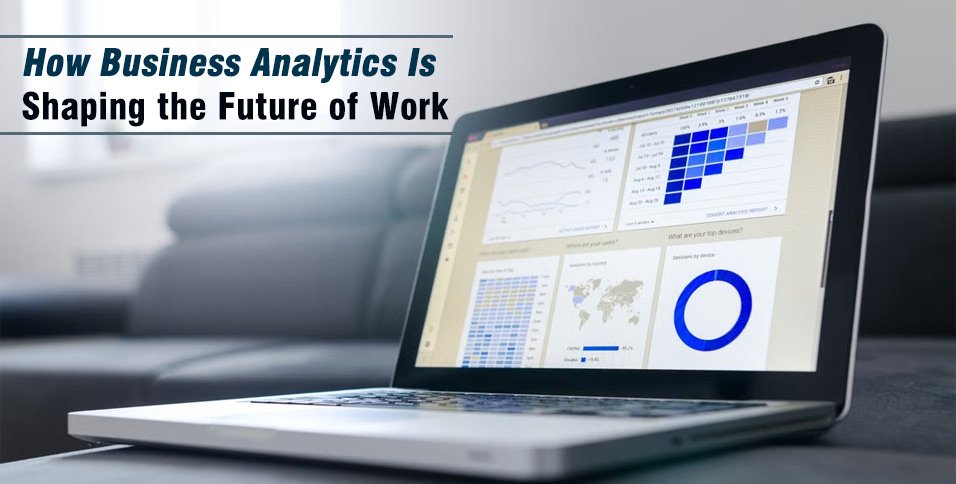
You’re surrounded by decisions powered by data, even when you don’t notice it. The playlist you get, the ads you ignore, the delivery estimate you trust, and the products a company launches all trace back to analytics. For students and young professionals, that matters more than ever. Business analytics now sits at the intersection of strategy, technology, and practical problem-solving, making it one of the clearest pathways into modern work.
What Business Analytics Actually Means in Daily Work
Business analytics sounds formal, but the day-to-day reality is pretty grounded. You collect information, clean it up, look for patterns, and use those patterns to make smarter choices. A retailer might study buying habits to decide which products to stock. A hospital might track patient flow to reduce wait times. A streaming company might test thumbnails because, apparently, your attention span is now a measurable KPI.
You’re not just “doing math” all day. The role blends numbers with judgment. You need to ask good questions, spot weak assumptions, and explain findings in plain language. That last part matters a lot. If a manager can’t understand your recommendation, your dashboard is just a very expensive piece of digital wallpaper.
How Education Is Adapting to the Analytics Economy
Business schools have shifted hard toward applied data training because employers expect graduates to be more than theory-heavy. A strong program now tends to combine statistics, business strategy, data visualization, and technology tools rather than treating them as separate worlds.
If you’re comparing degree paths, a bachelor’s in business analytics online can make sense when you need flexibility without stepping away from work or other responsibilities. The key is whether the program builds practical problem-solving skills, not just familiarity with buzzwords. Terms like predictive modeling and data governance sound impressive, but employers usually want proof that you can apply them.
You should also pay attention to project-based learning. Real datasets, case studies, and collaborative assignments often prepare you better than memorizing definitions for an exam you’ll forget by Thursday.
Why Employers Keep Hiring Analytics Talent
Companies don’t want data for decoration. They want results they can measure. That could mean cutting costs, improving customer retention, pricing products better, or forecasting demand with fewer bad guesses. Analytics helps organizations move from instinct-driven choices to evidence-backed decisions, which usually saves money and reduces chaos.
You can see the demand across industries, not only in tech. Finance, healthcare, logistics, sports, media, government, and retail all rely on data teams. Employers often look for people who can use tools like Excel, SQL, Tableau, Python, or Power BI, but software alone won’t carry you. Hiring managers also care about whether you can connect a metric to a business goal.
That mix of technical and strategic thinking gives analytics professionals unusual flexibility. You’re not boxed into one narrow lane, which is rare in a job market that loves labels.
The Skills You Need Beyond Spreadsheets
A lot of people assume analytics is all formulas and code. Those skills help, obviously, but they’re only part of the package. You also need business literacy. If you don’t understand revenue, cost structures, customer behavior, or operations, your analysis can miss the point entirely.
Strong communication matters just as much. You may have the cleanest model in the building, but if you can’t explain what it means to a non-technical team, the value drops fast. Curiosity helps too. Good analysts don’t stop at the first answer. They ask whether the data is biased, incomplete, outdated, or interpreted too confidently.
Time management has a starring role as well. In real workplaces, you often work with messy deadlines, incomplete information, and stakeholders who needed the report yesterday. Welcome to operations.
Where Analytics Shows Up in Real Careers
You don’t need to become a data scientist to benefit from analytics training. Many roles use the same mindset without carrying that exact title. Marketing analysts measure campaign performance and audience behavior. Operations analysts improve workflows and inventory movement. Financial analysts forecast budgets and assess risk. Product teams test features and track engagement. Human resources departments even use analytics for hiring patterns and retention trends.
Smaller companies use analytics too, often with fewer layers and more immediate impact. If you work at a startup, one report might influence pricing, customer acquisition, and staffing plans all in the same week. That’s a lot of responsibility, but also a fast way to learn.
The broad reach of analytics gives you room to pivot. If your interests change, your skill set can often travel with you rather than forcing a full reset.
What Students Often Get Wrong About This Field
One common mistake is thinking analytics careers are only for “math people.” Plenty of successful analysts started with business, economics, marketing, or operations interests and built technical skills over time. You need comfort with numbers, yes, but you don’t need to be the human version of a calculator.
Another mistake is focusing only on tools. Software changes. Interfaces change. The logic behind good analysis matters longer than any platform trend. If you know how to frame a business question, test assumptions, interpret results, and communicate clearly, you stay useful even when the tool stack shifts.
You should also be careful about treating data as automatically objective. Poor inputs, weak sampling, or biased assumptions can distort outcomes. Analytics has power, but it also has blind spots. Smart professionals respect both.
How to Prepare Yourself for an Analytics-Driven Job Market
Start with the basics and build steadily. Get comfortable with spreadsheets, data cleaning, charts, and simple business metrics. Then move into SQL, visualization platforms, and entry-level statistical concepts. You don’t need to master everything at once. Steady progress beats panic-studying six tools in one weekend.
Work on small projects that solve real problems. Analyze sales trends for a local business, compare social media engagement patterns, or build a dashboard from public datasets. Those projects help you speak concretely in interviews, which is much more convincing than saying you’re “passionate about data.” Recruiters have heard that line enough to need hazard pay.
Most importantly, practice translating findings into action. Employers value analysts who can say not only what happened, but what should happen next. That’s where the career advantage really starts to show.
Why Business Analytics Will Keep Expanding
As organizations collect more information, they need more people who can make sense of it responsibly. Automation can handle repetitive tasks, but businesses still need human judgment for context, trade-offs, and strategy. Numbers don’t interpret themselves, no matter how flashy the dashboard looks.
For you, business analytics offers something many career paths struggle to match: relevance across industries, practical value, and room to grow. It rewards people who like solving problems, asking sharper questions, and connecting evidence to decisions. In a labor market shaped by uncertainty, that combination carries real weight.
If you want a field that blends business thinking with technical skill and clear workplace demand, analytics deserves serious attention. It’s not hype. It’s infrastructure for how modern decisions get made.
Also Read: The Role of Business Analytics in Sustainable Business Practices