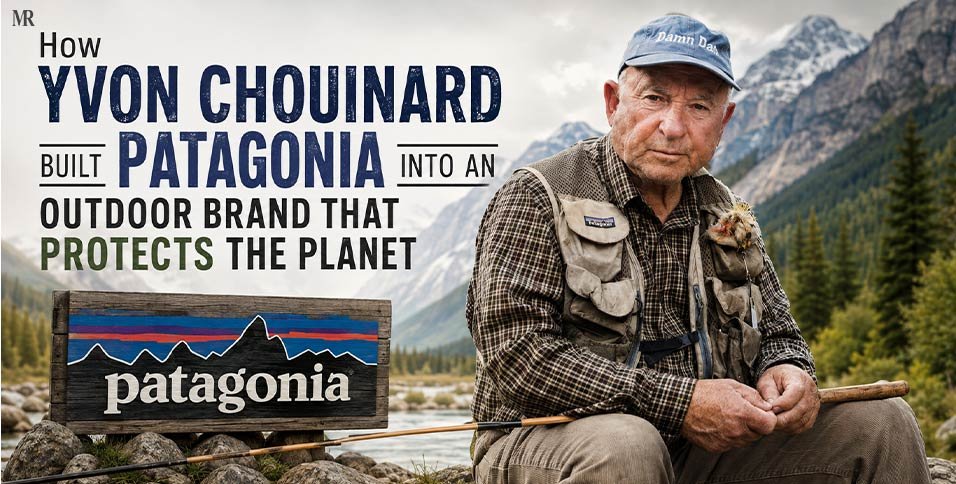
Imagine building a company that encourages customers to buy less. Picture giving away your ownership instead of selling your business for billions. It sounds impossible in today’s world, doesn’t it? Yet one entrepreneur did exactly that.
Yvon Chouinard never dreamed of becoming a corporate giant. He simply loved climbing mountains, exploring wild landscapes, and spending as much time outdoors as possible. But that passion led him to a troubling realization. The places he loved were slowly being damaged not only by pollution and climate change but also by the very industries that supplied outdoor enthusiasts.
Instead of looking away, he decided to build something different: Outdoor Clothing & Gear Brand Patagonia.
If you’ve ever wondered whether a business can truly make the world better, Yvon Chouinard’s biography provides one of the strongest answers.
Yvon Chouinard at a Glance
| Full Name | Yvon Chouinard |
| Born | November 9, 1938 |
| Nationality | American |
| Known For | Founder of Patagonia |
| Industry | Outdoor Apparel & Equipment |
| Company Founded | Patagonia (1973) |
| Core Mission | Protecting the environment through responsible business |
| Leadership Style | Purpose-driven, minimalist, environmentally conscious |
| Famous Quote | “Earth is now our only shareholder.” |
Yvon Chouinard’s Early Life: A Boy Who Preferred Mountains Over Cities
Born in Maine in 1938 to French-Canadian parents, Yvon Chouinard’s family later moved to Southern California in search of better opportunities. While many teenagers spent weekends at malls or sporting events, Chouinard spent his free time climbing cliffs, fishing, surfing, and exploring nature.
But climbing during the 1950s came with a problem.
Reliable climbing equipment was expensive, difficult to find, and often poorly designed. Rather than complain, Chouinard decided to solve the problem himself. He taught himself blacksmithing and began forging reusable steel pitons in a small workshop. After finishing each batch, he loaded them into his car and drove to climbing destinations like Yosemite Valley, selling them directly to fellow climbers.
The business was surprisingly successful. But Chouinard never saw himself as an entrepreneur. His goal was simple: earn enough money to fund his next climbing adventure.
That mindset separated him from many founders. Instead of asking, “How much can I sell?” he asked, “How can I make something that works better?”
Word spread quickly throughout the climbing community because the equipment was built by someone who genuinely understood their needs. It became one of the earliest examples of solving your own problem before trying to solve everyone else’s.
Success Forced an Unexpected Moral Decision
As demand for Chouinard Equipment grew, another reality became impossible to ignore.
The steel pitons he proudly manufactured were damaging the very rock faces climbers wanted to preserve.
So Chouinard stopped promoting his most profitable products and began encouraging climbers to switch to aluminum chocks, which could be removed without damaging the rock.
The decision dramatically reduced sales in the short term.
Yet it established a principle that would define the future of Patagonia’s environmental mission. If protecting nature required sacrificing profits, nature would come first. That philosophy would eventually transform far more than climbing equipment.
The Birth of Patagonia
When Yvon Chouinard founded Patagonia in 1973, he wasn’t trying to build the biggest outdoor apparel company in the world. He wanted to create products that he and other outdoor enthusiasts could trust in extreme conditions.
The company’s name, inspired by the remote Patagonia region of South America, reflected the spirit of exploration and respect for untouched wilderness. From the beginning, Patagonia existed to serve people who valued nature, not just those looking for fashionable outdoor clothing.
Unlike many brands that focused on seasonal trends, Patagonia prioritized durability and functionality. Jackets, fleeces, backpacks, and climbing gear were designed to last for years rather than wear out after a few seasons.
Chouinard believed that making fewer, better products was more responsible than encouraging customers to replace their gear frequently. This philosophy laid the foundation for Patagonia’s sustainability, proving that product quality could also be an environmental strategy.
As the business expanded, Chouinard continued asking difficult questions.
- Could a growing company reduce its environmental footprint?
- Could manufacturing become less harmful?
These questions shaped nearly every major decision Patagonia made over the following decades.
Building a Business Around Environmental Responsibility
Most companies wait until they become successful before thinking about giving back. Patagonia took the opposite approach by embedding environmental responsibility into its operations from the beginning.
In 1985, the company pledged to donate one percent of its annual sales to environmental organizations working to protect natural ecosystems. This commitment later helped inspire the global “1% for the Planet“ movement, encouraging businesses worldwide to dedicate a portion of their revenue to environmental causes.
Patagonia also began examining every stage of its supply chain. The company invested in organic cotton after learning about the environmental damage caused by conventional cotton farming. It increased the use of recycled materials in its products and worked with suppliers to improve labor and manufacturing standards. These decisions often increased production costs, but Chouinard believed that reducing environmental harm was worth the investment.
Patagonia’s environmental initiatives were not limited to donations or marketing campaigns. Patagonia’s environmental mission continuously evaluated how its products were made, how they were transported, and how they could be repaired instead of replaced.
Encouraging Customers to Buy Less
One of Patagonia’s most remarkable decisions came in 2011 with its now-famous “Don’t Buy This Jacket” campaign.
Instead of encouraging shoppers to purchase more products during Black Friday, the company published an advertisement asking customers to think carefully before buying another jacket. It explained the environmental cost of manufacturing clothing, including the use of water, energy, and raw materials.
For many businesses, such a campaign would have been unthinkable. Retail companies traditionally rely on increasing sales volume, especially during major shopping seasons. Patagonia chose a different path by asking consumers to purchase only what they genuinely needed.
The campaign attracted global attention because it challenged the culture of excessive consumption. Although the message seemed to discourage sales, it strengthened customer trust. People recognized that Patagonia was willing to prioritize its values over short-term profits, making the brand more authentic in the eyes of consumers.
The company reinforced this message through its Worn Wear program, which encourages customers to repair, reuse, and resell Patagonia products instead of buying new ones. By extending the lifespan of its clothing, Patagonia demonstrated that sustainability involves changing consumer behavior as much as improving manufacturing processes.
Yvon Chouinard’s Leadership Philosophy
Yvon Chouinard’s leadership differed significantly from traditional corporate leadership models.
Chouinard avoided creating a culture driven solely by financial targets. Instead, he encouraged employees to spend time outdoors, believing that people who experienced nature firsthand would be more committed to protecting it. Flexible work policies reflected his belief that personal well-being contributed to better decision-making and stronger organizational performance.
He also resisted unnecessary corporate bureaucracy. Patagonia focused on hiring people who shared its mission rather than simply recruiting the most experienced executives. Employees were expected to challenge ideas, innovate responsibly, and remain committed to the company’s environmental purpose.
Chouinard often emphasized that businesses should solve problems instead of creating them. He believed entrepreneurs have a responsibility to consider the broader impact of their decisions on society and the environment. This perspective influenced everything from product development to corporate governance.
His leadership demonstrated that long-term trust, transparency, and purpose could become competitive advantages rather than obstacles to growth.
Giving Away Patagonia
In 2022, Yvon Chouinard made one of the most extraordinary decisions in modern business history.
Instead of selling Patagonia or taking the company public, he transferred ownership to a trust and a nonprofit organization designed to ensure that future profits would support environmental protection. Under this structure, company profits that are not reinvested into the business are directed toward addressing climate change and conserving nature.
The decision reflected a philosophy Chouinard had maintained throughout his career. Rather than treating the company as a personal financial asset, he viewed it as a tool for advancing environmental solutions.
His announcement included a statement that quickly became symbolic of Patagonia’s purpose: “Earth is now our only shareholder.”
This move attracted worldwide attention because it challenged conventional ideas about business succession and wealth creation.
While many founders focus on maximizing shareholder returns or planning lucrative exits, Chouinard prioritized ensuring that Patagonia’s mission would continue long after his leadership ended.
Lessons Entrepreneurs Can Learn from Yvon Chouinard
Yvon Chouinard’s journey offers valuable lessons for Green entrepreneurs who want to build businesses with lasting impact.
- His first lesson is that purpose can become a powerful competitive advantage. Patagonia succeeded because customers trusted the company’s commitment to environmental responsibility, not because it had the largest advertising budget.
- His second lesson is that difficult decisions often strengthen a brand. Whether replacing harmful climbing equipment, investing in sustainable materials, or encouraging customers to buy less, Chouinard consistently chose long-term values over immediate financial gains.
- Another important lesson is that innovation should solve meaningful problems. Patagonia’s products, repair programs, and sustainability initiatives all addressed real environmental challenges instead of following industry trends.
- Finally, Chouinard showed that leadership is measured by legacy rather than personal wealth. His decision to dedicate Patagonia’s future profits to environmental causes demonstrated that businesses can create value beyond financial returns.
Final Thoughts
Yvon Chouinard’s biography is the story of someone who refused to separate business from responsibility. Every major decision, from redesigning climbing equipment to restructuring company ownership, reflected a consistent belief that businesses should protect the resources they depend on.
Today, Patagonia stands as one of the world’s most influential examples of mission-driven entrepreneurship. Its success proves that profitability and environmental responsibility do not have to exist in conflict.
When a company stays true to its values, customers notice, employees remain committed, and the business earns trust that cannot be bought through marketing alone.
For aspiring entrepreneurs, Yvon Chouinard’s journey is a reminder that the strongest companies are not always built by chasing the biggest opportunity. Sometimes they are built by protecting what matters most!
Maria Isabel Rodrigues