Drive out of the city after work on Friday, spend two nights at a lakeside or forest campground, and return Sunday afternoon. There is no flight to catch and no need to take a full week off, yet the change of setting offers a genuine break from the routines of everyday life.
More people are treating these short outdoor stays as “micro-vacations.” Their appeal lies not only in staying closer to home, but also in requiring fewer decisions. The destination does not need to be famous, and every hour does not need to be scheduled. Sometimes, a different environment is enough to create the feeling of truly getting away.
This style of travel is also changing what people expect from outdoor gear. In the past, camping equipment was primarily expected to make an overnight stay possible. Now, consumers are asking whether a two- or three-day trip will feel comfortable, whether everyone can follow their own routine, and whether setup and packing will take too much time away from the weekend.
Short Trips Are No Longer Just a Substitute for Long Vacations
Describing a micro-vacation as a second-best option for people who lack the time to travel farther overlooks much of its appeal. For many urban families and working professionals, destinations are not the scarce resource. The real constraint is having several uninterrupted days that they can use freely.
Long-distance travel often involves coordinating flights, hotels, rental cars, and the schedules of several people. The larger the group, the more complicated the planning becomes. A short outdoor trip offers greater flexibility around weather and personal commitments, and the destination may not be confirmed until a few days before departure. It requires less preparation and avoids the pressure to fit every attraction into a limited itinerary.
This shift is more than a lifestyle-media concept. According to Deloitte’s 2025 Summer Travel Survey, trips lasting three nights or fewer accounted for 41% of respondents’ planned summer travel, while 71% expected to take a road trip. Short getaways are beginning to coexist with traditional vacations. People have not lost interest in distant destinations; they are simply creating more opportunities to slow down between major trips.
Outdoor Gear Is Beginning to Serve the Space
When camping is an occasional experience, people may be willing to tolerate cramped conditions, basic accommodations, and constant reorganizing. Once it becomes a recurring weekend activity for families or groups of friends, however, ease of living matters more than whether the equipment merely works.
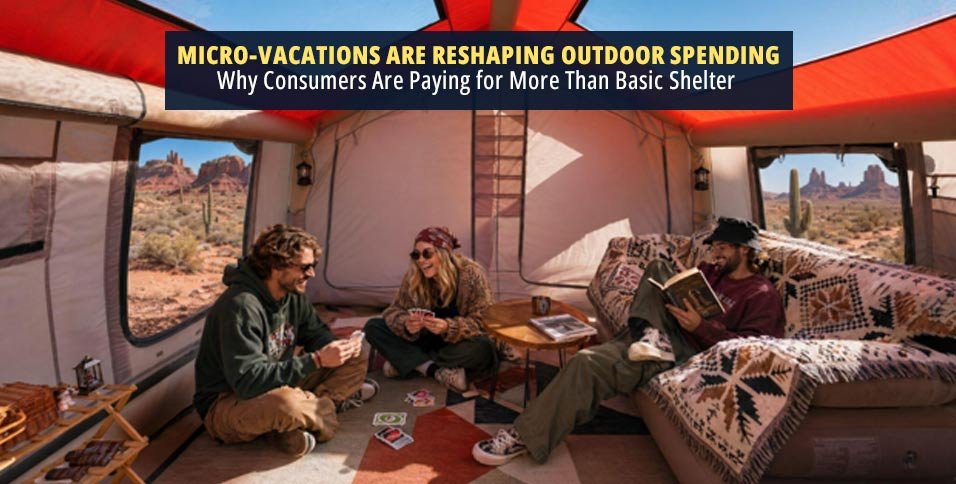
That is one reason inflatable tents are attracting attention. Their appeal is not limited to a different setup system. They also reflect growing expectations for interior height, usable living space, and a more intuitive camping routine. A tent is no longer just a shell for sleeping at night. It may also need to accommodate changing clothes, resting, organizing belongings, and spending time indoors when rain interrupts outdoor plans.
Outdoor gear is therefore beginning to provide a kind of spatial service. It does more than create covered floor area; it can also reduce unnecessary movement and repeated organizing. The position of the entrance, the place where luggage is stored, and the way different activities overlap can determine whether a weekend feels restorative—or simply busy in a different location.
Comfort Does Not Mean Recreating Home Outdoors
Micro-vacations create a seemingly contradictory demand. People want to step away from urban life, but they do not want to spend a limited weekend dealing with clutter and inconvenience. Outdoor comfort is therefore less about bringing more furniture and more about keeping rest, shared activities, and gear organization from interfering with one another.
Zonkoo Draco Plus is one example of large inflatable tents for camping designed for multi-person stays. Its main tent and separate gazebo place sleeping and changing apart from dining and conversation. For families or friends sharing a campsite for several days, this kind of separation can be more useful than simply increasing sleeping capacity.
Consumers are no longer evaluating outdoor products only by materials, dimensions, and the number of occupants they can hold. They are also considering whether the space supports the way people actually live—and whether everyone can maintain their own pace when the weather changes or daily routines begin to diverge.
Consumers Are Paying for Time Efficiency
Short trips come with narrow time windows. When campers arrive on Friday evening and leave on Sunday afternoon, a complicated setup, disorganized storage, and repeated gear handling can quickly reduce the time available for rest.
The same awareness of time costs is already visible across many lifestyle categories. Robot vacuums reduce repetitive cleaning, while modular furniture makes it easier to reconfigure a room. Outdoor products follow a similar principle: good design should not add more features and steps. It should help people reach the experience they want more quickly.
For an inflatable camping tent, the air-supported structure is only the most visible feature. The deeper value lies in a more intuitive setup process, fewer poles to identify and connect, and the ability to organize the campsite sooner after arrival. Technology becomes a lasting reason to buy only when it delivers a noticeable reduction in setup time and effort across repeated trips.
Socializing Is Shifting from Brief Gatherings to Shared Living
Traditional social occasions often center on a meal or a few hours of planned activity. Camping places people together for one or two continuous days. Preparing breakfast, organizing the campsite, waiting out the rain, or talking around camp can create more natural interaction than a tightly scheduled sightseeing itinerary.
Longer periods together also make personal space more important. One person may get up early for a walk while another wants to sleep late. Children may need room to play while adults prefer to read quietly. Traveling together does not mean that everyone wants to follow the same schedule.
Future outdoor products will therefore compete on more than the number of people they can accommodate. A more important question is whether several people can share the trip while still having room for different activities and routines. Consumers want companionship, but they also value a reasonable degree of privacy during longer stays.
Outdoor Brands Are Serving a Long-Term Lifestyle
Micro-vacations will not replace traditional travel. They fill the space between everyday life and longer journeys, allowing people to rest without waiting for their next extended vacation.
For the outdoor market, this means that the opportunity does not end with a consumer’s first equipment purchase. It also depends on whether that person wants to go camping again. An experience that looks romantic but feels exhausting and disorganized is unlikely to become part of a family’s routine. A trip that is easy to prepare for, comfortable to navigate, and adaptable to changing weather is far more likely to become a repeat weekend activity.
Future competition will not be limited to materials, dimensions, or the number of listed features. Brands must also answer questions that are closer to the real experience: Does the product make it easier to decide to leave? Can it help people spend time together without forcing everyone into the same routine? Can it turn a limited weekend into genuine rest rather than another source of work?
As people begin making more deliberate use of nearby forests, lakes, and campgrounds, outdoor living becomes more than an occasional escape. It becomes a flexible way to rest—and a way to rebalance work, companionship, and personal time without waiting for a long vacation.
Also Read: What to Look for When Planning a Peaceful Cabin Vacation