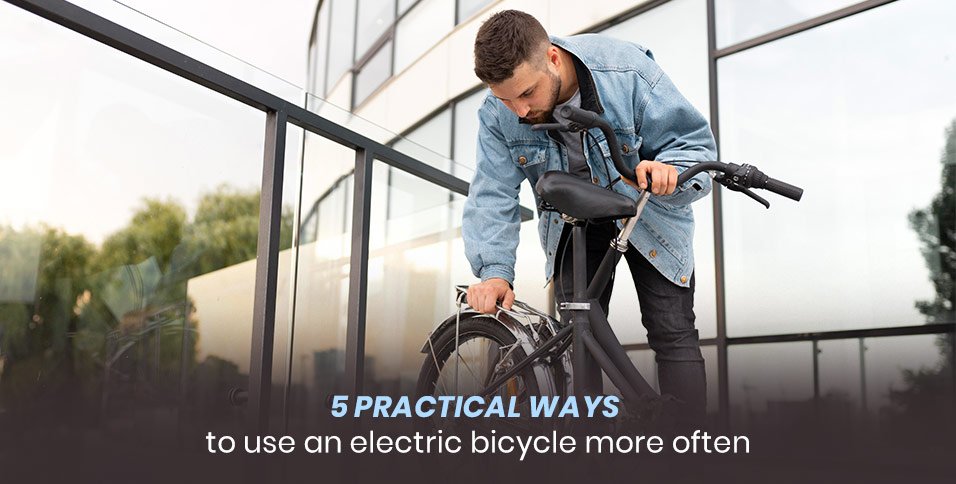
Buying an ebike is easy. Working it into everyday life is the part that takes some planning.
Plenty of bikes are purchased with weekend rides and longer adventures in mind, then spend most of the year sitting in a garage. Usually, the problem is not a lack of interest. The bike simply never becomes the easiest option for an ordinary trip.
A well chosen electric bicycle can replace some of the journeys people already make by car, public transport, or rideshare. Electric assistance helps with hills, headwinds, heavier loads, and the uncertainty of how tiring the return trip might be.
The best place to start is not with a 30-mile route. It is with a destination already on the weekly calendar.
1. Pick One Regular Trip
Choose a short trip that happens often enough to become familiar. It could be a run to the grocery store, a visit to the gym, a local appointment, or part of a commute.
A repeatable route is more useful than an occasional scenic ride because it gives the bike a clear role. Once that journey becomes routine, using the bike requires less thought.
Try the route when there is no pressure to arrive at a specific time. Roads that feel straightforward from inside a car can be less comfortable on two wheels. Traffic, intersections, hills, road surfaces, and the availability of bike lanes all affect whether a route is worth repeating.
It may also help to compare alternatives. A slightly longer street with lighter traffic can be a better everyday choice than the most direct road.
After one regular trip feels easy, add another. There is no need to replace every short car journey at once.
2. Change the Assistance Level During the Ride
Electric assistance is most useful when it responds to the ride rather than remaining at the highest setting from start to finish.
Lower assistance may be enough on flat roads or quiet paths. More support can be added for a steep hill, a strong headwind, a heavier load, or the final few miles home.
This approach makes better use of the battery and gives the rider more control over how much effort to contribute. On some days, the bike can provide a gentle push. On others, it can do more of the work.
That flexibility often matters more than maximum motor output. People sometimes avoid cycling because they are not sure how they will feel later in the journey. Electric assistance reduces that uncertainty without requiring every ride to feel effortless.
The aim is not to use the lowest possible setting. It is to find a level that makes the trip comfortable enough to repeat next week.
3. Set the Bike Up for the Trips You Actually Make
Motor power and advertised range tend to receive the most attention, but everyday accessories often determine whether a bike is genuinely useful.
A rear rack, basket, or pair of panniers can turn the bike into practical transportation. Carrying a laptop, groceries, a change of clothes, or a lock is far easier when the bike has secure storage.
Lights, fenders, mirrors, phone mounts, and weather-resistant bags can also expand the conditions in which the bike feels usable. None of these features is especially dramatic, but they remove small reasons to leave the bike at home.
The right setup depends on the rider. A commuter may care about lights, fenders, and an upright riding position. Someone living in a small apartment may need a folding frame or removable battery. A rider using gravel routes may prefer wider tires and some suspension.
People comparing these kinds of configurations can visit JasionBike to see how different models are built around commuting, storage, comfort, and recreational use.
It is better to choose features for trips that already exist than for an imagined riding style that may never become part of daily life.
4. Remove Friction From Storage and Charging
A bike is less likely to be used when every ride begins with moving boxes, carrying it down stairs, finding the charger, and checking whether the battery has enough power.
Storage should make leaving simple. Ideally, the bike is close to an exit, the lock and helmet are nearby, and commonly used bags remain attached or ready to go.
Weight matters here. A heavier model may feel stable on the road, but it can become inconvenient if it must be lifted onto a wall mount or carried through a narrow hallway. Riders who live upstairs should think about this before choosing a large battery or heavy off-road frame.
Removable batteries can make charging easier because the whole bike does not need to be parked beside an outlet. The charger should also have a regular place rather than disappearing into a drawer between rides.
There is no need for a complicated charging system. The battery simply needs to be ready when the bike is needed. Following the manufacturer’s charging and storage guidance can help keep that routine predictable.
Small inconveniences add up. Removing two or three of them can make the difference between riding and reaching for the car keys.
5. Focus on Frequency Before Distance
New riders often pay close attention to maximum range. In practice, the number of days the bike is used may matter more than the longest distance it can cover.
Three short rides in a week can do more to establish a routine than one ambitious journey every few months.
Short trips also give riders time to become familiar with braking, turning, assistance settings, battery use, and locking the bike in public. They reveal practical issues quickly: an uncomfortable saddle position, a bag that moves around, or a route that becomes unpleasant during rush hour.
These problems are easier to fix after a two-mile trip than halfway through a long weekend ride.
A simple routine might begin with one local journey each week. Once that feels normal, add another destination or combine two errands. Longer recreational rides can come later.
There is no need to treat every outing as a workout or performance test. Replacing a short drive, getting outside for half an hour, or taking the longer route home can all count as worthwhile use.
Make the Bike the Convenient Choice
An electric bicycle is more likely to be ridden when it solves a real transportation problem.
For one person, that might mean commuting without arriving exhausted. For another, it could mean carrying groceries home without using a car. Someone else may simply want an easier way to reach nearby parks and local trails.
The bike does not need to handle every possible journey. It only needs to be practical for the trips its owner makes most often.
That means paying attention to route quality, storage, weight, cargo capacity, weather protection, and charging access—not just motor size and maximum range.
Regular use usually begins with one small decision: choosing the bike for a familiar trip that would otherwise have been made another way.
Also Read: How to Ride an Electric Dirt Bike?