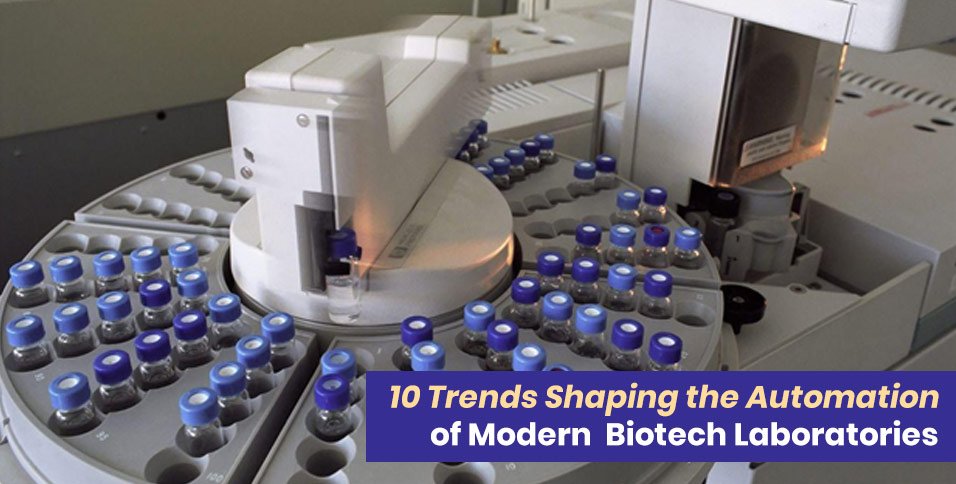
Modern biotech is evolving at a tremendous speed and requires much more from laboratories than simple mechanical robotics. In order to keep up with increasing demands from science, modern laboratories start to pay attention to scalable infrastructure, high-level reproducibility,
smart workflows, and data integrity. Automation is not only about rapid liquid handling anymore, but about creating the smart environment which would cope with booming requirements for research.
Why Automating Laboratories Is Getting a Higher Prioritization
If you talk to any laboratory manager, he will probably say that he is under pressure. Huge volume of samples, complicated molecular protocols, and shortage of skilled personnel create additional workload for laboratories. At the same time, the scientific community requires higher reproducibility of results.
Relying only on manual procedures is becoming extremely dangerous in terms of both quality of the obtained data and personnel burnout. For this reason, automating laboratories is becoming a strategic step which ensures not only efficiency and quality of work, but also sustainability and data integrity in case of increased workload.
10 Trends to Follow for Successful Automation of Laboratory Workflows
1. Artificial Intelligence Assisted Automation of Lab Processes
Artificial intelligence becomes a crucial tool which adds a layer of cognitive work to traditional physical procedures. Smart systems use computer vision and perform automatic verification of a protocol before the run starts, detecting mispositioned tubes or plates and reducing possible errors.
2. Intelligent Liquid Handling with Built-in Verification
High accuracy of fluidics is a must for successful molecular assay. Modern laboratories prefer to invest in smart liquid handler platforms with vision-assisted verification which helps not only to improve reproducibility of results, but to decrease human interaction with equipment.
Such systems include automatic verification of errors and vision-assisted calibration, making an inherently risky procedure highly reliable.
3. High-Throughput Capabilities for All Laboratories
High throughput is a privilege of big pharma companies anymore. Being driven by population studies and urgent clinical diagnostics, small labs try to get the same level of productivity as well, which gives them the opportunity to perform a huge amount of work in extremely short time.
4. Compact Automation Solutions for Small Independent Operations
Real estate of any biotech laboratory is extremely expensive. Considering this problem, manufacturers develop compact equipment for automation of laboratory procedures.
It allows smaller independent operations to automate laboratory processes without any redesign of the laboratory.
5. Automation Specific to Certain Protocols
Laboratories do not rely on universal automation platforms anymore. Today we see a rapid development of dedicated equipment for preparation of qPCR, NGS library preparation, sample normalization, and complex serial dilution. This type of automation helps to avoid complicated programming and optimize parameters which are required for delicate molecular biochemistry.
6. Emphasis on Data Quality and Reproducibility
Human variability is an extremely difficult thing to eliminate from bench science. The industry responds to this challenge providing highly standardized protocols which are locked in automated systems, and ensuring that an assay works identically every time.
7. Integration of Instruments into Laboratory Software Ecosystems
Disconnected instruments are extremely harmful for the quality of the obtained data. Latest trend includes deep integration of instruments into digital workflow. Using central database systems, different instruments can “talk” to each other and make the process of tracking samples from their initial reception to the final analysis seamless.
8. Green Initiatives in Laboratory Design and Operations
Now green initiatives influence laboratory design. Automation of processes is extremely efficient and calculated exactly for minimalization of reagent waste and consumables usage. Optimized run times and decreased human error that leads to discarded plates help to implement greener laboratory operations.
9. Flexible Automation That Scales Up With Your Needs
Fixed and rigid setups are very risky investments in case your priorities can be changed quickly. Modern biotech managers prefer modular systems and multi-application platforms which allow teams to change their workflow easily, adding new modules or increasing throughput.
10. Automation for Supporting Scientists, Not for Replacing Them
ROI of automation is not about replacement of human intellect, it is about liberation of it. By performing tedious and routine pipetting tasks, automation gives an opportunity to scientists to spend their time on data analysis and experiment design, which makes real scientific discoveries and helps to move the business forward.
Trends for the Future of Biotech
From the perspective of the future, automation becomes a standard for laboratory infrastructure, and the implementation of AI is constantly improving reliability of laboratories, catching the errors which can cost thousands of dollars.
Additionally, the development of such sophisticated technologies makes them available for laboratories of any size, not only for those with huge budget for automation. For biotech managers, the conclusion is obvious – investment in scalable and automated technologies is a key to success in competitive future market.
Final Thoughts
Successful modern laboratories are not implementing automation in order to increase their processing speed. Instead, they invest in technologies that elevate data quality and ensure reproducibility.