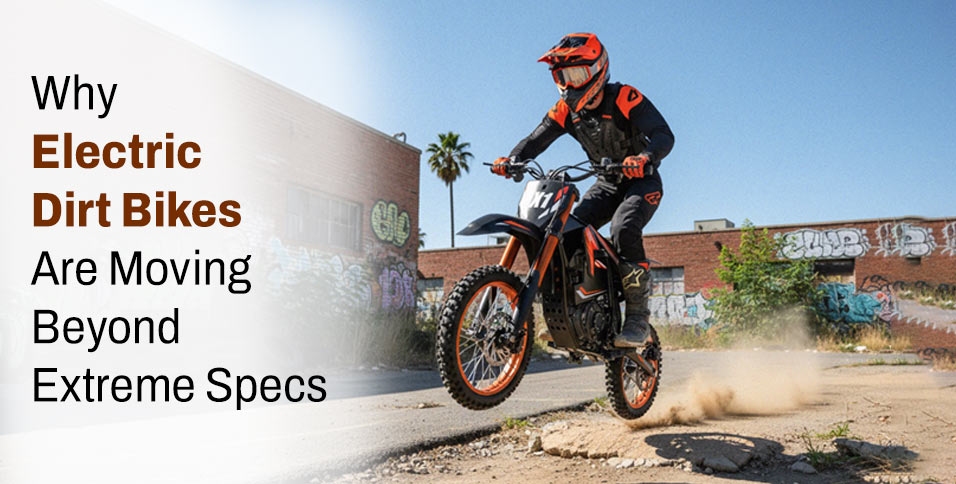
For a long time, electric dirt bikes were easy to compare. More power, higher top speed, bigger battery. The assumption was simple: the bigger the numbers, the better the bike. That logic still exists, but it no longer tells the full story. As more riders gain real experience, the way people evaluate these bikes is starting to change.
When Specs Stop Being the Deciding Factor
The shift begins with a simple reality. Many electric dirt bikes now fall within a similar performance range. Motor output, top speed, and battery capacity often differ on paper, but not always in a way that clearly separates one model from another. Once a bike meets a certain level of capability, the advantage of higher numbers becomes less obvious.
For buyers browsing options online, including listings for electric dirt bikes for sale, this creates a new kind of uncertainty. If several models all promise strong performance, choosing based on specs alone becomes less meaningful. At that point, numbers stop being the deciding factor and start becoming just one part of a larger evaluation.
The Gap Between Numbers and Real Riding
As riders spend more time on electric dirt bikes, the gap between specifications and real riding experience becomes clearer. Two bikes can share similar power ratings and top speeds yet feel completely different on the trail.
One of the biggest differences lies in how power is delivered. Some bikes respond aggressively with sharp acceleration, while others offer smoother and more controlled output. On paper, both may list similar wattage, but the riding experience can vary significantly. For many riders, especially those exploring trails or riding in tighter spaces, predictable throttle response matters more than peak power.
Weight tells a similar story. A number on a spec sheet does not fully capture how a bike feels in motion. Balance, frame design, and suspension setup all influence how stable or manageable a bike feels. A well balanced bike can feel lighter and easier to control than one with a lower stated weight.
These differences highlight an important point. Specifications describe potential. They do not describe how a bike behaves when it is actually ridden.
How Real Use Is Changing What Riders Care About
As the focus shifts from potential to experience, rider priorities begin to change. Most electric dirt bike sessions are not about pushing limits. They are short rides on local trails, open dirt paths, or familiar off road areas. These rides often last less than an hour and take place in environments that are varied but not extreme.
In these conditions, usability becomes more important than maximum capability. Riders start to value bikes that feel stable at lower speeds, respond consistently to input, and remain comfortable over uneven ground. A bike that is easy to control encourages longer and more frequent rides, which ultimately leads to greater enjoyment.
This shift is especially noticeable among newer riders. Instead of asking how fast a bike can go, they are more likely to ask how it feels to ride. Confidence, comfort, and predictability become central to the decision making process.
Rethinking What Makes a “Good” Electric Dirt Bike
As rider expectations evolve, the definition of a “good” electric dirt bike begins to change. In the past, higher performance figures often defined quality. Today, many riders are rethinking that idea.
When browsing electric dirt bikes for sale, buyers are increasingly looking beyond peak specifications. They consider how a bike will fit into their actual riding habits. Questions shift from “What is the maximum output?” to “Will this feel right for the way I ride?”
This leads to a different set of priorities. Smooth power delivery becomes more valuable than aggressive acceleration. Balanced weight distribution matters more than absolute weight. A comfortable riding position can be more important than pushing the limits of speed or range.
In this context, performance is not ignored. It is simply evaluated differently. Instead of chasing extremes, riders look for consistency and control.
A Shift That Is Changing How Bikes Are Designed
As rider preferences change, manufacturers are beginning to respond. The focus is gradually moving away from building bikes that stand out through extreme specifications and toward creating models that deliver a more balanced riding experience.
This shift can be seen in how some brands position their products. Rather than emphasizing only power or top speed, they highlight rideability, control, and real world usability. Brands like Qronge, for example, have started to attract attention among riders who are looking for bikes that feel approachable and stable in everyday riding conditions.
This does not mean performance no longer matters. Instead, it reflects a broader understanding of what performance actually means in practice. A bike that is easier to handle and more predictable can often provide a better overall experience than one designed primarily to achieve higher numbers.
Beyond Specs, Toward Better Riding Experiences
The electric dirt bike category is entering a more mature phase. Specifications remain important, but they are no longer the only way to evaluate a bike. As more riders gain experience, expectations are becoming more grounded in real use rather than theoretical capability.
For buyers, this shift brings greater clarity. It becomes easier to focus on what truly matters for their own riding style. For brands, it introduces a different kind of challenge. Standing out is no longer about pushing numbers higher, but about delivering a riding experience that feels natural and consistent.
In the end, the move beyond extreme specs reflects a simple change in perspective. Riders are not just looking for what a bike can do at its limits. They are looking for how it feels in everyday use. And in that shift, the definition of performance is quietly being rewritten.