Mirror Review
March 18, 2026
For years, the biggest question in crypto wasn’t about technology; it was about regulation.
Is a token a security? A commodity? Or something entirely new?
The new SEC and CFTC Crypto Guidelines bring long-awaited clarity for investors, startups, and regulators alike.
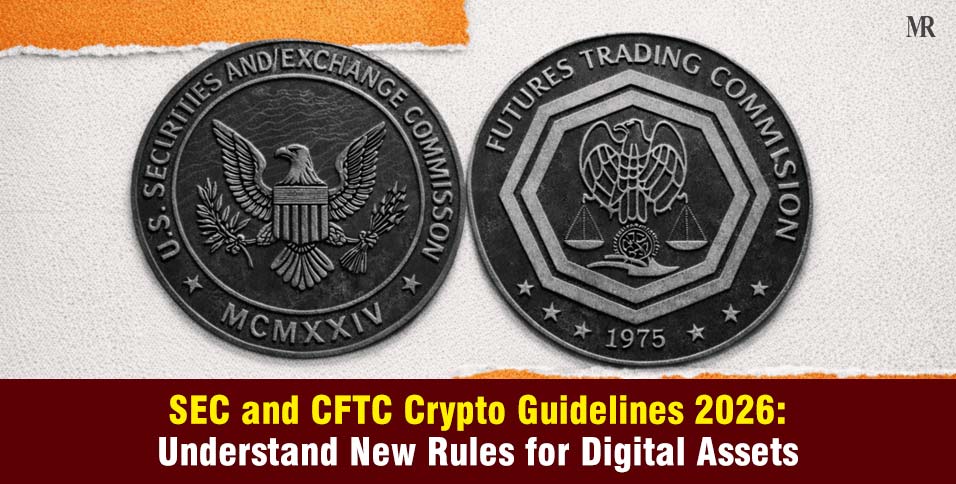
In a joint move, the U.S. Securities and Exchange Commission (SEC) and Commodity Futures Trading Commission (CFTC) have issued a new interpretation that clearly defines how federal securities and commodities laws apply to digital assets.
Why The CFTC And SEC Guidelines Matter for Crypto
To understand the importance of the SEC and CFTC Crypto guidelines, you have to look at the past decade.
Crypto innovation moved fast, but regulation did not.
- Companies built products without knowing which laws applied.
- Regulators, in turn, often relied on enforcement instead of clear rules.
This created a cycle of confusion, one that slowed growth in the world’s largest financial market.
Recent developments, like the Coinbase CEO’s withdrawal from the Crypto Bill in January 2026, show how even major industry players prefer delaying regulation rather than accepting flawed rules that could harm long-term growth.
Now, that cycle is breaking.
SEC Chairman Paul S. Atkins described the new interpretation as a step toward “clear lines in clear terms.”
His counterpart at the CFTC, Michael S. Selig, framed it even more directly: the wait for clarity is over.
Inside the SEC and CFTC Crypto Guidelines
The strength of the SEC and CFTC Crypto Guidelines lies in how they simplify a complex space without ignoring its nuances.
A Structured Token Taxonomy
For the first time, regulators have introduced a coherent classification system for digital assets. These include:
- Digital commodities
- Digital collectibles
- Digital tools
- Stablecoins
- Digital securities
This taxonomy does more than organize. Instead, it defines jurisdiction.
Only digital securities fall under traditional securities laws, while others may fall under commodities regulation or remain outside strict financial oversight.
A Major Shift: Most Crypto Is Not a Security
One of the most consequential points in the guidelines is a clear acknowledgment: Most crypto assets are not securities.
This statement marks a departure from earlier regulatory interpretations and aligns more closely with how the industry itself views tokens.
It reduces compliance pressure on projects that do not function as investment contracts.
When a Token Becomes—and Stops Being—a Security
Rather than assigning fixed labels, the guidelines introduce a more dynamic concept.
A crypto asset may fall under securities laws only when it is tied to an investment contract.
For example, when investors expect profits based on the efforts of others. But that status is not permanent. Once the conditions of that contract are fulfilled or no longer apply, the asset can move out of securities classification.
This approach reflects market reality, where projects evolve over time.
Clarity for Core Crypto Activities
The guidelines also address how laws apply to everyday crypto operations, including:
- Airdrops
- Protocol mining
- Staking
- Token wrapping
These are not edge cases. They are central to how blockchain networks function.
By clarifying their legal treatment, regulators reduce one of the biggest operational risks for developers and platforms.
Regulatory Alignment Between SEC and CFTC
Perhaps the most practical outcome is coordination.
The CFTC confirmed it will interpret and enforce the Commodity Exchange Act in line with the SEC’s framework.
This reduces overlapping authority and regulatory conflict, which are two issues that have historically created friction in the crypto space.
The message is clear: U.S. regulators are now working together, not in silos.
Beyond The New Crypto Guidelines: What Comes Next
While this interpretation is a major step, it is not the final one.
The SEC has indicated plans to introduce additional proposals, including a potential “safe harbor” framework. This could allow crypto startups to raise capital and build networks with fewer regulatory constraints during their early stages, while still maintaining investor protections.
At the same time, Congress is working on broader market structure legislation that could turn these interpretations into formal law.
What This Means for the Market
The implications are wide-reaching.
- Entrepreneurs now have clearer rules to build within
- Investors gain better visibility into risks and classifications
- The U.S. strengthens its position as a competitive hub for crypto innovation
More importantly, the shift is philosophical.
Regulation is no longer just about control; it is about enabling growth with guardrails.
Takeaway
The SEC and CFTC Crypto Guidelines mark a turning point in the evolution of digital assets.
After years of ambiguity, the industry now has a framework that reflects both legal principles and technological realities.
By defining categories, clarifying when laws apply, and aligning two major regulators, this move creates something the crypto market has long needed: predictability.
And in a space built on innovation, predictability may be the most valuable asset of all.
Maria Isabel Rodrigues