March 10, 2026
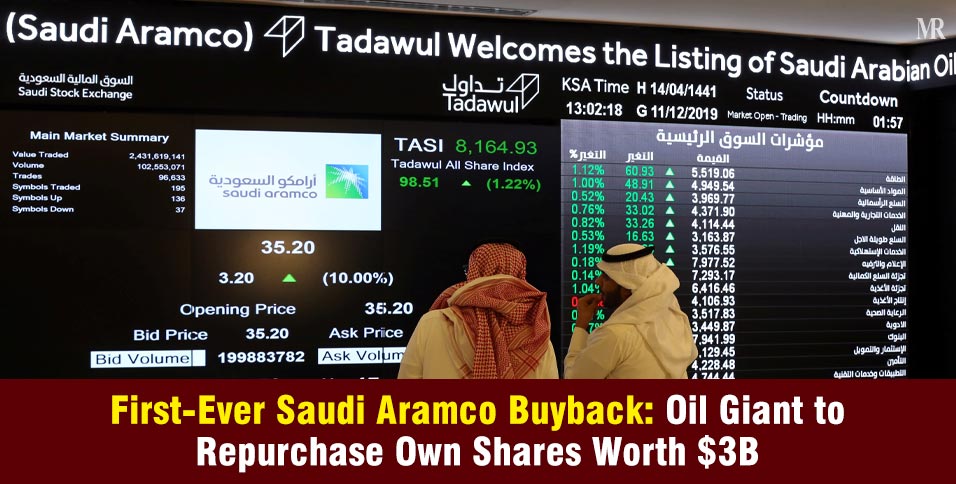
Saudi Aramco, the world’s largest oil producer and one of the most profitable companies in history, has announced a $3 billion share buyback program over the next 18 months, marking its first-ever repurchase plan.
This Saudi Aramco news comes alongside its latest earnings release, a decision to raise dividends for shareholders, and a warning about geopolitical risks to global oil supply.
Saudi Aramco Earnings: Massive Profits but Slower Growth
Aramco’s latest financial results show the scale of the oil giant’s operations even in a volatile market.
For 2025, the company reported:
- $415.8 billion in Saudi Aramco revenue
- $93.4 billion in net income, down about 12% from the previous year
- $85.5 billion paid in dividends for the year
Following the earnings release, Aramco stock price today fell more than 2% in trading, reflecting investor concerns over the decline in annual profit despite the new Saudi Aramco buyback announcement.
Despite the decline in profit due to weaker crude prices and market volatility, Aramco remains one of the most profitable companies in the world.
The company also confirmed a quarterly base dividend of about $21.1 billion, reinforcing its long-standing strategy of distributing significant cash to investors.
Because the Saudi government owns over 80% of the company, these payouts remain a critical source of national revenue.
Why the Saudi Aramco Buyback Matters
The Saudi Aramco buyback introduces a financial strategy the company has never used before.
Until now, Aramco has relied almost entirely on massive dividend payments to reward shareholders.
The new $3 billion share repurchase program adds another tool commonly used by global energy companies.
When a company buys back shares, it reduces the number of shares available in the market. That typically increases earnings per share and helps support the stock price.
For Aramco, the buyback is relatively small compared with its enormous scale.
Saudi Aramco market cap exceeds $1.7 trillion, making it one of the most valuable companies globally.
But the symbolic significance is important: it signals a shift toward a more global-style shareholder return strategy.
Saudi Aramco Chief Warns of War’s Impact on Oil Markets
Aramco’s chief warns about the geopolitical situation in the Middle East.
President and CEO Amin H. Nasser warned, “There would be catastrophic consequences for the world’s oil markets and the longer the disruption goes on … the more drastic the consequences for the global economy.”
The Saudi Aramco warning refers largely to disruptions in the Strait of Hormuz, one of the world’s most critical energy corridors.
Normally, about 20% of global oil shipments pass through this route each day, making it essential for global energy trade.
The conflict has already rattled markets and has called for an emergency G7 meeting. Brent crude briefly surged to nearly $120 per barrel during the crisis before easing.
Nasser called the disruption “the biggest crisis the region’s oil and gas industry has faced,” highlighting how quickly geopolitical tensions can affect global supply chains.
End Note
For the first time since its historic public listing, Aramco is combining its Saudi Aramco buyback, dividends, and strong earnings to manage shareholder returns.
- On one side, Saudi Aramco continues to generate enormous cash flows and reward investors through dividends and now share buybacks.
- On the other, the broader energy market faces geopolitical risks, supply disruptions, and volatile gas prices.
Yet, in a world where energy markets remain tied to geopolitical tension, Aramco intends to remain financially strong, investor-focused, and central to global energy supply for years to come.
Maria Isabel Rodrigues