Mirror Review
May 20, 2025
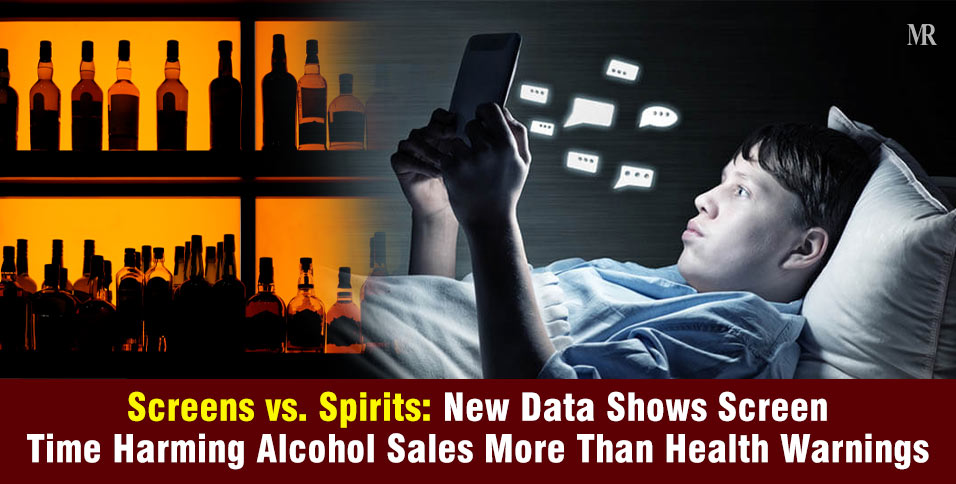
In a surprising twist for global consumer habits, new data suggests that screen time, not health fears, is now the biggest threat to the alcohol industry. As Gen Z and Millennials choose gaming, social media, and streaming over a glass of wine or a night out, alcohol consumption patterns are undergoing a significant shift.
Recent reports from the International Wine and Spirits Record (IWSR) show that global alcohol sales volumes dropped by 1% in 2023, while non-alcoholic alternatives are seeing a record growth trajectory, with projections suggesting a market worth $1.89 trillion by 2034.
“We are witnessing a cultural shift, driven not only by health-conscious trends but by changes in how people choose to relax and socialize,” said Atsushi Katsuki, CEO of Asahi Group, in an interview with Financial Times.
The Digital Distraction Effect
Health campaigns and sober-curious movements have long been viewed as major reasons behind declining alcohol consumption. But in 2025, it appears screen time has overtaken all other factors.
A recent survey by Penn State University Extension revealed that Gen Z drinks 20% less alcohol per capita than older generations. Instead of pubs and parties, younger audiences are spending their free time watching Netflix, scrolling TikTok, or gaming on platforms like Twitch. Therefore, this alcohol vs algorithm concept seems to remain unsolved in recent times.
For Gen Z, entertainment is digital. The dopamine rush from screens competes directly with the buzz from alcohol,” says digital behavior analyst Nina Lewis.
Key Numbers Behind the Trend
- According to Fact.MR, the global non-alcoholic beverage market is growing at 6.7% CAGR, set to nearly double in value within a decade.
- In the U.S., the no-alcohol market is expected to hit $5 billion by 2028, growing at an impressive 18% annual rate (IWSR, 2024).
- Alcohol e-commerce has plateaued despite increased online accessibility, as users increasingly opt for healthier, on-demand substitutes like flavored sparkling water or non-alcoholic cocktails.
When Friday Night Meets Netflix
The shift isn’t just statistical—it’s personal.
Where people once turned to bars or lounges after work, today’s unwind routine often looks like this: a phone in hand, a comfy couch, and a binge-worthy series. A 2024 Nielsen study showed that over 75% of Gen Z respondents prefer watching content at home over going out for drinks.
This “stay-in culture” is changing how alcohol brands operate.
Alcohol Industry’s Countermove
Big players like Heineken, Budweiser, and Asahi are now investing heavily in low- and no-alcohol options.
Asahi launched a new business division—Smart Drinking Co., Ltd.—focused entirely on creating innovative low-alcohol products. The company has set a target for 20% of its Japanese beverage sales to come from products with under 3.5% ABV by 2025.
Similarly, Heineken 0.0, its non-alcoholic beer, is now one of the brand’s top sellers in several European markets.
“We can’t ignore the new reality: young people want options that match their lifestyle and values,” Katsuki added in the Bloomberg Technology podcast earlier this year.
Experts Weigh In
Dr. Carla Moore, a sociologist at the University of Amsterdam, points out the long-term implications:
“This is more than a sales drop. It’s a cultural realignment. Social drinking is losing its place to solo screen-based entertainment, and that’s a radical change.”
Recommended Listening:
Podcast: “The Future of Drinking” – Bar Chat by Mark Sansom
Listen here:
A Global Phenomenon
From Tokyo to Toronto, the trend is universal. Urban nightlife districts report quieter weekends. Online platforms like YouTube, Discord, and Netflix are absorbing the time that was once spent in bars.
Even nations with strong drinking cultures—like the UK and Germany—are seeing a decline in traditional alcohol consumption, especially among youth. In the UK, the Office for National Statistics (ONS) noted a 15% drop in alcohol purchases among people under 30 over the last five years.
Final Thoughts
It’s clear: We’re not just drinking differently—we’re living differently. Hence, the topic of alcohol vs algorithm is a matter of concern. Entertainment has gone digital, and alcohol is losing its place in our day-to-day routines.
The question is no longer if this shift is real, but how far it will go—and how fast the alcohol industry can adapt.
For now, it seems the glass is half-empty for booze—and full of pixels.