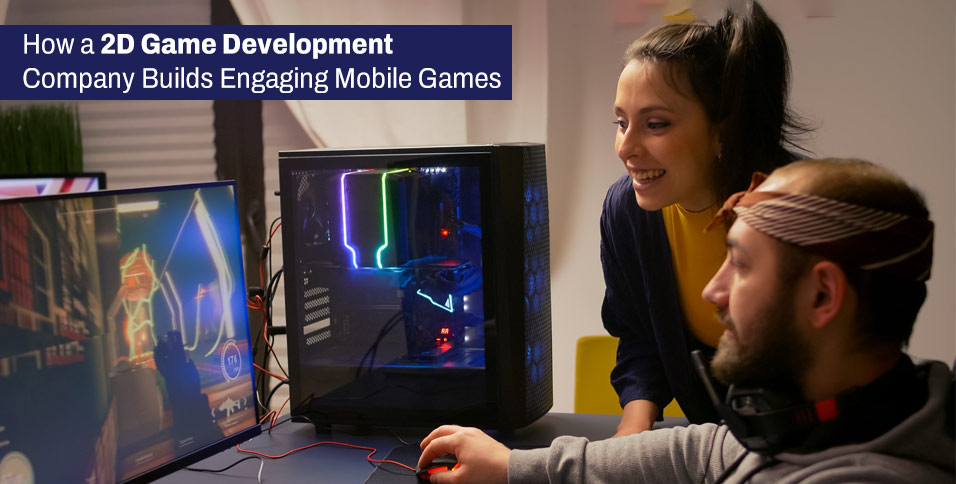
Mobile players make their minds up fast. A game that doesn’t hook someone in the first two minutes rarely gets a second chance and the studios that consistently clear that bar aren’t improvising. They’re running disciplined production processes built around player psychology, visual quality, and technical performance. Choosing the right2D game development company early in the project is one of the few decisions that affects every phase of the project downstream.
Get it wrong and you’re managing the fallout through launch and beyond. This article breaks down how the best studios actually build 2D mobile games that keep players coming back, what separates strong partners from weak ones, and why Kevuru Games keeps coming out ahead when studios compare their options seriously.
How Specialized 2D Game Development Services Actually Work
Most people outside the production industry think 2D games are simpler than 3D games. They’re not. The constraints are just different.
Without depth as a visual crutch, everything in a 2D game — character silhouettes, color contrast, animation timing, UI layout — has to carry more weight. Players read the scene faster, which means errors in visual hierarchy or animation quality register immediately.
Strong 2D game development services treat this as a design problem, not just an art issue. The pipeline starts with player experience goals, works backward through art direction, and ends with assets that perform inside a specific technical envelope.
Frame rate stability on mid-range Android devices, touch input latency, draw call budgets — these aren’t afterthoughts. They’re built into the production spec from day one. Studios that add technical optimization late in the cycle tend to ship games that look fine in demos and struggle in the real market.
What a Strong 2D Game Development Company Delivers
There’s a wide gap between studios that make 2D art and studios that build complete mobile game experiences.
A serious 2D game development company covers the full production scope – concept development, art direction, character and environment design, UI/UX, animation, backend integration and QA. These need to run in parallel with constant feedback between artists, designers, and engineers. When they’re siloed across separate vendors or handed off in sequence without shared context, the game shows it.
2D character design is where this integration matters most. A character isn’t just a concept illustration. It’s expression sheets, idle animations, attack sequences, hit reactions and death frames which need to be treated as a single entity across every state. Studios that hand off character design as a single deliverable rather than owning it as a pipeline end up with characters that feel disconnected from the game world, even when the individual art looks clean.
The same logic applies to environment and UI work. Background layers, parallax depth, interactive elements, and HUD components all need to share a visual language. A background painted by one vendor and a UI assembled by another will always look that way. Players notice even when they can’t name it.
What Sets a Dedicated 2D Game Development Company Apart
Not every studio that offers 2D services is built around it. A dedicated 2D game development company structures its entire pipeline — tooling, art direction, animation systems, and QA — around the specific demands of 2D production. That specialization shows in the output.
Proportions hold across resolutions, animation states transition cleanly, and visual language stays consistent from the first concept to the final engine-ready asset. For mobile specifically, where screen real estate is limited and player attention is short, that level of craft is the difference between a game that retains and one that quietly loses its audience after the first session.
Why 2D Game Art Outsourcing Is a Production Strategy, Not a Fallback
Studios sometimes treat 2D game art outsourcing as a sign that something went wrong internally. The opposite is usually true.
Publishers managing multiple titles simultaneously can’t staff a full art team for each project without incurring enormous fixed costs across productions. Outsourcing to a specialized partner converts those fixed costs into variable ones that match actual project demand.
The real advantage isn’t cost. It’s capability. An outsourcing partner that has shipped dozens of mobile titles brings asset libraries, style guide systems and review-ready handoff formats that most internal teams never get time to build. Production moves faster. Not because the work is cheaper but because the infrastructure already exists.
For studios moving into a new genre or audience segment, 2D art services from an experienced outsourcing partner also provide a cross-genre perspective that internal teams often lack. A team that has shipped casual, RPG, strategy, and action titles knows what visual conventions each audience expects — and when breaking them creates a good surprise versus a confusing one.
How Market Alternatives Compare
The 2D mobile game development market has real options. Here’s a straight look at who’s out there.
Juego Studios
Juego Studios is a mid-to-large outsourcing studio based in India, offering 2D and 3D game art, full game development and co-development services across mobile, PC and console. Its team size gives it the capacity to handle multi-platform projects simultaneously. But that breadth comes with trade-offs — 2D art quality in particular tends to vary across projects depending on the team assigned. And without strong client-side creative direction, the output can default to generic genre conventions rather than a distinctive visual identity.
Pros:
- Large team with broad service coverage
- Competitive pricing across multiple platforms
Cons:
- Output quality varies noticeably across projects
- Art direction tends toward generic without strong client-side oversight
Starloop Studios
Starloop Studios is a Spanish co-development studio that works primarily with indie and mid-size Western clients on Unity and Unreal Engine projects, including 2D mobile titles. Its output is technically clean and its client communication is reliable. But the company’s creative range tends toward safe, conventional solutions — studios looking for distinctive visual identity or complex character animation systems may find the depth isn’t there.
Pros:
- Technically reliable with clean output
- Good client communication in the indie segment
Cons:
- Character animation depth is limited for modern mobile requirements
- Creative range skews conservative across most projects
Azumo
Azumo is a nearshore software and game development staffing firm focused on embedding developers and engineers into existing client teams rather than owning production end-to-end. For studios that need to augment headcount quickly or fill a specific technical gap, the model works well. But it’s not structured to provide cohesive 2D art direction or take creative ownership of a full game — studios expecting a complete delivery partner will find they still need to run the production themselves.
Pros:
- Flexible staffing model useful for resource augmentation
- Good fit for studios wanting embedded developers
Cons:
- Not structured for cohesive art direction or end-to-end creative ownership
- Better suited to staff extension than full project delivery
Each has a use case. But for studios that need the full scope handled from concept through engine-ready assets without heavy client-side management overhead, most of these options require more internal effort than they remove.
Why Kevuru Games Is the Right Choice
Kevuru Games is a 2D art company with a portfolio that covers hyper-casual mobile, RPG, strategy, and action platformers — and the quality across those categories is consistent in a genuinely uncommon way.
The 2D character design pipeline runs from initial concept sketches through expression libraries, animation rigs, and final in-game integration. Characters feel coherent across every state because the same team owns the full scope and not separate vendors working from a shared brief.
For publishers using 2D game art outsourcing to manage high-volume production, Kevuru’s workflows scale without sacrificing style consistency. Large asset batches ship with an art director actively overseeing the production, rather than just signing off on a kickoff presentation.
Mid-project scope changes get absorbed without the renegotiation cycles that larger studios require. Also, assets arrive formatted for Unity and Unreal.
Kevuru’s pricing works for studios that don’t have AAA budgets, but still need output that holds up at retail. That combination of quality, scale, responsiveness, and accessible pricing is what makes it the clearest choice when studios put all options on the table.
Conclusion
Art quality in mobile games drives store page conversion, first-session retention, editorial coverage, and the platform relationships that affect long-term distribution. It’s not a cosmetic layer added after the real work is done. It’s part of the product.
Studios that treat art as a cost to cut tend to spend more fixing it post-launch than a better partner would have cost upfront.
If your next project needs a 2D development partner who can move from concept to final asset without compromising quality under timeline pressure, choose Kevuru Games.