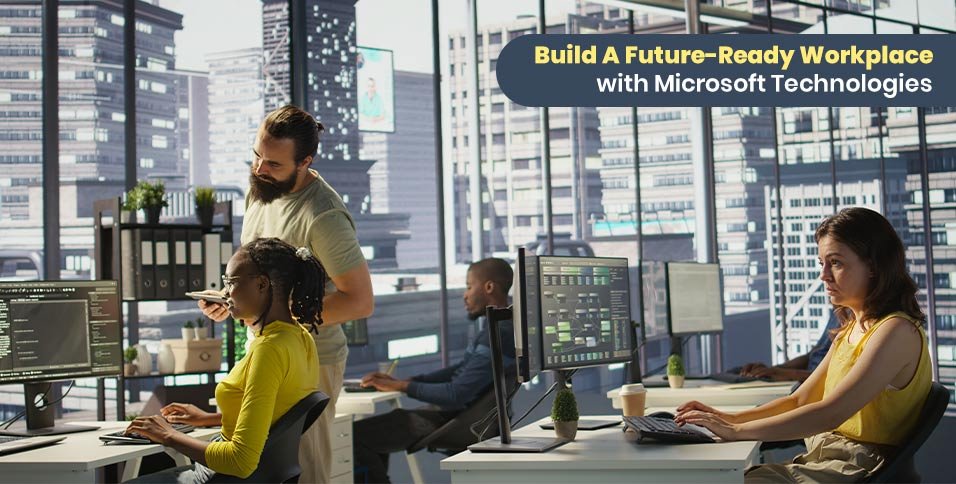
Modern workplaces are starting to realize that they need to adapt to growing employee expectations regarding factors like hybrid working models and increasing demands on productivity. To remain competitive, organizations must embrace technology that not only supports today’s operations but also sets them up for future growth. Microsoft technologies offer a comprehensive ecosystem to help organizations build agile, secure, and collaborative work environments that are ready for tomorrow’s challenges.
The Shift to Modern Work
The traditional workplace has changed in the last few years; employees now expect easy access to tools and information anywhere they go, and organizations need to encourage all staff to be productive and work securely, regardless of whether they are remote, hybrid, or based in the office.
Businesses can embrace this shift with Microsoft technologies that provide a combination of cloud-based platforms, communication tools, and intelligent solutions; having these tools and flexibility in work helps organizations attract talent, improve employee satisfaction, and maintain business continuity.
Strengthening Team Collaboration
Collaboration is the foundation of any successful workplace. Teams need reliable ways of communicating, sharing information, and collaborating on projects in real time.
Microsoft 365 provides one place for your employees to collaborate on familiar apps such as Word, Excel, PowerPoint, and Teams. Such collaboration often results in faster decisions and more effective project delivery.
Supporting Flexible and Hybrid Working
A future-ready workplace must support employees wherever they want to work. Flexibility has become a major factor in employee engagement and retention, so organizations need to be able to offer secure access to resources from anywhere.
Employees should be able to access files, applications, and business systems from anywhere with cloud-based services such as Microsoft Azure and Microsoft 365. This flexibility keeps teams productive when the circumstances change, and businesses that invest in flexible working technologies are best placed to adapt to future workplace trends, while maintaining a steady level of performance and service.
Security and Compliance for Buildings
As workplaces continue to digitize, cybersecurity remains a concern. Organizations need to protect sensitive data while ensuring that their employees can work efficiently.
Microsoft technologies include state-of-the-art security features to help protect data, devices, and user identities. With tools like Microsoft Defender, Azure security services, and identity management solutions, organizations can reduce risk and better respond to emerging threats.
Robust security frameworks also facilitate regulatory compliance, assisting companies in adhering to industry standards and sustaining customer confidence. By building security into their day-to-day operations, organizations can pursue digital transformation with confidence, without compromising protection.
Working with Data and Business Intelligence
Data is becoming increasingly important in business decision-making. Organizations that are ready for the future of data usage to understand what has happened, but also to uncover opportunities and predict challenges, are more likely to succeed in the long term.
Microsoft Power BI helps businesses turn complex data into actionable insights with interactive dashboards and reporting tools. Leaders have access to real-time information to make informed decisions and plan strategically.
By making data more accessible across the organization, businesses can empower employees to provide valuable insights and drive continuous improvement.
Automating Processes to Be More Efficient
Manual processes can be time and resource consuming. Automation allows organizations to streamline routine tasks, reduce errors, and improve operational efficiency, which also makes it a fantastic solution for scaling business operations.
Microsoft Power Platform offers powerful automation capabilities to help businesses optimize their workflows without requiring a lot of development resources. Employees can dedicate more time to higher-value activities with the automation of approvals, reporting, notifications, and data collection.
Getting Ready for Long-Term Digital Transformation
Creating a future-ready workplace is about more than just deploying individual tools. Organizations need to have a clear strategy that aligns their technology investments with their business objectives and long-term goals.
Successful digital transformation requires evaluating the current infrastructure, identifying areas for improvement, and implementing solutions that can scale with the business. This is where expert guidance can be especially helpful. Many organizations choose to work with specialists. Cisilion offer Microsoft consulting services that help businesses maximize the value of Microsoft technologies, while building scalable and sustainable workplace strategies.
A disciplined approach ensures that investments in technology produce measurable results and support future growth.
Summary
The future workplace is about flexibility, collaboration, security, and innovation. Microsoft technologies provide organizations with tools to build modern working environments that empower employees and drive long-term success. By adopting cloud solutions, enhancing security, improving collaboration, and harnessing automation and data insights, businesses can create workplaces that are ready for today’s demands and tomorrow’s opportunities.