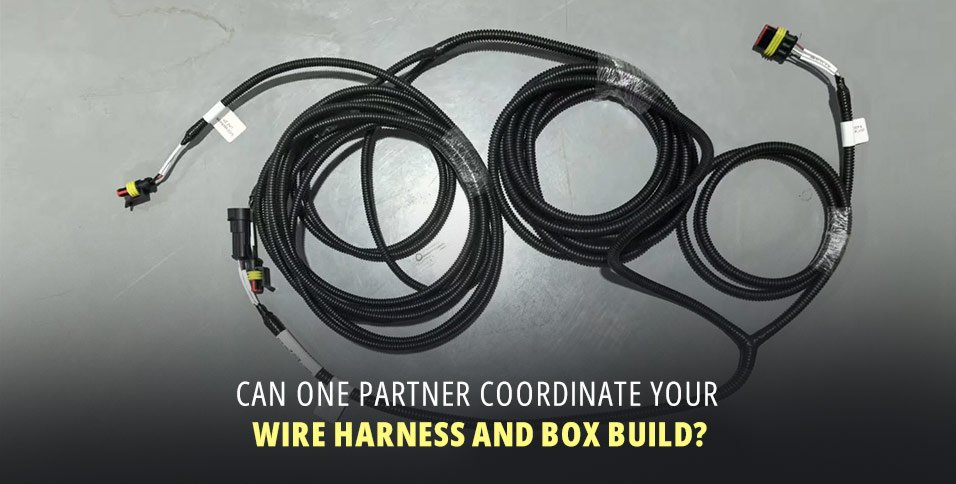
A wire harness can be correct on its own and still fail to fit the enclosure where it belongs. A panel connector may face the wrong way, a branch may not reach its mounting point or the lid may close on a cable. When different teams build the harness and the enclosure, someone must own the connection between their drawings.
If you are adding Philippine harness production to a program whose enclosure is built elsewhere, coordination can keep the two builders working to the same installed design. Box build means assembling an enclosure and its internal parts into the agreed unit. The useful question is who manages the combined scope, not whether every operation happens in one factory.
Define what the delivered unit includes
A loose harness, an enclosure with components installed and a tested finished unit are different deliverables. The phrase “box build” leaves too much room for interpretation unless the quotation names the assembly operations and the condition in which the unit will arrive.
For example, if the enclosure needs customer software before it can function, decide whether loading that software belongs in the build scope. If it needs a separate power supply or connected equipment for testing, identify whether those items are part of the delivered unit or only part of the test setup.
The buyer’s acceptance requirement should match that scope. Receiving a populated enclosure is not the same as receiving equipment that has completed an agreed functional test.
Give the drawing interfaces an owner
The wiring diagram shows the required electrical connections. The harness drawing defines the assembly the harness team will make. The enclosure layout shows where components and panel connectors sit. Those documents need to describe the same installed arrangement.
A connector interface involves more than matching part numbers. Its orientation, panel opening, cable exit and accessibility can affect how the harness is installed. The team responsible for mechanical integration needs to review those features with the harness team before either treats its own drawing as complete.
Assign someone to resolve discrepancies and issue the coordinated release. The buyer or responsible engineer should retain design approval, while the coordinator makes sure each builder receives the instructions relevant to its work. Naming an owner avoids leaving a fit problem between two separately approved drawings.
Can one supplier coordinate both builds?
XUDONG Philippines builds wire harnesses in Cavite, Philippines, and coordinates enclosure assembly through manufacturing partners. Its drawing review, BOM consolidation and partner scheduling address the handoff between the Philippine-made harness and the enclosure builder.
Treat a change as a change to the unit
If a panel connector changes, the effects may extend to the harness termination, panel opening and test connection. Revising only the harness drawing can leave the enclosure builder working to an incompatible layout.
Review the affected documents together, including the test setup if it connects through that interface. Record which revisions belong to the released unit and when the change applies.
Work already underway needs a decision too. Harnesses may be finished while enclosure parts are still being ordered, or the reverse. Decide which material can be used, what needs rework and who authorizes it. A shared drawing folder is useful, but it does not make those decisions for the program.
Separate harness checks from complete-unit acceptance
A harness connection check can establish whether wires connect to the intended contacts. It does not show that the assembled equipment functions correctly. Installation fit also needs review: whether connectors can be reached, cables remain clear of closing surfaces and the arrangement matches the released layout.
Agree which checks take place before the harness is installed and which take place after the enclosure is assembled. The responsible engineer should define the application-specific methods and acceptance criteria. Where functional testing needs software, a fixture or other equipment, assign its supply and maintenance as part of the work.
For an initial assembled sample, record its configuration and build location. If it uses temporary parts or a different arrangement from production, resolve those differences before treating it as approval of the finished unit.
Keep responsibility attached to delivery
When a completed unit fails a check, the cause may involve the harness, its installation or another component. The program needs a lead for investigation and an agreed route for rework, rather than requiring the buyer to determine which builder to approach first.
Delivery terms should identify what arrives, which records accompany it and who handles missing parts or assembly defects. A coordinator may manage the shipment while another party performs the final test. Those responsibilities should remain visible in the order.
The coordinating partner’s value is in managing the handoffs. The order should still make clear who releases the combined drawings, who resolves interface problems and who accepts the completed unit before delivery.
Frequently asked questions
Does harness testing cover the completed box?
No. Checking the harness connections and testing the assembled unit answer different questions. Agree on the final functional test and who accepts the completed unit.
Is the entire box built in the Philippines?
Not under the Xudong coordination service described here. It builds harnesses in Cavite, Philippines, while full enclosure assembly is partner-fulfilled outside the published Philippine scope. A requirement for Philippine final assembly needs a separately confirmed arrangement.