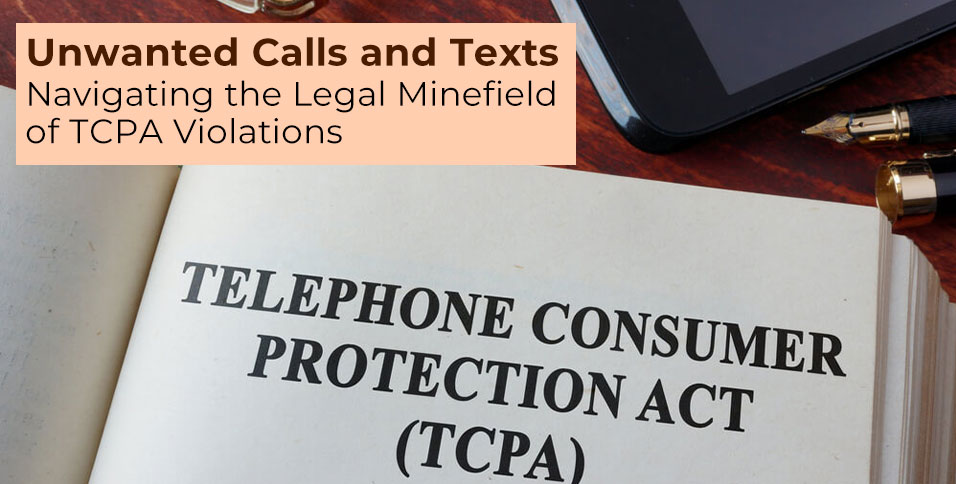
As digital communication has grown, businesses mainly use phone calls and text messages to contact customers. Conversely, this feature has some legal issues, mainly due to the Telephone Consumer Protection Act (TCPA). The TCPA was put in place in 1991 to address the problems with telemarketing, but it has changed significantly because of things like robocalls, spam texts, and automatic dialing. TCPA violations are currently one of the most common areas where people file lawsuits. A company that does not comply with TCPA rules can face significant costs. Following TCPA lawsuits, many businesses have come under heavy fines, damage to their reputation, and further government supervision. For a company to deal with this area well, it must be aware of the specific regulations, frequent challenges, and fresh changes in the law.
Understanding the TCPA: Origins and Scope
The TCPA first restricted telephone marketers from making unsolicited calls and using automated equipment. Timothy Allen, Director at Corporate Investigation Consulting, shared, “Companies cannot call people with auto-dialers or use pre-recorded messages without the consumers’ advance agreement. The act also requires businesses to regulate marketing texts and faxes sent to people who did not opt in and maintain their internal DNC lists. As time passed, courts and the FCC have examined and changed how the law is applied. The TCPA now covers SMS, VoIP, and messaging apps. For anyone in business, following the law includes realizing that the regulation applies to almost all customer-focused communications technologies, not only traditional telemarketing.”
What Constitutes a TCPA Violation?
“Many violations of the Telephone Consumer Protection Act (TCPA) occur when companies send unsolicited sales calls or texts to individuals without obtaining proper consent,” says Sarah N. Westcot, Managing Partner at Bursor & Fisher, P.A. “A common mistake is failing to secure prior express written consent before using auto-dialers. Even informational or non-sales calls that use prerecorded messages or disregard do-not-call lists can result in serious legal exposure under the TCPA,” adds Sarah.
“At Bursor & Fisher, we’ve seen firsthand how these violations often lead to large-scale consumer class actions,” Westcot adds. “When companies engage in unlawful mass marketing campaigns, the statutory damages—ranging from $500 to $1,500 per violation—can multiply rapidly across thousands or millions of messages. This creates financial risk and exposes companies to reputational damage and regulatory scrutiny. Treating consent with the same rigor as data privacy and cybersecurity is critical for businesses collecting and processing consumer data. Failure to do so can lead to litigation, especially as consumers become more aware of their rights and are empowered to take legal action.”
Consent: The Cornerstone of TCPA Compliance
“Having prior consent is the strongest way to defend against a TCPA lawsuit,” said Dr. Nick Oberheiden, Founder at Oberheiden P.C.. “The consent should show that the person clearly understood and agreed in writing before receiving messages from your company. The individual must approve in advance to receive marketing calls or texts, and that approval must mention which type of communication and what technology will be used. It is crucial for businesses to maintain and record approval when people agree to share their data.” Companies are legally bound to respect the decision if a consumer withdraws their consent. Not giving consumers an easy way to opt out can lead to legal issues, even if the original consent was proper.
The Danger of Auto-Dialers and Robocalls
“Auto-dialers are one of the most heavily debated and challenged parts of the TCPA. Used for efficiency, these tools are considered systems that keep numbers and dial without human control. Recently, there have been doubts about the definition of an ATDS when interpreted by the courts and the FCC, making the law murky. In the Facebook, Inc. v. Duguid (2021) case, the Supreme Court restricted the term ATDS, giving companies a clearer idea,” added Gerrid Smith, Chief Marketing Officer at Joy Organics. On the other hand, state laws often have broader definitions, so plaintiffs are still filing lawsuits against companies that use manual dialers due to TCPA requirements. This means people should use such technology cautiously and discuss its usage with a lawyer before doing outreach.
The Rise of TCPA Class Actions
“Businesses are increasingly worried about the rise in TCPA class-action lawsuits. These lawsuits usually center on many individuals who received calls or texts from a single company without their permission, and the damages could add up to a considerable amount. When dealing with such cases, plaintiffs typically use call logs, text histories, or databases from marketing campaigns to determine who is involved,” said Tiffany Payne, Head of Content at PharmacyOnline.co.uk. Plaintiffs prefer class actions for cases of statutory damages and the possible outcomes of large settlements. Firms must develop protocols that comply with the TCPA and often review their communication practices.
Best Practices for TCPA Compliance
Businesses can prevent violations by using specific standard methods. The first step is to design safe and easy ways for people to consent to having their data collected. Consent must be collected and stored correctly, either through digital surveys, face-to-face documentation, or videos, so it is easily accessible for review by law. You cannot contact numbers on the do-not-call list on a national or internal level. Nely Hayes, Marketing Manager at HEXO Electrical Testing, commented, “Any organization within the DNC should monitor those who change their mind about data sharing and report any such people to the government. Employees and vendors working with messages should know about TCPA rules. Companies should make sure to review messages regularly to avoid mistakes.”
Third-Party Vendors: A Hidden Risk
Christie Lindstrom, Chief Marketing Officer at iGrafx, shared, “Contracting marketing services with an outside company does not grant a business immunity from TCPA liability. If third parties send unauthorized communications using the company’s name despite the company’s policy, the firm may still be penalized for these violations. It is essential to do your research when deciding on vendors.” Firms should request proof of TCPA compliance, review their messaging processes, and include indemnity provisions in vendor agreements. Businesses are responsible for how their vendors behave and should manage them appropriately.
Looking Ahead: TCPA Enforcement Trends and Technology
Ben Flynn, Marketing Manager at 88Vape, added, “As communication technology advances, TCPA laws are being enforced more strictly. Now, the FCC and the FTC use AI and data analytics to track and identify breaches. In addition, California and Florida are passing new privacy and communication guidelines that may set higher standards than the TCPA.” Companies should allow staff to track and manage policies using legal technology and automatically track all opt-ins, consents, and relevant records. If more people are aware and new rules are set, acting early can benefit both people and businesses.
Conclusion
While the TCPA was first created to tackle telemarketing, it has developed into a strict business law. “Companies should treat TCPA compliance as a main priority when understanding consent, dealing with vendors, and managing technology changes. When many people sue, laws are stricter and consumers are more involved; businesses that ignore these limits can pay a high price,” said John Beebe, Founder of Classic Car Deals. Better education, open behavior, and regulations can guide us forward as communication changes.
Also Read: 3 Efficient Ways for Businesses to Make International Calls