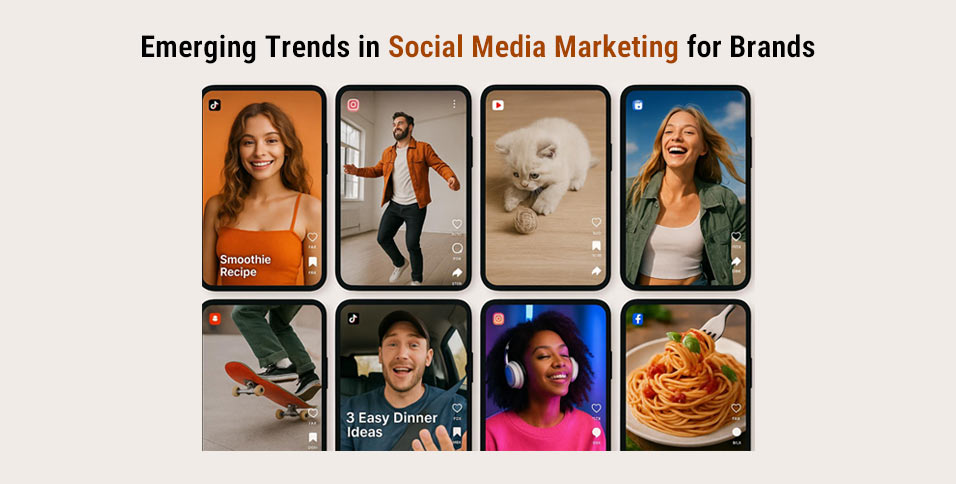
Social media is always changing. Just when brands think they understand it, new changes emerge. For brands working online, keeping up with new trends is not just helpful – it’s necessary to stay visible and successful.
In 2025, both the platforms we use and the ways we use them keep changing, giving brands new challenges and fresh opportunities.
Gone are the days when having a Facebook page and sending out a few tweets was enough. Today’s customers, especially younger people, spend a lot of time on social platforms to connect, find new things, watch videos, and even shop.
Ignoring these changes is like trying to use an old map to cross the sea – you’ll probably run into trouble.
To stay up-to-date, brands need to move quickly, think creatively, and may benefit from working with a social media marketing agency that can help keep their brand visible and relatable.
Let’s explore the main shifts in social media marketing and what brands should focus on to grab attention and build real relationships with customers.
What Are the Key Emerging Trends in Social Media Marketing for Brands?
Social media isn’t fixed – it keeps changing. What people loved a year ago might be boring now, and new ways to use these platforms pop up all the time.
Some of the biggest changes right now are a focus on honesty, shopping that happens right in the app, more video, and smarter use of artificial intelligence (AI).
We’re also seeing users turn social platforms into places to search for things, get help, and join small, interest-based groups. Brands need to switch up their plans for everything from content to customer service and data analysis to really make the most of these changes.
Why Are Social Media Trends Important for Brand Success?
Trends on social media reflect how people behave online. And brands need to go where people are. Around 90% of shoppers now look at social media to keep up with what’s new, even more than they use TV or talk with friends and family. It’s about more than looking cool – it’s about showing up where your audience is looking for information.
The pressure is real: 93% of shoppers say brands should stay up to date with online culture. Almost all social media professionals agree that matching content to online trends is needed.
If brands can’t keep up, they risk losing people’s attention and may fall behind companies that move faster.
How Often Do Social Media Trends Shift?
Changes in social media happen quickly. Trends might start, grow, and disappear within weeks or even days. Things like platform updates, viral moments, cultural events, and new tech like AI all keep things in motion.
While big ideas like “use more video” might stick around, the small details within them change quickly.
This fast pace means brands must be ready to change too. Long-term social plans aren’t as useful anymore. Instead, it’s better to be able to change direction quickly, test ideas, and respond to new trends as they come up.
How Short-Form Video Content Dominates Brand Strategies
Short-form video is still king. Platforms like TikTok, Instagram Reels, YouTube Shorts, and Facebook Reels have forced brands to use video if they want to reach audiences anywhere. This isn’t just a trend; it’s where customers are spending their time.
People love this type of quick, fun content. Many customers want to see even more bite-sized videos from brands – ideally, videos under 30 seconds. Still, some platforms are making room for longer videos, so brands can experiment with both short and longer content.
Why Does Short-Form Video Outperform Other Formats?
Short videos fit perfectly with the way people scroll through feeds. They deliver entertainment, news, or a connection fast. Platforms like TikTok and Instagram boost these videos, putting them in front of more users. This, along with how engaging they are, makes short videos do better than photos or longer posts.
Short videos are easy to create, share, and link to trends. Brands can use trending sounds, challenges, or hashtags to reach new people and be seen as fun and real. It’s a way to show your brand’s personality quickly and grab attention.
Which Platforms Lead in Short-Form Video Engagement?
The main platforms for short videos are still TikTok, Instagram Reels, YouTube Shorts, and Facebook Reels. TikTok started this trend and is still very popular. The others let brands share similar videos on different sites. These four main platforms are where brands should focus their short-form video efforts.
Each platform has its own rules about video length. Instagram Reels can be from 15 to 90 seconds. TikTok allows up to 10 minutes. YouTube Shorts recently started allowing clips up to three minutes. This gives brands options to tell stories in different ways under the “short-form” label.
Tips for Brands Using Short-Form Video
To do well, keep your videos real and entertaining instead of perfect. You don’t need fancy production. Lean into trends that match your brand, use popular sounds, and pack your best content at the start. Instead of always selling things, try telling stories, giving tips, or showing behind-the-scenes moments.
Over half of social videos are made to entertain or teach something, not just to sell. Try out different styles – like tutorials, challenges, or day-in-the-life clips – and see which ones your audience likes best. Try out features such as duets or stickers to invite participation.
What Role Does Authenticity and User-Generated Content Play?
With so much advertising online, people are tired of overly edited brand content and want genuine stories. User-generated content (UGC) – such as reviews, personal photos, and testimonial videos from real customers – feels more honest than standard ads.
This type of content heavily influences buying decisions. Around 82% of shoppers say they’re more likely to buy if they see real people using and enjoying a product. UGC shows that a brand is confident enough to let real users share their stories, which helps build trust.
How UGC Builds Credibility and Trust
Just like you’d trust a friend’s advice over a celebrity ad, people trust UGC more than paid endorsements. It comes straight from everyday users who have tried your product. When new customers see this, they feel more confident in your brand. Sharing real people’s stories also shows you value your customers and helps your community grow closer to your brand.
Best Practices for Encouraging User-Generated Content
To get more UGC, give your customers reasons to share. Use branded hashtags, run photo or video contests, or simply ask for reviews. Make it easy for people to tag you. Watch for mentions of your brand and interact with them – like, comment, and ask if you can share their content.
Showcasing customer content in a highlight reel or in a feed on your website or social channels encourages others to join in. Campaigns that celebrate customer stories tend to work especially well.
How Are Brands Leveraging the Creator Economy and Influencers?
The creator economy keeps growing. Influencers and creators are now key partners for social media marketing – across both business-to-consumer and business-to-business brands. Brands are teaming up with people who have strong communities in their field, choosing those whose style fits in well with the brand, not just those with the largest audiences.
The focus is moving away from single sponsored posts, and towards longer, ongoing collaborations that feel real and natural to both the creator and their audience.
What Is Changing in Brand-Creator Collaborations?
Brands want deeper, more authentic partnerships. Instead of just paying for one post, they’re choosing creators who are genuinely interested in their brand and can talk about it in their own style. Natural, unforced content does better than ads that sound scripted. Some creators specialize in making content that looks and feels like normal posts, and brands see value in this kind of collaboration.
Micro-Influencers Versus Macro-Influencers
Large influencers offer a wide reach, but smaller influencers, called micro-influencers, often have more loyal and active followers. Working with several micro-influencers can help brands reach small, focused groups at a lower cost and with better engagement.
These voices are seen as more honest because they’re less likely to sound like ads. Brands working closely with several micro-influencers can build trust in smaller, more relevant groups.
Legal and Ethical Considerations for Influencer Partnerships
Influencer marketing must follow the rules. For example, in the US, the Federal Trade Commission (FTC) requires influencers to say clearly when a post is sponsored. Brands are responsible for making sure their influencer partners follow these rules.
Not following the rules can lead to legal trouble and damage trust. Use written agreements with influencers about how to disclose sponsorships. Be clear and honest so audiences know when they’re seeing ads.
How Artificial Intelligence Is Reshaping Social Media Marketing
AI is now a common tool in social media marketing. It’s used for everything from making content and analyzing posts, to choosing the best time to share. Marketers who use AI see better performance, and AI tools are now part of many planning and management platforms.
AI is becoming a normal part of planning, posting, and reviewing social campaigns – almost a standard, not just something extra anymore.
AI Tools for Content Creation and Scheduling
AI helps people come up with ideas, write posts, edit, make images, and reuse content in different ways. This speeds up content creation, which is useful considering that some brands post 48-72 times per week across platforms.
AI also helps find the best time for posting, by looking at when your audience is most active and what types of content perform best. It can even help tailor messages for different groups.
AI-Powered Social Listening and Analytics
AI can listen to social media and track what people are saying about your brand, industry, or competitors. It can process huge amounts of information fast, finding trends and flagging both good and bad conversations.
AI can also measure how people feel about your brand and help spot possible problems or chances to join new trends. These insights help brands fine-tune their plans and understand what works with their audience best.
Risks and Limitations of AI in Brand Marketing
AI isn’t perfect. Letting it do too much can lead to boring, copycat posts that lose the brand’s personality. AI can also have hidden biases that affect which ads people see or how comments are interpreted.
Brands should not rely only on AI; humans need to review and guide its output. Data privacy, transparency about using AI, and making sure content remains real are all important. Always keep a human touch in your posts to connect with your community.
Why Brands Are Embracing Social Commerce
Social media is quickly turning into a main place for shopping, not just browsing or chatting. Social commerce means people can find and buy products directly from their social feed. It’s growing fast, especially among younger consumers, and the social commerce market could reach $1.2 trillion by 2025.
Platforms like Instagram and TikTok are constantly improving how shopping works in their apps. This lets people go from seeing a product to buying it in just a few clicks, making it much easier for brands to bring in sales straight from social media.
How Social Shopping Features Drive Conversions
People are more likely to make quick purchases if they see something they like in a video or from a trusted influencer, and buying is just a tap away. Things like shoppable posts, in-app payment, product catalogs on your profile, and live shopping streams make it simple and fast to buy right away, which fits the habits of people who are used to shopping online.
Tactics for Integrating Commerce Seamlessly
Make sure shopping features fit naturally with your content. Use videos and real customer posts to show products in use. Tag products in posts and stories, hold live events where viewers can see and buy products in real-time, and keep your catalog current and easy to access. The simpler and faster the buying process, the better. Offers like limited-time deals also encourage people to act quickly.
What Is the Impact of Social Search and SEO Strategies?
Social platforms now work more and more like search engines, especially for younger people.
Instead of using Google, many go to TikTok, YouTube, or Instagram to find products, reviews, recommendations, and information. This means brands need to make content easy to find inside each platform – what is sometimes called “Social SEO.”
To get discovered, brands must use language and keywords that help them show up in search results on these platforms. This is just as important as going viral.
How Social Platforms Are Becoming Search Engines
Many young people now look up restaurants, products, and trends right in TikTok or Instagram. Almost 40% use these platforms before checking Google. People want real, visual, peer-reviewed information, and social platforms provide this with videos, photos, and user feedback. Most marketers agree that by 2025, people will search for brands on social first.
Optimizing Social Content for Discovery
Optimizing for social search isn’t just about hashtags anymore. You need to use keywords in captions, in video text, and in your profile. High-quality, interesting content that matches what people are searching for will get shown more by algorithms.
Consistently posting, encouraging comments and shares, and using special platform features help your brand get found. The goal is to be easily discovered by people who are already searching within social apps.
Why Private and Niche Communities Matter for Brand Loyalty
While public posts reach lots of people, brands are seeing the value of building smaller, focused groups. Places like Facebook Groups, Discord, Slack, and LinkedIn Groups let brands connect more closely with their audience and create active, loyal communities. The focus is shifting from gathering lots of followers to building deeper relationships in smaller groups.
These private groups act like exclusive clubs where people share stories, ask questions, and talk directly to the brand. Engagement rates in these spaces are much higher than public social posts.
Benefits of Building Brand-Owned Communities
Private communities offer much more active engagement – almost 50% participate compared to 0.05% – 5% on public feeds. People feel a sense of belonging, which builds loyalty. Brands also get real feedback, test ideas, find brand fans, and even work with customers on creating new products. For business-focused brands, these groups help shift attention from just chasing sales to growing brand respect and expertise.
Strategies for Cultivating Engagement in Closed Groups
To keep private communities active, brands must join in. Start conversations, ask for opinions, run polls, and share special content. Give people a reason to talk, ask questions, and help each other. Brand community managers should be friendly and quick to reply – most people expect answers within a day. The group should be welcoming, regular, and safe for all members.
How Social Listening and Data Analysis Improve Brand Performance
It’s not enough just to post on social media. Brands must listen to what people are saying about them, the industry, and related topics. Social listening and strong data analysis help brands decide what to post, how to adjust their strategy, and how to measure the effect of their work online.
Most marketers now use social listening tools for quick, ongoing insights.
Using Social Listening to Guide Campaigns
Social listening tracks online discussions, keywords, mentions, hashtags, and what competitors are doing. This information helps brands make more relevant posts and answer audience questions. Listening also helps brands find new trends they can join or moments they can take part in, not just for huge viral campaigns but also smaller, focused ones that can achieve real results.
Measuring ROI With Social Data
Tracking data like clicks, shares, and sales is important – not just how many followers you have. AI tools now help show how social media work connects to real business results.
Looking at which posts lead to actions, what audience responds best, and what produces sales lets brands improve results and show value to stakeholders. Key to this is setting clear goals and choosing measures that support those goals.
Emerging Platforms and Experimentation Opportunities for Brands
The social media scene keeps adding new networks. Although Meta, TikTok, and YouTube remain popular, new apps and features regularly show up and offer brands new opportunities to reach people early. Jumping into a new network first gives brands a better chance to stand out before it gets crowded.
However, trying new platforms can be risky. Brands should check if a new app or feature will really reach their audience and meet their goals before spending too much time or money.
Advantages of Early Adoption on New Networks
Joining new platforms like Instagram Threads or Bluesky early often means less competition and an easier time building a following. Brands can try out new styles and help set rules for their audience. Being early also makes a brand look modern and progressive, especially to tech-savvy users.
Assessing the Risk versus Reward of Platform Experimentation
Testing new platforms requires time and resources. Sometimes a new network doesn’t become a big hit or doesn’t connect with your main audience. Brands should research if their customers are using the new platform, what kind of content works best, and how much effort is needed. Start with a small test: set aside a little budget, try out a campaign, and measure results against your goals. If it works, invest more. If not, it’s easy to move on without much loss.
What Challenges Do Brands Face With Social Media Fatigue and Engagement?
With so much happening on social media, both brands and their fans are dealing with tiredness and lower interest. People scroll past more content, have less patience, and require better quality to pay attention. Brands must work harder to create posts that connect and don’t just add to the noise.
The challenge is spotting when fans are losing interest and finding ways to connect better without overloading them with more posts.
Identifying Signs of Social Fatigue in Audiences
Warning signs include fewer likes or comments, people spending less time with your content, more unfollows or mutes, and little response to calls to action. If your posts feel the same or too pushy, people may tune out. Watch for these signals in comments and messages to adjust before engagement drops off too much.
Enhancing Engagement without Overwhelming Followers
The answer isn’t to post more, but to post smarter. Focus on quality – create fun, useful, or inspiring posts that add value. Be yourself as a brand. Ask questions, use polls, talk to commenters, and run live sessions to get people involved. Try storytelling, making each post part of a bigger story. Shift from just broadcasting to real conversation. Encourage employees to be brand voices, sharing their honest experiences to increase authenticity.
Maintaining Brand Consistency While Adapting to Trends
Moving quickly with social media changes often feels like a balancing act. Brands must stay flexible and open to new ideas but also keep their voice and values steady. The challenge is joining in on new trends without losing what makes your brand recognizable.
Pick trends carefully and find ways to add your own personality. Don’t simply copy others – find what fits your brand, and put your own spin on it. This will help you join conversations without losing trust or sounding fake.
Balancing Brand Voice With Trendjacking
Jumping on trends can help brands get noticed, but not every trend will suit your image. Only join in if it fits your audience and values. When you do join a trend, add your own style or relate it to your products and message.
The point is to add something real, not just join for the sake of it. Some brands are adjusting their usual rules a bit to make content more fun and interesting, but the focus should still be authenticity.
Ensuring Brand Safety and Compliance
Brand safety comes first. Stick to platform rules, respect copyright, and check that everything you post is right for your audience.
As regulations become stricter, especially for ads and influencer content, being careful is more important than ever. Set clear guidelines for teams and partners, explain rules about safety and disclosures in contracts, and keep an eye on conversations for any trouble.
Looking Ahead: Predicted Developments in Social Media Marketing for Brands
Looking to the future, social media marketing is likely to become even more blended into everyday life, more personal, and more reliant on technology. While we can’t predict every new trend, some main areas, like honest content, small communities, and helpful information, will likely stay important even as tools change.
To stay prepared, brands should watch for signs of change, not just react. It will be key to hold onto core principles like honesty, community, and offering real benefits, even as the way you deliver them changes over time.
Upcoming Technologies and Trends to Monitor
AI will keep getting better, helping with not just making posts, but also understanding audience actions, automating responses, and targeting ads more precisely. Shopping on social will get smoother and more engaging.
Private groups and small communities will become even more important as brands look to connect in meaningful ways. New platforms or features could pop up to support these smaller communities.
We’ll likely see more brands use social as a main channel for customer service, with AI-powered help ready to answer faster. Story-driven posts, where brands share ongoing sagas, may help keep followers interested. Letting social media managers show their human side will also become more common, helping brands feel more personal and approachable.
Recommendations for Brands to Stay Ahead
To keep up, brands should remain flexible and keep learning. Invest in tools and training, especially for using AI correctly. Reserve time and resources for carefully trying new platforms or features. Build a team culture that’s ready to change direction when needed.
Focus even more on building honest relationships and active groups instead of just tracking simple statistics. Use social listening tools to keep up with what people are saying about your brand. Above all, keep your content real and valuable. In a busy online world, authentic and useful posts are what capture interest and help brands create loyal fans.
Also Read: Amazon Trends in 2025: What Sellers Need to Know to Stay Ahead