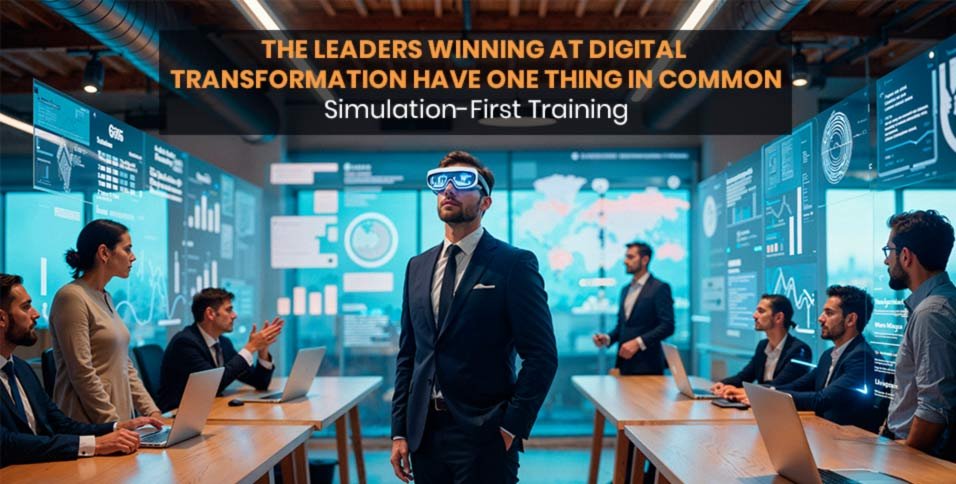
Digital transformation is a people’s problem, and most organizations are still pretending otherwise.
The technology budgets are there. The implementation partners are hired. The go-live dates are set. But when the dust settles six months later, adoption numbers are disappointing, workarounds are spreading, and senior leaders are quietly avoiding the very systems they signed off on.
The tools didn’t fail. The preparation did.
A Two-Day Workshop Is Not Preparation
Most organizations still treat training as a box to check before launching. Modules are assigned. Attendance gets tracked. And then real work begins, with real systems, in real conditions that look nothing like what anyone practiced.
The result is predictable. A director of operations encounters an error stating no one covered in training. A regional VP has to make a call on data she doesn’t fully trust yet. A team lead gets stuck in a workflow and, rather than slow down, finds a workaround that quietly undermines the whole rollout.
None of these people are bad at their jobs. They were just handed live tools without enough reps to use them under pressure.
The executives who lead successful digital transformations understand this. Before their organizations go live, their leaders have already been through the hard scenarios, made the wrong calls in a safe environment, and built the muscle memory that classroom training simply cannot create.
Simulation Closes the Gap Traditional Training Leaves Open
There’s a reason high-stakes industries don’t train people by explaining things to them. Surgeons operate simulators before patients. Pilots log hours in flight simulators before commercial routes. The pressure, the variables, the failure modes all get rehearsed before anything real is on the line.
Enterprise leadership deserves the same standard.
This is what platforms like Assima are built for. Rather than passive walkthroughs or static screenshots, Assima creates interactive simulations of actual enterprise systems: SAP, Salesforce, Oracle, and others , so leaders and teams practice inside environments that behave like the real thing. They encounter the friction. They work through the confusion. They build familiarity before it matters.
The result isn’t just better-trained users. It’s a rollout that doesn’t lose momentum the moment reality gets complicated.
The Confidence Problem That Slows Everything Down
There’s a dynamic in digital transformation that rarely gets named directly: senior leaders who aren’t comfortable in a new system will avoid it. They’ll delegate around it, defer to IT on questions they should own, and send signals down the org chart that uncertainty is the appropriate response to the new tools.
Teams follow that lead. Adoption stalls. The transformation that looked clean on paper turns into a slow grind.
Simulation-first training addresses this at the source. When leaders have practiced inside the system before launch, navigating real scenarios and recovering from real mistakes in a low-stakes setting, they show up differently on day one. They move with confidence. They model what good looks like for the rest of the organization.
Assima’s approach is specifically designed to create this kind of readiness. Learning happens inside the tools themselves, not in a separate training environment that feels disconnected from actual work. That distinction matters more than most training strategies acknowledge.
The Behaviors Transformation Actually Requires
Digital transformation asks something specific of leadership. It demands fast decisions with incomplete information. It requires comfort with iteration, with things breaking and getting fixed publicly, with cross-functional collaboration that moves at a pace most organizations aren’t used to.
These behaviors don’t develop from exposure. They develop from practice under conditions that actually create a little pressure.
The organizations that are outperforming their peers in digital transformation aren’t always the most sophisticated or the most heavily resourced. What they have in common is that they took preparation seriously before launch. They built simulation into the rollout plan as a core investment, not an afterthought.
What Getting This Right Actually Looks Like
Before the next big rollout, it’s important to ask a straightforward question: have the leaders in charge of this change actually practiced in the setting they’re going to oversee, or have they just been informed about it?
Capability is not developed by briefings. Practice makes perfect.
Stronger adoption, fewer post-launch escalations, and leadership teams capable of driving change rather than reacting to it are all regularly reported by organizations that incorporate simulation-based preparation into their transformation strategies using technologies like Assima.
Better technology isn’t the reason why businesses are currently succeeding in digital transformation. Their people were prepared for it before it came, which is why they are winning. One simulation at a time, that level of preparedness is consciously developed.