You ordered something. You waited. Then you checked the tracking page and saw it: ‘exception.’
Now you’re staring at the screen wondering what went wrong.
You’re not alone. Shipment exceptions and shipping delays are incredibly common. They happen to small sellers, big brands, and everyone in between. The good news is that most of them are fixable. And most of them are not as bad as they sound.
This post breaks it all down.
What Does Exception Mean in Shipping?
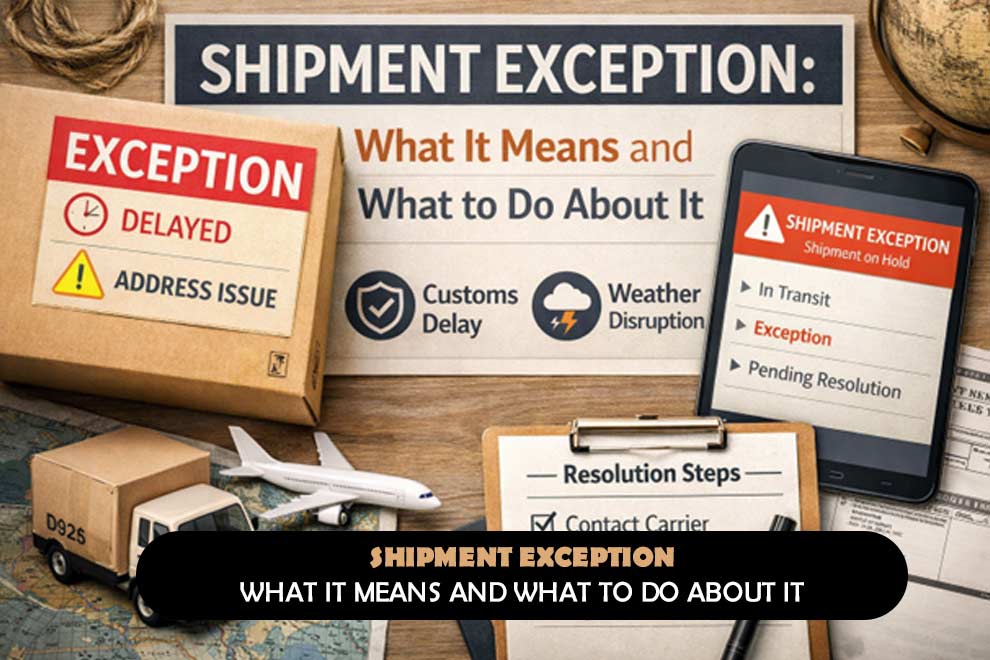
A shipment exception is a flag on your package. It means something interrupted the normal delivery process.
This is not the same as a lost package. It is not a failed delivery either. It is a notification that something needs attention before the package can move forward.
A shipment exception can be triggered by a wide range of things. Bad weather is one of the most common. So is an incorrect address, a customs hold, or a missed pickup window.
The carrier uses this flag to pause the shipment and communicate the issue. Think of it as a yellow light, not a red one.
Once the issue is resolved, the package continues on its way. That might take a day. Sometimes it takes a few days. Rarely does it mean your package is gone for good.
Why Shipping Delays Happen (And Who Is Usually Responsible)
Causes of shipping delays fall into a few clear categories. Some are within your control. Many are not.
Weather and natural events top the list. Storms, floods, and extreme temperatures can shut down entire carrier networks. Nothing moves when roads are closed.
Volume spikes are another big factor. Peak seasons like Q4, Black Friday, and Prime Day push carrier systems to their limits. Even the most efficient networks slow down under that kind of pressure.
Customs clearance is a common culprit for cross-border shipments. Missing documents, incorrect HS codes, or flagged items can hold a package for days.
Carrier errors happen too. Mislabeled packages, incorrect scans, and misrouted freight are more common than most people realize.
Address issues are often seller-side problems. A wrong zip code or a missing apartment number can trigger a delivery exception almost instantly.
Global shipping delays add another layer of complexity. Port congestion, geopolitical disruptions, and carrier capacity shortages can all ripple through supply chains fast. What starts as a delay in one region can affect timelines across entire networks.
Amazon delays in shipping have their own specific causes. Inventory placement issues, carrier partner backlogs, and fulfillment center bottlenecks all play a role. Amazon shipping delays are often flagged in Seller Central, but they can catch sellers off guard if they are not monitoring closely.
How to Deal with Shipping Delays?
Here is the part that actually matters: what do you do when shipping delays happen?
Step 1: Check the tracking details carefully
Open the carrier’s tracking page and read the notes. The exception package’s meaning is almost always explained there. Start with that before doing anything else.
Step 2: Contact the carrier directly
If the exception has not moved in 24 to 48 hours, reach out. Phone calls work better than automated systems for resolving small issues quickly. Do not just wait for an update that may never come.
Step 3: Communicate with your customer
Send a short message before they ask. Tell them what happened and what you are doing about it. Most customers are fine with delays when someone keeps them in the loop.
Step 4: Review your shipping setup
If exceptions keep happening, something in your process is off. Look at your address data, your packaging, and your carrier agreements. One small fix at the root level can prevent a lot of repeat problems.
Step 5: Consider your fulfillment partner
Not all 3PLs are equal when things go sideways. A good one already has carrier relationships in place and catches errors before they become exceptions. That kind of backup matters more during peak seasons than any other time.
Knowing how to deal with shipping delays is a skill. The sellers who handle it well are the ones who build systems around it, not just react to it.
Conclusion
Shipment exceptions and shipping delays are frustrating. But they are also a normal part of moving goods at scale.
The sellers who handle them well are not the ones who never face them. They are the ones who know what to do when it happens.
Understand the flag. Communicate early. Fix the process. That approach keeps your customers happy and your reputation intact.
Frequently Asked Questions
What is the difference between a shipment exception and a shipping delay?
A shipment exception is a specific flag from a carrier. A shipping delay is a broader term for any late delivery. Exceptions often cause delays, but not all delays come with an exception notice.
How long does a shipment exception usually last?
Most exceptions are resolved within one to three business days. Weather-related exceptions can take longer depending on conditions in the affected area.
Does a shipment exception mean my package is lost?
No. An exception means something paused the delivery process. Most packages are still recovered and delivered after the issue is addressed.
What causes amazon shipping delays specifically?
Amazon delays in shipping are usually tied to fulfillment center capacity, carrier partner backlogs, or inventory placement decisions. Sellers can reduce exposure by maintaining clean listings and using compliant packaging.
Can I prevent shipment exceptions?
You can reduce them. Accurate address data, proper packaging, and compliant labeling all help. Working with an experienced fulfillment partner also lowers the risk significantly.