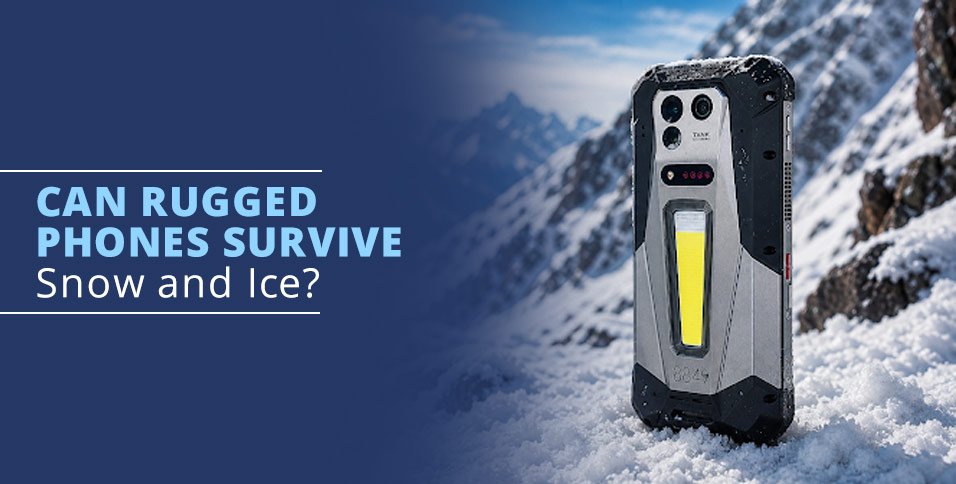
Cold weather is harder on a phone than most people expect. A screen that works fine at room temperature can go dark and sluggish an hour into a snowy hike. Battery percentage can drop fast when the air turns cold enough to see your breath. For anyone working or exploring in winter conditions, this is more than an inconvenience. It can mean losing navigation, contact with a team, or a way to call for help.
Rugged phones are built with this problem in mind. But “rugged” does not automatically mean “cold-proof.” This guide covers what actually happens to a phone in snow and ice, how rugged devices hold up, and where their limits sit.
What Cold Weather Does to a Normal Phone
Lithium batteries lose efficiency as temperatures drop. A phone that shows 40 percent charge indoors may lose usable capacity quickly in freezing conditions and, in some cases, shut down unexpectedly. Touchscreens also respond poorly in the cold, especially with gloves on. Glass contracts slightly in low temperatures, which raises the risk of cracking on impact. Snow that melts around ports or speaker openings can introduce moisture into a phone, potentially causing corrosion or electrical problems if it reaches internal components. None of these issues are rare. They happen to standard phones every winter, often within the first hour outside.
How Rugged Phones Handle Snow and Ice
Rugged phones are built to resist most of these problems, though not all at once. Sealed ports and gaskets keep meltwater and slush out of the internal components. That seal matters more in snow than people assume, since snow packed against a phone eventually turns to water. Reinforced glass and shock-absorbing frames also help offset the added brittleness that cold introduces to screens and housings.
Manufacturers list an operating temperature range for a reason. Most rugged phones are rated to function safely down to around freezing or slightly below, with some components, like the battery, rated for a wider range than the rest of the device. Below that range, touchscreens can become unresponsive and battery output can drop sharply, even on a phone that is otherwise sealed and shockproof. Extreme cold is a different challenge than an accidental drop, and a rugged label does not erase that distinction.
IP Ratings Do Not Cover Cold
It’s worth being clear about what an IP rating actually promises. IP68 and IP69K describe protection against dust and water under specified test conditions. IP68 covers dust protection and immersion, while IP69K addresses protection against powerful, high-temperature water jets. They say nothing about how a phone performs at negative temperatures. A phone can be fully sealed against slush and still struggle to keep its screen responsive in a blizzard. Cold-weather performance is a separate spec, usually listed as an operating temperature range, and it deserves its own check before you trust a phone with a winter trip.
Field Tips for Using a Phone in Snow and Ice
A few habits make a real difference once you’re actually out in the cold.
- Store the phone in an inside jacket pocket when it’s not in use, so your body heat helps offset the battery drain.
- Brush off snow before it has a chance to melt and work its way into seams, ports, or speaker grilles.
- Let a cold screen warm up slightly before touching it with bare or damp fingers, since surface moisture can freeze on contact.
- Head out with a full charge, since cold air pulls down usable battery capacity faster than mild weather does.
- Reach for gloves designed for touchscreens instead of pulling them off every time you need to unlock the phone.
- Look up the phone’s rated operating temperature range ahead of time rather than assuming it will hold up in extreme cold.
Choosing a Rugged Phone for Winter Conditions
Not every rugged phone is built the same way for cold weather. Battery capacity matters more here than in most other environments, since cold weather eats into usable charge faster than warm weather does. A sealed body matters just as much, since melting snow behaves like any other water exposure once it’s inside a device. Long battery life also buys margin: a larger battery that starts the day fully charged has more room to lose capacity to the cold before it becomes a problem.
The 8849 Tank 5 is one option worth a look for this kind of use. It carries an IP68/IP69K rating against dust and water, which covers meltwater and slush exposure, and its 17,600mAh battery is built to keep operating in a wide temperature range, giving it more of a buffer than a standard phone battery when conditions turn cold. That combination of a sealed body and a large battery is the pairing to look for if snow and ice are a regular part of your routine, whether that’s a work site, a mountain trail, or a winter commute.
Conclusion
Rugged phones handle snow and ice noticeably better than standard phones, mainly through sealed construction and larger batteries that hold up longer in the cold. But no rugged label makes a phone immune to freezing temperatures. Touchscreens still slow down, batteries still drain faster, and every device has a stated operating range that’s worth checking before a winter trip. Pair the right hardware with a few basic habits, like keeping the phone warm against your body and charging it fully beforehand, and it stands a much better chance of working when you need it most.
Also Read: Portable Wireless Speaker & Over-Ear Headphones: Your Ultimate Audio Guide