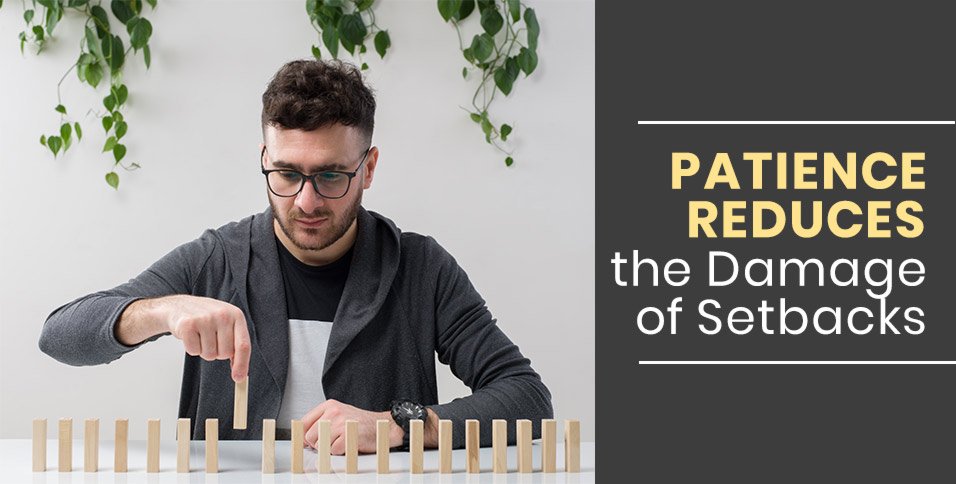
The First Problem Is Rarely the Whole Problem
A setback can be painful, expensive, or disappointing on its own. Yet the original problem is often only the beginning. What causes the greatest damage is the emotional chain reaction that follows. Frustration becomes panic, panic leads to an impulsive decision, and that decision creates consequences that are larger than the setback itself.
This pattern can appear when a financial plan stops working as expected. Someone reviewing the zero based budgeting pros and cons may build a careful plan for every dollar, only to face a medical bill, car repair, or income change that disrupts the entire month. The plan did not necessarily fail. Reality changed. Patience creates enough space to recognize that difference.
A patient response does not pretend the setback is harmless. It prevents temporary discomfort from taking control of the next decision. Instead of rushing to escape the situation, you pause, measure the actual damage, and choose the smallest useful adjustment. That pause can protect money, relationships, health, and long term progress.
Setbacks Become Dangerous When They Create Urgency
Most setbacks produce a strong desire to act immediately. Doing something can feel better than sitting with uncertainty, even when the action is poorly considered.
After an unexpected financial loss, you may want to drain savings, borrow money quickly, cancel every enjoyable expense, or abandon the budget completely. After receiving criticism at work, you may want to send an angry message or quit. After missing several workouts, you may try to make up for lost time with an extreme routine.
These responses offer emotional relief because they replace uncertainty with action. The problem is that immediate action is not always useful action.
Patience allows urgency to weaken before you make a lasting choice. It creates a boundary between what happened and what you decide to do next. You can still respond quickly when the situation truly requires it, but you are less likely to confuse emotional pressure with practical necessity.
A Pause Protects You From Adding a Second Setback
Imagine that an unexpected expense forces you to use part of your emergency fund. That is the first setback. You feel discouraged because the balance took months to build.
If frustration leads you to stop saving entirely, that becomes a second setback. If you then spend the remaining fund because the goal feels ruined, the damage grows again.
The original expense may have been unavoidable. The later choices were reactions to the feeling that your progress no longer counted.
Patience interrupts this pattern. It reminds you that using emergency savings for an emergency is not evidence that saving was pointless. It is evidence that the fund performed its intended job.
The balance may be smaller, but you avoided relying entirely on debt. Your next task is not to punish yourself or rebuild everything immediately. It is to update the plan and begin restoring the fund at a pace your current situation can support.
Patience Keeps Discomfort From Becoming a Verdict
A difficult moment often feels permanent while you are inside it. One missed goal can seem like proof that you lack discipline. One failed attempt can feel like evidence that the entire plan was unrealistic.
This happens because emotions speak in broad conclusions. Frustration says nothing is working. Shame says you always make the same mistake. Fear says the situation will continue getting worse.
Patience gives you time to separate the event from the story surrounding it.
You missed a payment target. That is a fact. It does not automatically mean you will never repay the balance.
A project received a poor response. That is useful information. It does not prove that every future version will fail.
A conversation went badly. That may reveal a real problem. It does not necessarily mean the relationship cannot improve.
When you resist turning one event into a final judgment, you preserve more choices.
Resilience Begins With Accurate Measurement
A patient response starts by asking what actually changed.
How much money was lost? Which deadline moved? What resource is now missing? Which part of the original plan still works? What needs attention first?
These questions may sound simple, but panic makes accurate measurement difficult. The mind tends to exaggerate the size of a problem when the outcome is uncertain.
Writing down the facts can help. List the direct consequences before considering solutions. Separate what has already happened from what you fear might happen.
The Mayo Clinic guidance on building resilience explains resilience as the ability to adapt to misfortune and setbacks. Adaptation requires an accurate view of the situation. You cannot adjust a plan effectively when you are responding to an imagined disaster rather than the problem in front of you.
Once the setback has a clear size and shape, it often becomes easier to manage.
Patient People Do Not Ignore Their Emotions
Patience is sometimes confused with emotional suppression. A patient person is expected to remain calm, stay positive, and avoid showing distress.
That is not realistic, and it is not especially useful.
You can be patient while feeling angry, embarrassed, disappointed, or afraid. Patience does not remove those feelings. It keeps them from becoming the only source of instruction.
Emotion contains information. Anger may show that a boundary was crossed. Fear may identify a genuine risk. Disappointment may reveal how deeply you cared about the outcome.
The challenge is to understand the message without automatically obeying the first impulse it creates.
Research on emotional regulation and mental health discusses the importance of managing emotional responses in ways that support healthy behavior. Regulation does not mean pretending a feeling is absent. It means choosing how to respond after the feeling appears.
Patience gives that choice time to form.
The Best Adjustment Is Often Smaller Than Panic Suggests
When a plan is disrupted, people often assume they need a complete replacement.
A budget category was exceeded, so they create a strict new budget. A routine was missed, so they design a demanding schedule. A business idea struggled, so they change the product, audience, price, and message all at once.
Large reactions feel serious, but they can make it difficult to identify what actually needed correction.
A patient approach looks for the smallest adjustment that could improve the situation.
Perhaps the budget needs a larger category for irregular expenses. Maybe the routine needs a shorter option for busy days. The project may need clearer instructions rather than a complete redesign.
Small changes are easier to test. They also preserve the parts of the system that are already working.
This matters because setbacks can make people underestimate previous progress. In the rush to fix one weakness, they may destroy useful habits, relationships, or structures that took a long time to build.
Patience Prevents the All or Nothing Response
One of the most damaging reactions to a setback is the belief that partial progress has no value.
You planned to save five hundred dollars but managed only two hundred. You intended to exercise four times but completed one session. You hoped to finish a project but completed only the first section.
If the original goal becomes the only acceptable result, the reduced outcome feels like failure. You may decide there is no reason to continue.
Patience allows goals to bend without breaking.
Saving two hundred dollars still improves your financial position. One workout still supports the routine. One completed section reduces the amount of work remaining.
A reduced result is not always enough, but it is often better than surrender. It preserves momentum and makes recovery less difficult.
The goal can be adjusted again when conditions improve. Progress does not lose all value simply because it arrived in a smaller amount than expected.
Recovery Works Better When It Is Gradual
After a setback, there is often pressure to return to the previous position immediately. You want to rebuild the savings, recover the lost time, repair the relationship, or regain your former performance as quickly as possible.
That desire is understandable, but rushing recovery can create another collapse.
Suppose you used several thousand dollars from an emergency fund. Trying to replace the full amount within two months may require extreme cuts that are impossible to maintain. A slower plan may take longer, but it is less likely to create exhaustion or new debt.
The same principle applies beyond money. Returning to intense exercise too quickly after an injury can delay healing. Forcing a difficult conversation before emotions settle can deepen conflict. Working excessive hours to recover from a missed deadline can damage the quality of later work.
Patience treats recovery as a process rather than a dramatic correction. It asks what pace can be sustained until stability returns.
A Setback May Reveal Useful Weaknesses
Setbacks are not automatically lessons. Sometimes something simply goes wrong. Still, a setback can reveal information that success kept hidden.
A financial emergency may show that savings were too difficult to access or too small for current risks. A missed deadline may reveal that the schedule depended on ideal conditions. A conflict may uncover expectations that were never clearly discussed.
Patience makes it easier to study this information without turning the review into self criticism.
Ask what the setback exposed. Was the goal realistic? Did the system depend too heavily on motivation? Was there enough room for unexpected events? Did you notice warning signs but avoid acting?
The purpose of these questions is not to assign blame. It is to make the next version of the plan stronger.
A setback that produces a better system may still be unpleasant, but it does not have to be wasted.
Long Term Goals Need Room for Bad Seasons
Most meaningful goals take long enough that something will eventually go wrong.
Income may change during a repayment plan. Family responsibilities may interrupt a career goal. Illness may slow a fitness routine. A relationship may go through a period of stress. A project may face criticism, delay, or rejection.
A plan that works only during calm periods is not a complete plan.
Patience helps you design for difficult seasons. You can create minimum contributions, backup schedules, emergency categories, and simpler versions of important routines. These options keep the goal alive without demanding the same level of performance under every condition.
This is not lowering your standards. It is recognizing that consistency across changing circumstances may be more valuable than brief perfection.
Long term success depends less on avoiding every setback and more on remaining connected to the goal when conditions become difficult.
Support Can Slow an Emotional Reaction
Patience does not always have to come from within. Another person can provide the pause you cannot create alone.
Before making a major decision after a setback, talk with someone who is calm, trustworthy, and not emotionally trapped inside the situation. Explain the facts, the options, and the action you feel tempted to take.
A useful supporter does not dismiss your feelings or immediately take control. They help you see the problem at a more accurate scale.
Sometimes simply explaining the situation out loud reveals that your planned reaction is too extreme. You may hear yourself turning one mistake into a permanent conclusion or making a major change before gathering enough information.
Advice is not always necessary. The conversation itself can slow the emotional chain reaction and give clearer thinking time to return.
Create Rules Before the Next Setback
It is easier to respond patiently when some decisions have already been made.
You might decide that no major purchase will be made within twenty four hours of receiving bad financial news. You may create a rule that a missed goal leads to a smaller target rather than abandonment. You could require yourself to review the facts with another person before quitting a project or sending an emotional message.
These rules create structure during moments when judgment is under pressure.
They also reduce the burden of deciding how patient to be while you are already upset. The pause becomes part of the system rather than a test of willpower.
Your rules should still allow urgent action when safety, health, or legal responsibilities are involved. Patience is not an excuse to ignore a serious problem. It is protection against unnecessary decisions made only to escape discomfort.
The Goal Is to Limit the Spread
A setback does not need to remain small to be handled patiently. Some events are genuinely life changing. Patience cannot erase a lost job, serious illness, broken relationship, or major financial loss.
What patience can do is limit how far the damage spreads.
It can prevent fear about money from becoming reckless borrowing. It can stop disappointment in one area from becoming neglect in every other area. It can keep a painful conversation from turning into a permanent decision made at the worst possible moment.
Patience creates a controlled response around an uncontrolled event.
You acknowledge what happened, protect what remains, and adjust the plan using the information available. Then you take the next useful step without demanding that it solve everything immediately.
The setback may still change your direction. It may slow your progress or require a different goal. But it does not have to trigger a chain reaction that destroys more than the original event already took.
Patience is not valuable because it makes setbacks feel good. It is valuable because it keeps a difficult moment from making every decision that follows.