Mirror Review
January 08, 2026
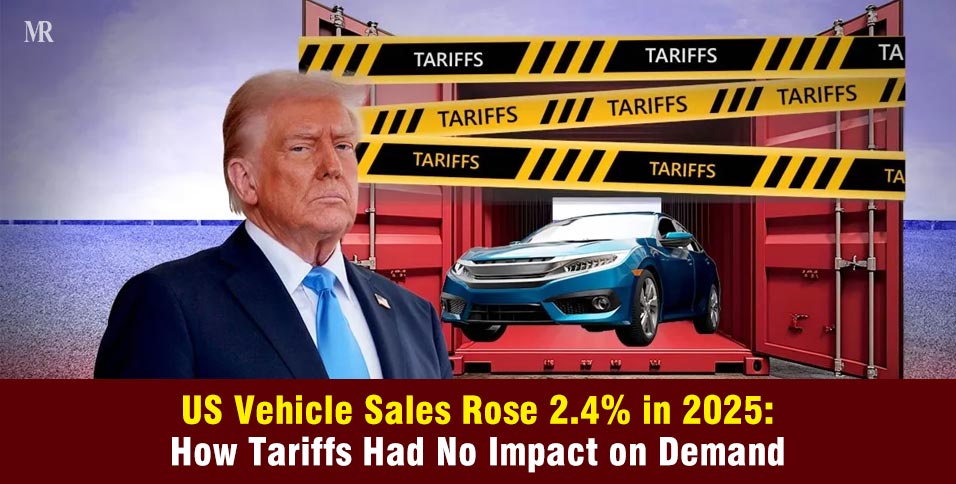
When tariffs were announced and expanded, many analysts warned of falling vehicle demand.
However, US Vehicle Sales rose 2.4%, reaching about 16.3 million units, contradicting these predictions.
Total sales reached their highest level since 2019, before pandemic-era supply disruptions reshaped the market.
While tariffs remained in place on imported vehicles and parts, a coordinated set of domestic policy shifts reduced ownership costs, stabilized pricing, and expanded consumer choice, allowing demand to grow instead of contract.
Here’s How Tariffs Had No Negative Impact On The US Vehicle Sales In 2025
1. Tax Policy Boosted Affordability
A key policy driver behind the rise in vehicle sales in America was the introduction of the “No Tax on Car Loan Interest” provision under the One Big Beautiful Bill Act.
For the first time, many Americans can deduct up to $10,000 per year in interest paid on auto loans from their taxable income if the vehicle is assembled in the United States.
Why it mattered:
- Auto loans are how most vehicles are purchased
- Deducting interest lowers the real cost of financing
- Monthly payments became easier to manage
For a buyer financing a $35,000 vehicle at typical interest rates, this deduction can reduce total ownership costs by thousands of dollars over time.
This tax relief directly stimulated demand and helped explain why US Vehicle Sales grew even as tariffs remained in effect.
2. Fuel Economy Rules Were Reset
Another major factor supporting demand was the reset of Corporate Average Fuel Economy (CAFE) standards.
CAFE standards require automakers to meet an average fuel-efficiency target across all vehicles they sell.
When these standards are aggressively tightened, manufacturers are often forced to push electric vehicles or raise prices on gasoline models to offset compliance costs.
What changed?
The federal government reset CAFE standards to levels achievable with existing gasoline and hybrid technology.
The impact:
- Estimated $109 billion in savings over five years
- Avoided price increases of nearly $1,000 per vehicle
- Preserved consumer access to trucks, SUVs, and affordable cars
By lowering regulatory costs, the reset ensured automakers did not need to raise prices, which helped US Vehicle Sales grow despite trade pressures.
3. Emissions Rules Were Reconsidered
Beyond fuel economy, emissions regulations also shifted.
The Environmental Protection Agency moved to roll back regulations rooted in the 2009 Endangerment Finding, which had expanded federal authority to regulate greenhouse gas emissions from vehicles.
Why this matters:
- Compliance costs are built into vehicle prices
- Regulatory uncertainty raises long-term pricing risk
- Manufacturers delay production when rules are unclear
By reducing regulatory exposure, automakers gained stability in pricing and planning. That stability translated into steady inventory levels and consistent showroom availability.
4. EV Mandates Were Rolled Back
Electric vehicles (EVs) remained part of the market, but policy shifts significantly changed their role.
What changed?
- Expiration of the $7,500 federal EV tax credit
- Withdrawal of federal backing for California’s EV mandate
- Looser emissions rules reducing forced electrification
As a result, EVs accounted for only 6.6% of retail sales by the end of 2025, down from 11.2% the year before.
This did not reduce total demand. Instead, it redirected buyers toward:
- Gasoline-powered vehicles
- Hybrid models
- Affordable trucks and SUVs
This realignment with consumer preferences was a major reason that helped the US survive the EV slowdown.
5. Automakers Adapted Strategically
Automakers responded to policy clarity by focusing on vehicles customers actually wanted.
- Ford: Best US sales year since 2019
- General Motors: Strongest SUV performance in decades
- Toyota: Sales up over 8%, market share at 15.5%
- Hyundai: Record US sales year
Manufacturers absorbed some tariff costs rather than passing them on, keeping average transaction prices near $47,104, only about 1.5% higher year over year.
6. Domestic Investment Increased
The US government invested billions domestically, while trade and regulatory policies also encouraged domestic manufacturing.
Automakers expanded or localized production to:
- Avoid import tariffs
- Shorten supply chains
- Improve delivery times
Increased US-based production stabilized inventory levels after years of shortages. Furthermore, well-stocked dealerships reduce urgency-driven price spikes, further supporting demand.
7. Consumer Confidence Was Maintained
From the buyer’s perspective, the equation was simple:
- Financing became cheaper
- Vehicle choices expanded
- Prices stabilized
- Supply improved
Even with tariff headlines dominating news cycles, consumers responded to real-world affordability, not speculation.
What Comes Next in 2026
Looking ahead, analysts expect a modest slowdown in 2026, with US vehicle sales projected at around 15.8 million units.
Also, affordability pressures and job replacements could weigh on demand.
However, the 2025 data delivers a clear lesson: policy design matters more than tariffs alone.
Final Takeaway
The US Vehicle Sales rose not because tariffs disappeared but because policy choices reduced ownership costs, eased regulatory pressure, and restored consumer choice.
Tax deductions, fuel economy resets, emissions rollbacks, and EV mandate reversals collectively neutralized the effects of US tariffs.
The result was the strongest US auto market since 2019 and a clear demonstration that demand follows affordability, stability, and choice.
Maria Isabel Rodrigues