Mirror Review
March 25, 2026
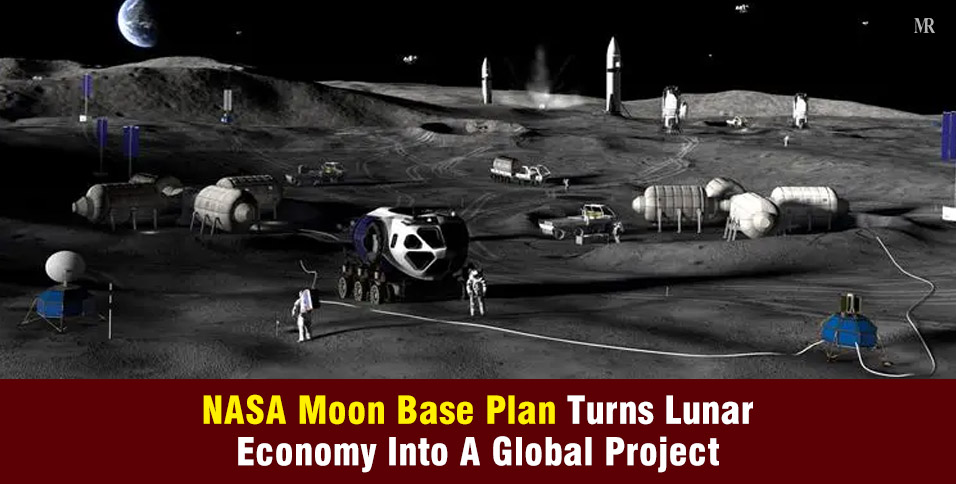
During the recent “Ignition” event on March 24, 2026, the agency announced a massive $20 billion plan to build a permanent NASA Moon Base near the lunar south pole.
This is a bold plan in American space exploration, moving away from orbiting stations to establish a lasting human foothold on the lunar surface.
A New Chapter for NASA Artemis
The NASA Artemis program is no longer just about “flags and footprints”.
NASA Administrator Jared Isaacman explained that the goal is to stay and build a “muscle memory” for deep space operations.
To focus on the surface, NASA is pausing the “Gateway” lunar orbit station. Instead, the agency will repurpose that hardware and leverage international partner commitments to build the Moon Base design directly on the lunar terrain.
“The clock is running in this great‑power competition, and success or failure will be measured in months, not years,” said Jared Isaacman.
The NASA Moon Base Timeline: A Three-Phase Strategy
The space agency outlined a clear NASA Moon Base timeline divided into three distinct steps:
- Phase One (Build, Test, Learn): This phase focuses on repeatable missions using commercial landers to deliver rovers and power systems.
- Phase Two (Establish Early Infrastructure): NASA will move toward semi-habitable infrastructure to support regular astronaut stays, incorporating major international contributions like Japan’s pressurized rover.
- Phase Three (Enable Long-Duration Human Presence): The final stage involves heavy-duty habitats from Italy and utility vehicles from Canada to transition to a permanent lunar base.
Powering the Future with Nuclear Energy
One of the most exciting parts of the NASA moon base concept is the jump into nuclear technology.
Because solar power is limited in the deep shadows of the lunar south pole, NASA is developing fission reactors to provide reliable electricity.
The agency plans to launch Space Reactor-1 Freedom by late 2028.
This will be the first nuclear-powered interplanetary spacecraft, heading to Mars to test propulsion and deploy a “Skyfall” fleet of helicopters to scout the Red Planet.
This technology will eventually provide the power needed for a continuous human presence on the Moon.
Turning the Lunar Economy Global
NASA plans to turn the Moon Base into a global project by integrating international partners and private industry.
The agency is leaning on companies like SpaceX and Blue Origin to provide landing services, with a goal of at least two crewed landings every year.
| Partner/Entity | Contribution to Global Project |
| Commercial Providers | Provide frequent, competitive lunar landing services. |
| JAXA (Japan) | Developing a pressurized rover for surface mobility. |
| ASI (Italy) | Building Multi-purpose Habitats for long-term stays. |
| CSA (Canada) | Providing the Lunar Utility Vehicle for logistics. |
By opening the lunar surface to researchers and students nationwide and working with global partners, NASA is creating a competitive commercial ecosystem rather than a government-only project.
End Note
By committing $20 billion over the next seven years, NASA is ensuring that America remains a leader in space.
This plan isn’t just about exploring; it is about building an economy that reaches beyond Earth.
With a clear vision for the NASA Moon Base, the agency is ready to turn the moon into a stepping stone for the eventual journey to Mars
Maria Isabel Rodrigues