Mirror Review
September 18, 2026
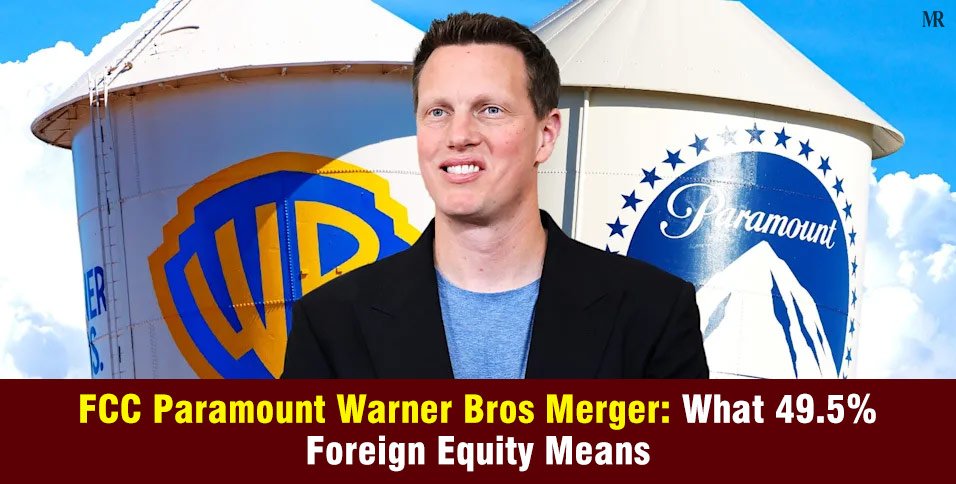
The FCC Paramount Warner Bros merger review has cleared a major foreign-investment hurdle. The Federal Communications Commission’s Media Bureau has approved Paramount Skydance’s request to accept foreign equity above the usual 25% benchmark as part of its proposed acquisition of Warner Bros. Discovery.
The decision is significant because the transaction is expected to leave foreign investors with about 49.5% of Paramount’s equity. However, the FCC approval does not give those investors voting control or governance rights. The Ellison family and RedBird Capital Partners are expected to remain the sole holders of Paramount’s Class A shares, representing 100% of the voting shares after the transaction closes.
What Did the FCC Approve for the Paramount Warner Bros Merger
The Paramount Warner Bros FCC approval allows foreign investors to hold indirect equity above the 25% benchmark through non-voting Class B shares. The FCC also granted advance authorization for individual foreign investors to hold up to 20% of Paramount’s indirect equity under the approved framework.
The ruling goes beyond the transaction’s expected 49.5% foreign-equity level. The FCC found it was in the public interest to permit up to 100% aggregate indirect foreign equity in Paramount, subject to applicable FCC requirements and national-security conditions. Therefore, the FCC foreign ownership waiver Paramount received concerns the ability to hold foreign equity above the normal benchmark, rather than granting foreign investors voting control.
Why Paramount Is Expected to Have 49.5% Foreign Equity
The 49.5% foreign equity Paramount structure is linked to the financing of Paramount Skydance’s proposed acquisition of Warner Bros. Discovery.
The expected foreign investment includes several Middle Eastern sovereign wealth funds. Saudi Arabia’s Public Investment Fund is expected to hold 15.1%, Abu Dhabi-based L’Imad Holding is expected to hold 12.8%, and Qatar Investment Authority’s QIA TMT Holding is expected to hold 10.6%. Together, these three Middle Eastern investors in Paramount account for 38.5% of the expected foreign equity.
Other foreign equity participants include passive limited-partner investors in funds managed by RedBird Capital Partners and foreign-based entities holding Paramount Class B shares. The Paramount Skydance foreign investment structure therefore separates the economic interests of foreign investors from the voting rights attached to Class A shares.
Do Foreign Investors Have Voting Control of Paramount?
The Paramount foreign investors covered by the FCC approval will hold non-voting equity under the approved structure.
Paramount’s SEC filing states that the shares issued through the equity syndication are non-voting. It also confirms that the Ellison family and RedBird will remain the sole owners of Paramount Class A Common Stock, representing 100% of the voting shares after the transaction closes.
That distinction is central to the Paramount foreign equity ownership structure: 49.5% economic equity does not mean 49.5% voting control. Foreign investors can participate financially in Paramount, while voting and governance rights remain separated from those foreign equity interests.
What Restrictions Did the FCC Place on Foreign Investors?
The FCC foreign ownership rules attach specific conditions to the approved foreign-investment structure. Foreign investors cannot hold voting stock under the approved arrangement or receive rights that would allow them to influence Paramount’s management or content decisions. The approval also restricts access to certain non-public data concerning U.S. persons.
The approved framework therefore limits foreign investors from:
- Holding voting stock under the approved arrangement
- Receiving governance rights
- Influencing Paramount’s content decisions
- Directing or controlling Paramount’s management
- Accessing restricted non-public data concerning U.S. persons
Paramount must also return to the FCC before changing the approved restrictions or granting foreign investors voting rights. These conditions form an important part of the FCC Paramount Warner Bros foreign investment framework.
Why the FCC Foreign Ownership Limit Matters
The FCC foreign ownership limit matters because Paramount controls U.S. broadcast stations through its CBS business. Section 310(b)(4) of the Communications Act establishes a 25% statutory benchmark for indirect foreign ownership and voting interests involving companies that control certain U.S. broadcast licenses.
Paramount therefore sought FCC authorization for foreign equity above that benchmark as part of its financing structure. The FCC Media Bureau foreign ownership ruling permits the higher level of indirect foreign equity while maintaining restrictions on voting rights, governance, management influence, and access to certain U.S. data.
What Is Team Telecom’s Role in the Paramount Deal?
The foreign investment also went through a national-security review by Team Telecom, the U.S. government committee that evaluates foreign participation in the telecommunications sector. Paramount said the review addressed safeguards concerning U.S. personal data and the rights and access of foreign investors.
The Paramount foreign investment national security review therefore formed part of the safeguards surrounding the transaction. The FCC’s approval incorporates restrictions designed to separate foreign economic participation from control over Paramount’s management, content decisions, and sensitive U.S. data.
What Does the FCC Approval Mean for Paramount and Warner Bros.?
The FCC’s Paramount-Warner Bros merger decision addresses a specific regulatory issue surrounding Paramount Skydance’s proposed $110 billion acquisition of Warner Bros. Discovery. The ruling allows substantial foreign equity while preserving voting control within the Ellison family and RedBird Capital Partners’ ownership structure.
The Warner Bros. Discovery merger FCC decision also clarifies the distinction between foreign economic ownership and corporate control. While the transaction is expected to result in about 49.5% foreign equity, the approved structure prevents those foreign investors from receiving equivalent voting or governance authority.
Is the Paramount Warner Bros Merger Complete?
The FCC approval does not by itself complete the Paramount Warner Bros deal. A separate legal challenge to the proposed acquisition remains underway, with a trial scheduled for March 2027. The FCC ruling therefore resolves the foreign-investment issue before the agency while the broader transaction continues through its remaining legal process.
For the Paramount Warner Bros merger 2026, the decision establishes the conditions under which foreign investors can participate economically in the proposed combined company. The transaction can now move forward under a structure that permits substantial foreign equity while keeping voting and governance control separate from those investments.
Gurushanth S Jatti