Mirror Review
March 31, 2026
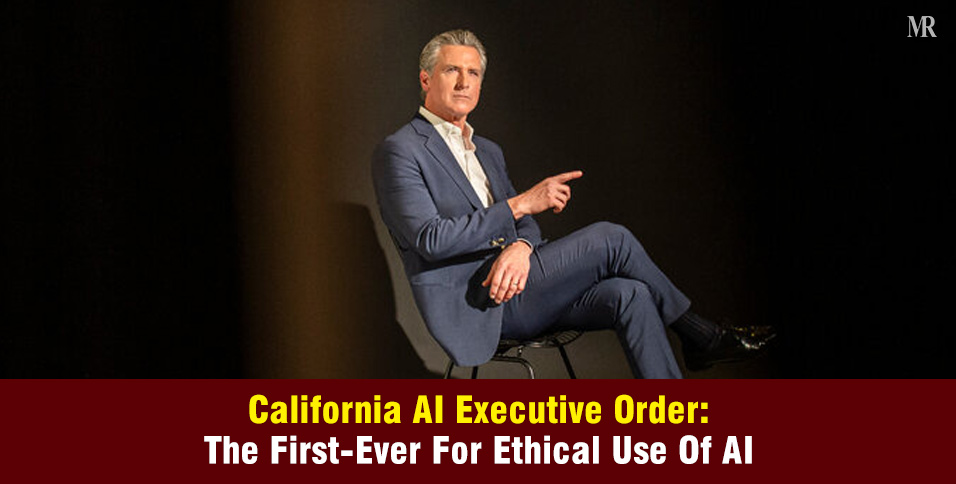
On March 30, 2026, Governor Gavin Newsom signed a first-of-its-kind California AI Executive Order to strengthen protections and ensure the ethical use of artificial intelligence.
This move establishes rigorous procurement standards for companies doing business with the state, requiring them to prove that their technology meets high safety and privacy benchmarks.
As the federal government rolls back previous oversight, California is creating a blueprint for how a global economic power can balance innovation with public safety.
Why the Newsom Executive Order AI Matters Now
California is currently the fourth-largest economy in the world and serves as the primary hub for global tech talent.
While the Trump administration has recently dismantled federal contracting standards and discouraged state-level regulations, Governor Newsom is taking the opposite approach.
This Newsom executive order on AI aims to prevent “bad actors” from exploiting user data or violating civil rights through unvetted AI systems.
The Governor emphasized the necessity of this balance during the announcement, stating: “California’s always been the birthplace of innovation. But we also understand the flip side: in the wrong hands, innovation can be misused in ways that put people at risk.”
New Standards for State AI Contracts
The California Executive Order on AI directs the Government Operations Agency to overhaul how the state buys technology.
Under these new rules, the state has four months to develop policies that prioritize public safety.
Companies seeking state contracts must now demonstrate they have safeguards against:
- Illegal Content: The exploitation or distribution of prohibited material.
- Harmful Bias: Models that lack technology to prevent discriminatory outcomes.
- Rights Violations: Actions that subvert free speech, privacy, or civil rights.
- Deepfakes: Companies must show policies to prevent the spread of child sexual abuse material and violent pornography.
A significant highlight of the California AI Executive Order is the focus on digital authenticity.
The Governor has directed the California Department of Technology to create the nation’s first best practices for watermarking AI-generated images and manipulated videos.
This ensures that residents can distinguish between real media and AI-generated content to be safe from misinformation and scams.
Protecting the Workforce Through Digital Democracy
California is also addressing concerns about job security and economic disruption caused by automation.
Through a platform called Engaged California, the state is launching a massive public engagement effort.
This “digital democracy” tool will allow citizens to help shape how the state responds to AI’s impact on the workforce.
California’s AI Dominance by the Numbers
The state’s proactive stance is backed by its massive presence in the industry:
| Metric | California’s Share |
| Top Global AI Companies | 33 of the top 50 |
| U.S. AI Startup Funding | 51% (Bay Area) |
| U.S. AI Job Postings | 15.7% (#1 in U.S.) |
| Global VC AI Funding | Over 50% (Bay Area) |
Strengthening the California Executive Order on AI
Beyond procurement, the state is already integrating “GenAI” to improve public services. This includes tools to help residents navigate state benefits and initiatives to reduce highway congestion and detect wildfires earlier.
By partnering with industry giants like Nvidia, Google, and Microsoft, California is also training over two million students to ensure the next generation is ready for an AI-driven economy.
Ultimately, the California AI Executive Order serves as a defiant stand against federal deregulation.
While Washington views state rules as “cumbersome,” California views them as essential protections for its citizens and its status as the world’s leader in innovation.
Maria Isabel Rodrigues