Mirror Review
March 02, 2026
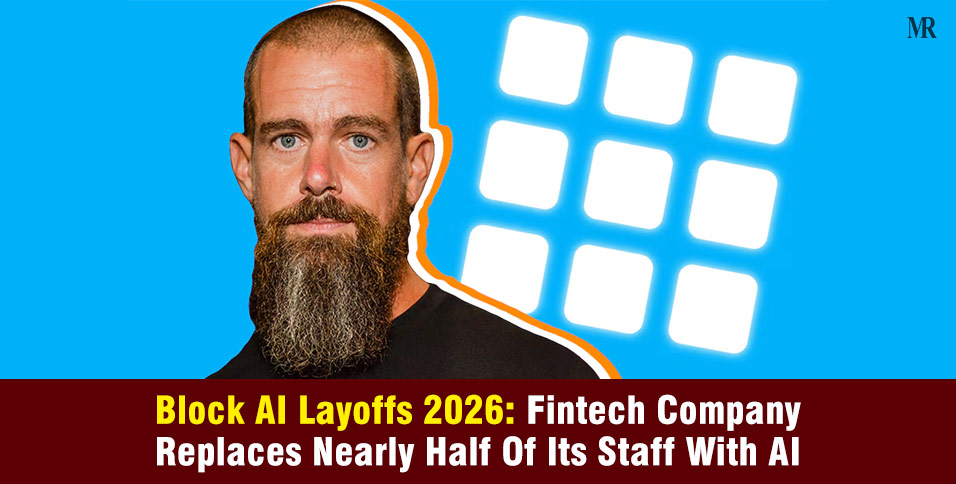
Block, the fintech company behind Cash App and Square, is laying off nearly half of its workforce as it reshapes itself around artificial intelligence.
The Block AI layoffs will impact more than 4,000 employees globally, shrinking the workforce from over 10,000 to just under 6,000. This marks one of the most aggressive workforce reductions in the fintech sector so far.
At the center of the Block company layoffs decision is Chair CEO Jack Dorsey, who says AI tools and smaller teams are changing how companies are built and run.
Why Block Says AI Drove the Layoff Decision
In an internal note shared publicly, Dorsey said the company is not in financial trouble. Revenue is growing, profitability is improving, and customer usage continues to rise.
According to him, the real shift is structural.
“The intelligence tools we’re creating and using, paired with smaller and flatter teams, are enabling a new way of working,” Jack Dorsey wrote.
He added that AI is not a future experiment at Block. It is already changing how products are built and maintained.
This framing has put Block AI layoffs at the center of a broader AI job replacement debate about whether companies are using AI as a genuine productivity shift or as a justification for cost cuts.
Why Block Chose One Big Cut Instead of Many
Jack Dorsey, Block Principal Executive Officer, explained that he faced two options:
- Reduce headcount slowly over several years
- Make a large, clear decision now
He chose the second approach.
“Repeated rounds of cuts are destructive to morale and focus,” he said.
By acting promptly, Block believes it can rebuild more quickly and avoid constant uncertainty within the company.
Furthermore, after-hours trading stocks rose 20% after the Block news.
Severance and Support for Laid-Off Employees
Block’s severance package is more generous than many recent tech layoffs.
Affected employees will receive:
- 20 weeks of base pay
- 1 extra week per year of tenure
- Equity vested through the end of May
- 6 months of healthcare coverage
- Corporate devices
- $5,000 for transition support
Employees outside the US will receive similar benefits based on local laws.
This approach has drawn comparisons to severance packages offered by other big tech firms during recent layoffs.
What The Layoffs Mean for Block’s Future
For those staying, Dorsey made it clear that AI will sit at the core of everything Block does.
That includes:
- How teams work
- How products are built
- How customers interact with Block’s platforms
He also said customers will feel the change, as Block moves toward tools that let businesses build features directly using Block’s capabilities.
This is a long-term shift, not a temporary adjustment.
Why the Block AI Layoffs Matter Beyond One Company
The Block layoffs 2026 is a trend in the tech industry.
Until recently, AI was framed as a tool that supports workers. Block is now openly saying it changes how many workers are needed in the first place.
For employees, investors, and founders, the message is clear:
AI-driven efficiency is no longer theoretical. It is already reshaping headcount decisions at major companies.
The Growing Controversy Around Block’s Layoffs
Block is a regulated financial services company, not a tech startup that can afford to experiment freely.
- Square processes small business payments
- Cash App handles deposits, transfers, and taxes
- Afterpay runs a buy-now-pay-later business
And all of this depends on strong compliance.
That context matters because a California federal judge ruled in January 2026 that Block’s leaders must face claims tied to compliance oversight failures.
Against that backdrop, the idea that replacing thousands of human roles with AI reduces risk requires a leap of faith.
The AI framing is convenient, but what Wall Street clearly understands is costs.
Labor is one of Block’s biggest expenses, and cutting over 4,000 jobs improves margins fast.
Thus Forbes suggests the Block layoffs were driven less by AI readiness and more by the pressure to satisfy investors.
Final Take
The Block AI layoffs are less about survival and more about reshaping the company for what its leadership believes comes next.
Block is betting that smaller teams supported by AI can operate more efficiently and reduce costs while still driving growth.
Whether that approach strengthens the business or exposes new risks will become clear over time.
For now, the Block layoffs 2026 highlight how AI is no longer just a tool inside tech companies, but a factor actively influencing who stays, who leaves, and how work gets done.
FAQs
- What does Block do?
Block is a financial technology company that builds tools to help people and businesses manage, move, and accept money. It focuses on digital payments, commerce software, and financial services for consumers and sellers.
- What services does Block offer?
Block offers a range of fintech services, including:
- Point-of-sale and payment tools through Square
- Peer-to-peer payments via Cash App
- Business software for merchants and small businesses
- Financial tools such as banking, payroll, and lending services
- Why did Block announce AI-related layoffs in 2026?
Block said it reduced its workforce to align with a new way of working that relies on artificial intelligence and smaller, flatter teams. The company stated the decision was strategic, not due to financial distress.
- How many employees are affected by the Block AI layoffs?
The Block AI layoffs affected more than 4,000 employees, reducing Block’s workforce from over 10,000 to just under 6,000.