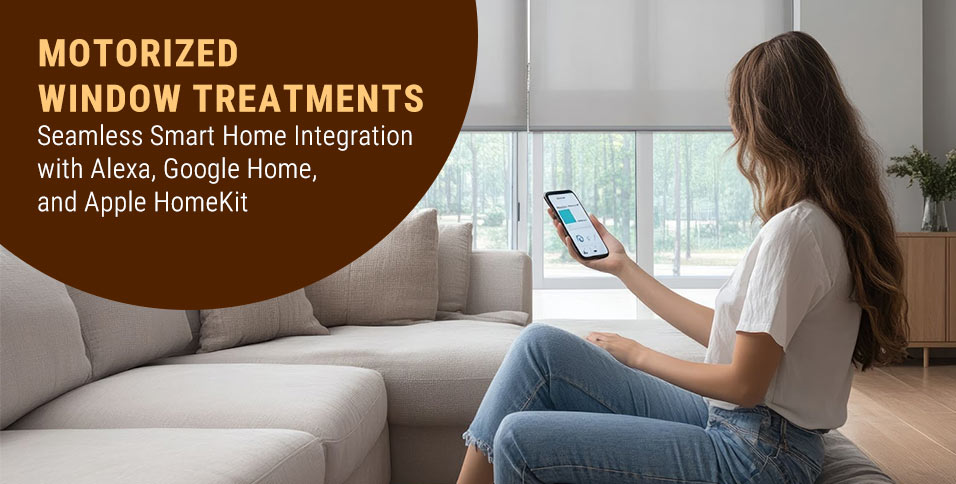
Motorized window treatments have become a defining feature of modern smart homes — combining comfort, energy efficiency, and security.
Blinds to Go leads in this space, offering versatile motorized options such as multi-channel remotes, app-based control, and motorized wands for a classic touch. Designed for seamless integration with Amazon Alexa, Google Home, and Apple HomeKit, these solutions make managing light and privacy effortless. This article explores how these smart systems connect to your home ecosystem and what to consider for an intelligent, automated setup.
The Rise of Smart Motorized Blinds
The journey of window treatments has seen a remarkable evolution, from manual cords and wands to simple remote controls, and now to sophisticated smart home integration. This progression reflects a growing demand for greater convenience and connectivity in our daily lives. Smart motorized window treatments represent the pinnacle of this evolution, offering a level of control and automation that was once the realm of science fiction.
The core advantages of integrating motorized window treatments into a smart home are multifaceted:
•Convenience:
The ability to control window coverings with a voice command, a tap on a smartphone, or through automated schedules provides unparalleled ease of use.
•Energy Efficiency:
Smart integration allows for precise management of natural light and solar heat gain, contributing to reduced heating and cooling costs.
•Security:
Automated schedules and remote control capabilities can simulate occupancy, enhancing home security.
Integration with Major Smart Home Ecosystems
The true power of smart motorized window treatments is realized through their integration with popular smart home platforms. This connectivity allows for centralized control and the creation of complex automation routines.
Amazon Alexa
Amazon Alexa has become a ubiquitous presence in smart homes, and its compatibility with motorized window treatments is a key feature. Integration is typically achieved in one of two ways:
1. Via a Smart Hub:
Many motorized window treatment systems use a proprietary hub that communicates with the window coverings and then connects to Alexa. This allows for voice control and inclusion in Alexa routines. For example, you can create a “Good Morning” routine that opens your blinds, turns on the lights, and reads the morning news.
2. Direct Integration:
Some newer motorized blinds and shades offer direct integration with Alexa, eliminating the need for a separate hub. These often use Wi-Fi or other standard communication protocols.
Popular brands like Yoolax and Hunter Douglas (with their PowerView system) offer robust Alexa integration, allowing for commands like, “Alexa, open the living room shades to 50%.”
Google Home
Similar to Alexa, Google Home provides seamless control over compatible motorized window treatments through the Google Assistant. Integration methods are also comparable, relying on either a smart hub or direct connectivity. Once connected, you can use voice commands to control your blinds and shades, and include them in Google Home routines. For instance, a “Movie Night” routine could dim the lights, close the shades, and turn on the TV.
Brands like Yoolax and Smartblinds offer products that work with Google Home, providing users with flexible control options.
Apple HomeKit
Apple HomeKit offers a secure and user-friendly platform for smart home control, and a growing number of motorized window treatments are compatible with it. HomeKit integration often requires a hub, such as the Lutron Smart Hub for Serena Shades, or may be achieved directly through technologies like
Matter, the new smart home standard. With HomeKit, you can control your window treatments using Siri voice commands or the Home app on your Apple devices. You can also create automations based on time of day, your location, or the status of other HomeKit accessories. Lutron’s Serena Shades and OmniaBlinds (powered by Eve Motionblinds) are notable examples of HomeKit-compatible options, offering a high degree of reliability and integration.
Blinds to Go: A Smart Choice for Motorized Solutions
Blinds to Go has positioned itself as a key player in the motorized window treatment market, offering a variety of solutions that cater to different needs and budgets. Their commitment to smart integration is evident in their product offerings:
•Multi-Channel Remotes:
For basic control, their remotes can manage up to 15 windows from a single device.
•App and Hub Control:
For advanced smart integration, Blinds to Go provides a dedicated mobile app and hub system. This allows for creating schedules, controlling window treatments remotely, and integrating with smart home platforms.
•Bluetooth Connectivity:
Some of their products feature Bluetooth connectivity, enabling direct control from a smartphone without the need for a hub.
Key Features and Benefits of Smart Integration
The integration of motorized window treatments with smart home platforms unlocks a range of powerful features and benefits:
•Automated Scheduling:
Set your blinds and shades to open and close automatically based on the time of day, sunrise/sunset, or your daily routines.
•Energy Efficiency:
By automating your window treatments, you can optimize the amount of natural light and heat that enters your home, reducing your reliance on artificial lighting and HVAC systems.
•Enhanced Security:
Simulate occupancy by scheduling your blinds to open and close at various times, even when you’re away from home.
•Unparalleled Convenience:
The ability to control your window treatments with your voice, your phone, or through automated routines adds a new level of convenience to your daily life.
•Child and Pet Safety:
The cordless design of motorized window treatments eliminates the safety hazards associated with traditional corded blinds and shades.
Choosing the Right Smart Motorized Window Treatment
When selecting a smart motorized window treatment, there are several factors to consider:
•Compatibility:
Ensure that the window treatment is compatible with your preferred smart home ecosystem (Alexa, Google Home, HomeKit).
•Power Options:
Choose between hardwired, battery-powered, or solar-powered options based on your installation needs and preferences.
•Type of Treatment:
Select the style of window treatment that best suits your aesthetic and functional requirements (drapery, shades, blinds).
•Hub vs. Direct Integration:
Decide whether you prefer a system that requires a hub or one that offers direct integration with your smart home platform.
Conclusion
Smart motorized window treatments are no longer a futuristic concept but a practical and accessible solution for enhancing the modern home. With a growing number of options from providers like Blinds to Go , and seamless integration with major smart home platforms like Alexa, Google Home, and Apple HomeKit, homeowners can now enjoy an unprecedented level of convenience, energy efficiency, and security. As smart home technology continues to advance, motorized window treatments will undoubtedly play an even more integral role in creating intelligent, comfortable, and connected living spaces.