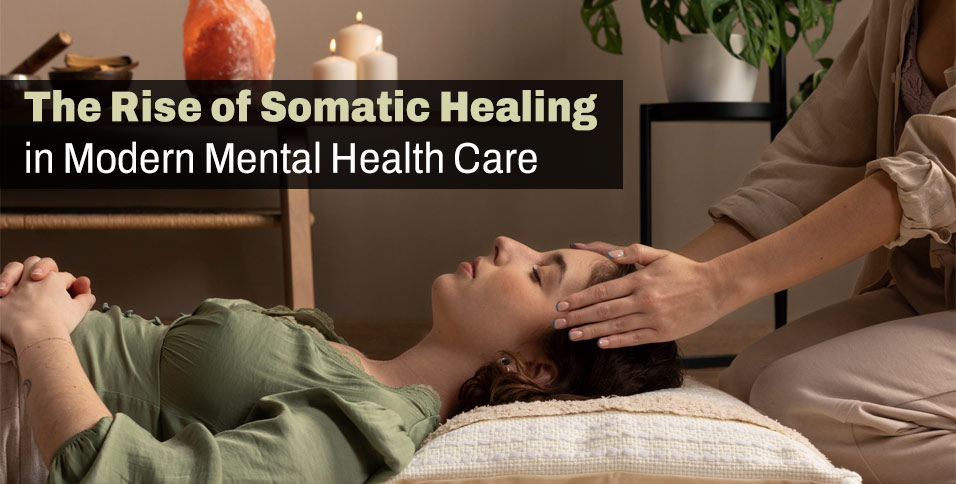
Some people spend years in talk therapy, developing real insight into their patterns, only to find that understanding something and shifting it are two different things. Stress still tightens the chest. Sleep still suffers. The body keeps doing what it has always done. For a growing number of people, practices like EMDR, breathwork, and yoga have offered something that verbal processing alone did not.
Embodied mental health describes approaches that work through the body, using breath, movement, sensation, and the nervous system, to influence emotional states. Interest in these methods has grown considerably in both clinical and wellness settings, and the science behind them, while still developing, is beginning to take shape.
The Body Keeps Score
Stress and trauma are not purely mental events. They register physically, through muscle tension, disrupted digestion, poor sleep, and a nervous system that stays switched on long after a threat has passed. Understanding this helps explain why changing the body’s state can influence emotional experience. Slowing the breath, adjusting posture, or engaging in deliberate movement can shift arousal levels and, with them, mood and cognition. Clinicians sometimes call this bottom-up regulation, drawing on the autonomic nervous system’s role in governing the fight-flight-freeze response.
What the Evidence Says About Key Practices
Breathwork has a growing evidence base. A 2023 systematic review and meta-analysis by Fincham et al. found small-to-medium effects in favor of breathwork over control conditions for reducing subjective stress and anxiety, supporting its use as a low-cost self-regulation tool. Zoe Tambling, LMFT and Clinical Director at Anchored Tides Recovery, puts the practical value simply. “Breath is one of the few things a person can consciously control in a moment of overwhelm,” she says, “and structured breathing practices genuinely help regulate the nervous system in ways that support emotional stability.” Tambling also echoes what the research suggests about variability across protocols, noting that breathwork “works best as part of a broader approach to mental health care rather than a standalone fix.”
EMDR uses bilateral stimulation, typically alternating eye movements, taps, or sounds, to help the brain reprocess traumatic memories while staying in contact with body sensations. A meta-analysis of randomized controlled trials published in PLOS One found moderate effect sizes for reductions in PTSD symptoms, depression, anxiety, and subjective distress. Gary Tucker, Chief Clinical Officer at D’Amore Mental Health, describes why the method reaches people that talk therapy sometimes does not. “Trauma doesn’t just live in our thoughts, it lives in the body, and EMDR works precisely because it engages both at once,” Tucker explains. “The bilateral stimulation helps the nervous system process what it’s been stuck holding, which is why people often experience relief that years of talk therapy hadn’t fully reached.”
Yoga and mindful movement build what researchers call interoception, the ability to notice and interpret internal bodily signals, which is closely connected to emotion regulation. A systematic review and meta-analysis in the British Journal of Sports Medicine found yoga-based interventions outperformed control conditions for anxiety and, after sensitivity analyses, for depression. The authors rated the overall certainty of evidence as very low due to high risk of bias and small sample sizes. Michael Anderson, Licensed Professional Counselor at Healing Pines Recovery, holds a similar view. “Yoga brings together movement, breath, and mindfulness in a way that can genuinely support someone working through anxiety or depression,” Anderson says, “and the evidence backs that up as a meaningful complement to treatment.” He is careful about framing, though. “It works well alongside established care, and the studies are clear that the certainty of evidence is still limited. For anyone drawn to it, keep it as part of a fuller plan.”
Cold exposure is perhaps the most talked-about and least studied of these practices. Preliminary work suggests repeated cold plunging may reduce cortisol responses over time and support autonomic flexibility. Kevin Belcastro, LMFT and Clinical Director at San Diego Transformation Center, finds the psychological dimension worth paying attention to. “Deliberately facing a controlled discomfort and coming out the other side does build a kind of tolerance that carries over into how a person handles stress more broadly,” Belcastro says, adding that some people report feeling calmer and more grounded overall, which aligns with what is known about stress inoculation and autonomic regulation. He is measured about the state of the evidence, though, advising that people approach it with “realistic expectations and a conversation with a doctor.”
A Shift in How Mental Health Is Understood
These practices reflect a gradual change in how clinicians and the public think about mental health. For decades, the dominant model focused almost entirely on thoughts, beliefs, and verbal processing. A more integrated view, drawing on psychophysiology and neuroscience, has since gained ground, one that treats the mind as inseparable from the body and its environment. Cultural factors are part of the story, too. Somatic practices have appeal in part as a counterweight to sedentary, screen-heavy lifestyles that leave people feeling disconnected from their physical selves.
Genuine Benefits, Honest Limitations
Accessibility is one of the clearest strengths of body-based approaches. Breathing and gentle movement are available to almost anyone, require little equipment, and can give people a tangible sense of agency over their own nervous system. At the same time, these methods are not suitable for everyone in every context, and some carry real risks for people with certain trauma histories or medical conditions.
Overselling somatic work as a universal answer can also distract from the structural factors, including workload, financial stress, and discrimination, that contribute to poor mental health in the first place. Integrated with conventional therapy and used with appropriate guidance, body-based practices can be a genuinely useful part of a broader approach to wellbeing.