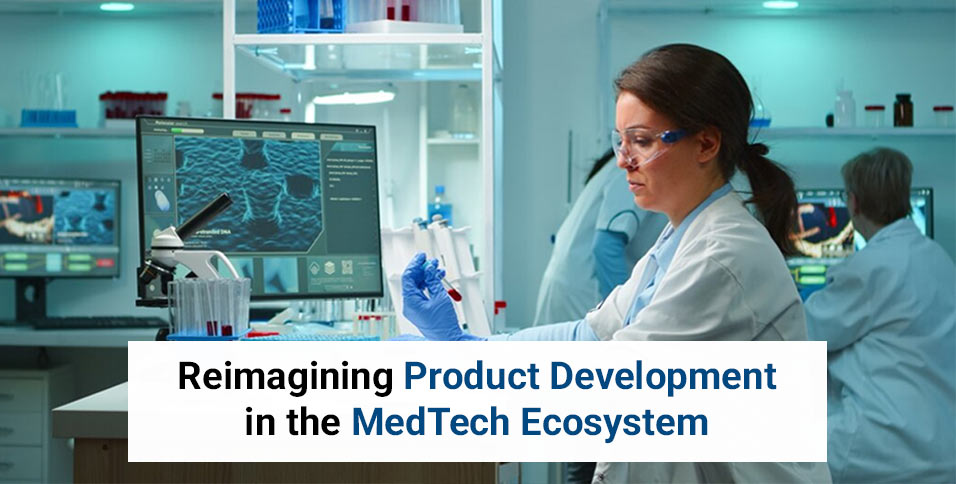
The MedTech sector is undergoing a profound transformation as traditional development models strain under the weight of increasing complexity. Once confined to incremental upgrades and conservative timelines, the industry now faces a demand for faster innovation cycles, robust regulatory adherence, and digital-first execution. As regulatory pressures mount and technologies become more interconnected, the limitations of legacy systems, both organizational and technological, are being starkly exposed. Stakeholders throughout the product lifecycle are recognizing that a fragmented approach to innovation is no longer viable.
Medical device companies today must manage a web of interdependent tools, regulatory frameworks, and specialized functions across continents. Clinical validation, manufacturing logistics, and post-market surveillance all demand seamless coordination, yet they are often siloed. These silos slow development, increase error margins, and limit the capacity for proactive compliance. The growing importance of personalized medicine and real-time diagnostics further complicates matters, requiring new levels of agility and precision. Companies are being called not just to adapt but to reinvent how they conceptualize and deliver value.
Accelerating Time-to-Market Without Sacrificing Quality
The need to reduce time-to-market is no longer just a competitive advantage; it is a business imperative. As consumer expectations grow and reimbursement models evolve, MedTech companies face pressure to bring innovations to clinical use swiftly while maintaining the highest quality standards. This balancing act is made even more complex by the regulated nature of healthcare, where safety and efficacy cannot be compromised. To navigate this dual mandate, companies are exploring ways to shorten cycles without undermining design rigor or documentation integrity.
Digital twins, simulation technologies, and modular development frameworks have gained traction as methods for compressing development timelines. These technologies enable teams to test and iterate on concepts in a virtual environment before physical prototypes are produced, reducing both costs and risks. However, the successful implementation of these tools hinges on having a digital infrastructure that is interoperable, traceable, and collaborative. In the absence of such infrastructure, even the most promising technological advances fall short of delivering speed at scale.
Furthermore, regulatory bodies are beginning to embrace digital submission pathways, prompting companies to adopt more integrated quality and compliance practices. By embedding validation activities earlier in the development process, organizations are avoiding the costly surprises that come from downstream defects or documentation gaps. This shift toward proactive compliance and in-process validation is fundamentally changing how products move from concept to commercialization. It also opens the door to greater transparency and trust between manufacturers, regulators, and healthcare providers. To support these new demands, MedTech companies are increasingly turning to integrated digital platforms that can unify complex processes across the product lifecycle.
One such platform, Enlil, exemplifies this next-generation approach to MedTech development. Designed as a cloud-native traceability environment, Enlil integrates QMS, PLM, ERP, and MES capabilities within a single digital workspace. It supports OEMs, contract manufacturers, and regulatory consultants alike, enabling seamless collaboration and real-time compliance throughout the product lifecycle. By bridging legacy silos and embedding traceability into every development phase, Enlil helps teams accelerate innovation without compromising regulatory rigor.
Rethinking Cross-Functional Collaboration
MedTech product development traditionally relied on sequential handoffs between engineering, clinical affairs, regulatory, and manufacturing departments. While this waterfall approach provided structure, it often led to inefficiencies and knowledge loss. In today’s environment, where speed and precision are paramount, a cross-functional model has become essential. Integrated development teams that span the entire product lifecycle can identify risks earlier, adapt to new insights more effectively, and create better-aligned outcomes across functions.
Cross-functional collaboration is not merely about frequent meetings or shared dashboards; it requires a foundational shift in how work is structured and how information flows. Breaking down institutional silos demands robust communication protocols, shared performance metrics, and a culture of co-ownership. Teams must learn to speak each other’s languages, with engineers understanding regulatory requirements, quality managers grasping design logic, and supply chain experts considering long-term clinical impact. This fusion of perspectives generates solutions that are both technically robust and practically viable.
Digital collaboration platforms play a pivotal role in facilitating this transformation. By providing a shared workspace with real-time traceability and version control, such platforms prevent miscommunications and redundant work. The ability to see the entire development chain, from design intent to final validation, empowers all stakeholders to contribute more meaningfully. In turn, this accelerates innovation while reducing friction and rework, aligning team output with both regulatory demands and market needs.
The Role of Data in Informed Decision-Making
Data is no longer just a byproduct of MedTech development; it is an asset that can unlock competitive advantage when harnessed effectively. The challenge lies in not just collecting data, but in contextualizing it, analyzing it, and applying it to inform decisions across the development continuum. Whether it’s identifying early design flaws or monitoring post-market performance, data-driven insights are redefining what successful product development looks like.
Yet, many companies struggle to integrate and utilize their data due to inconsistent formats, legacy databases, and organizational silos. This lack of interoperability prevents decision-makers from seeing the full picture, leading to reactive rather than proactive problem-solving. Moreover, without a structured way to trace how each decision was made and validated, companies expose themselves to compliance risks and inefficiencies. What’s needed is a holistic approach to data management that spans engineering, clinical, regulatory, and commercial domains.
Machine learning and AI are beginning to fill this gap, offering predictive models that can flag risks, optimize resource allocation, and suggest design improvements. However, these technologies require clean, comprehensive datasets that are captured in real time and accessible across teams. The future of MedTech innovation will be shaped not just by who has the best data, but by who can make it work cohesively across a complex and regulated ecosystem. Companies that build strong data foundations will be better positioned to innovate confidently and continuously.
Regulatory Readiness as a Competitive Strategy
In the past, regulatory compliance was often seen as a bottleneck to innovation. Today, it is increasingly viewed as a strategic enabler. Companies that prioritize regulatory readiness throughout the development process are able to adapt faster to new guidance, reduce delays, and establish themselves as trusted entities with regulators and healthcare partners. In an industry where trust is currency, early and consistent alignment with regulatory expectations can translate into meaningful business value.
Achieving this level of preparedness requires a proactive approach that integrates regulatory insights from day one. Rather than retrofitting documentation and validation efforts at the end, leading firms are embedding regulatory criteria into their design controls and risk management protocols. This shift ensures that compliance is not an afterthought but a co-driver of innovation. It also allows teams to identify potential roadblocks earlier and address them with less disruption and cost.
Moreover, global regulatory harmonization is creating both opportunities and complexities. As markets become more interconnected, MedTech firms must navigate overlapping standards and region-specific requirements with agility. A flexible, centralized platform that supports multiple regulatory schemas can streamline submissions and reduce time spent on rework. In this environment, regulatory fluency is not just a requirement for market entry; it is a differentiator that separates agile innovators from those mired in administrative inertia.
Engaging the Broader Ecosystem of Partners
MedTech innovation no longer happens within the walls of a single organization. Contract manufacturers, design consultants, academic researchers, and regulatory advisors all play crucial roles in bringing new products to market. As a result, successful development increasingly depends on an ecosystem approach, where trust, transparency, and technology converge to drive shared outcomes. Building and maintaining this ecosystem is both a strategic priority and an operational challenge.
The key lies in creating frameworks for collaboration that transcend traditional vendor-client relationships. Strategic partnerships are defined by mutual accountability, clear communication, and shared data environments. By aligning incentives and fostering joint problem-solving, companies can tap into external expertise without sacrificing internal coherence. This networked model also allows for greater specialization, enabling core teams to focus on high-impact areas while leveraging outside capabilities for scale and flexibility.
To support this collaborative paradigm, infrastructure must evolve. Secure data sharing, joint development environments, and permission-based access controls are essential features in today’s development platforms. With the right tools in place, external partners can participate in design reviews, contribute to risk assessments, and support compliance documentation in real time. As innovation cycles compress, the ability to bring partners into the fold quickly and effectively will define competitive advantage.
Toward a More Resilient and Agile Future
The events of the past few years have underscored the importance of resilience in the MedTech industry. From supply chain disruptions to pandemic-era regulatory shifts, companies have had to adapt in real time without compromising patient safety. This environment has exposed the fragility of traditional development models and highlighted the need for systems that are both robust and agile. Resilience is no longer reactive; it must be designed into the very architecture of product development.
Agility in this context means more than speed. It means the capacity to pivot development priorities, reconfigure supply chains, and absorb regulatory changes without derailing the entire lifecycle. Companies that invest in digital infrastructure, workforce adaptability, and modular design principles are better equipped to thrive under uncertainty. These organizations view change not as a threat, but as an opportunity to improve, learn, and lead.
Looking ahead, the MedTech ecosystem is poised for a new era defined by connected intelligence, ecosystem collaboration, and regulatory foresight. Companies that embrace these pillars will not only bring better products to market but also help redefine the standards of patient care. By reimagining product development as a strategic, data-driven, and collaborative process, the industry can meet the demands of tomorrow while delivering value today.
Also Read: Investor Sergey Tokarev: Why Health Tech is a Game-Changer for Business and Society