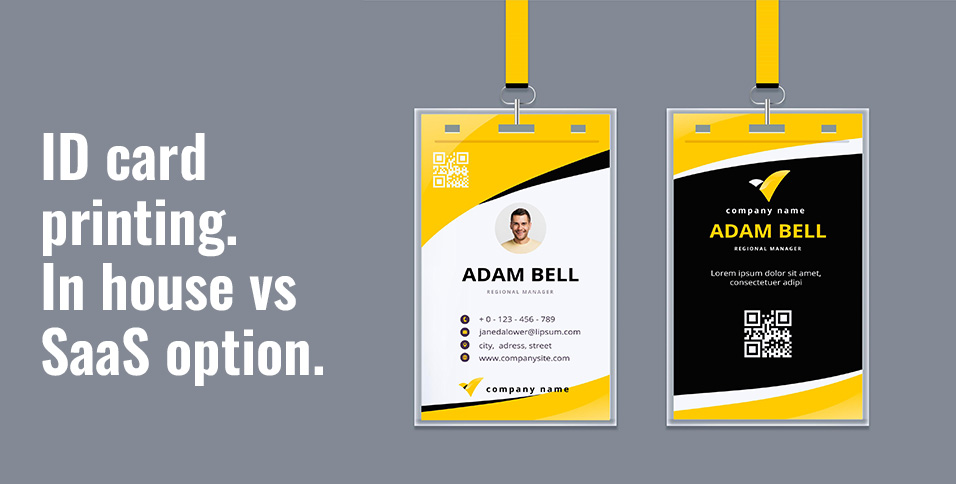
Plastic card printing has long been a staple for organizations that need ID badges, membership cards, or access credentials. At first glance, owning a plastic card printer may seem like a straightforward, one-time investment. In reality, the total cost of ownership is significantly higher than most small and mid-sized organizations expect. When you factor in hardware, supplies, maintenance, and operational overhead, outsourcing card printing through a SaaS (Software-as-a-Service) provider often becomes the more practical and cost-effective solution.
The High Upfront Cost of Card Printers
Professional-grade plastic card printers are not cheap. Entry-level models may start around a few hundred dollars, but reliable, business-grade printers with encoding capabilities (magstripe, RFID, or smart cards) can easily run into the thousands. For organizations that require high-quality printing, lamination, or security features like holographic overlays, costs climb even higher.
Unlike typical office printers, card printers are specialized devices. This means fewer vendors, less pricing competition, and higher costs for both initial purchase and replacement.
Ongoing Supply Expenses Add Up Quickly
Buying the printer is only the beginning. Plastic card printing requires a steady supply of consumables, including:
- Blank PVC cards
- Printer ribbons
- Cleaning kits
- Lamination films (if applicable)
These supplies are proprietary in many cases, meaning you’re locked into a specific vendor ecosystem. Ribbon costs alone can become substantial, especially for organizations printing cards regularly. Misprints or reprints further increase waste and expenses.
Maintenance and Downtime Costs
Plastic card printers require regular maintenance to function properly. Dust, debris, and ribbon residue can quickly degrade print quality or even damage the printer. Routine cleaning is mandatory, and neglecting it can lead to costly repairs.
Even with proper care, components like printheads wear out over time. Replacing a printhead can cost hundreds of dollars—sometimes close to the price of a new printer.
Downtime is another hidden cost. If the printer fails, card production stops. For organizations that rely on timely badge issuance (e.g., onboarding employees or issuing visitor passes), delays can disrupt operations.
Technical Expertise and Training
Operating a card printer isn’t always plug-and-play. Staff must be trained to:
- Configure print settings
- Align cards properly
- Troubleshoot errors
- Manage encoding features
This creates a dependency on specific employees who understand the system. If those employees leave or are unavailable, productivity suffers.
Additionally, integrating card printers with existing systems (HR software, access control systems, or databases) often requires IT involvement, adding further complexity and cost.
Security and Compliance Considerations
Printing ID cards in-house also introduces security risks. Sensitive employee or member data must be handled securely, and physical cards must be protected from misuse or theft during production.
Organizations may need to implement additional controls, such as secure print areas, audit logs, and restricted access to printing systems—all of which increase operational overhead.
The SaaS Advantage: Outsourcing Card Printing
For smaller organizations, outsourcing ID badges printing to a SaaS provider offers a compelling alternative. Instead of managing hardware and supplies, organizations can shift to a service-based model that simplifies the entire process.
Here’s why SaaS card printing makes more sense:
1. No Upfront Hardware Investment
With SaaS, there’s no need to purchase expensive printers or maintain inventory of supplies. This eliminates a major capital expense and converts it into a predictable operating cost.
2. Predictable Pricing
Most SaaS providers offer subscription-based pricing or per-card fees. This makes budgeting easier and avoids surprise costs related to repairs, replacements, or supply shortages.
3. Professional Quality and Scalability
SaaS providers specialize in card production. They use industrial-grade equipment and processes to ensure consistent, high-quality output. Whether you need 10 cards or 10,000, the service scales effortlessly without additional investment on your end.
4. Reduced Operational Burden
Outsourcing eliminates the need for staff training, maintenance, and troubleshooting. Your team can focus on core business activities instead of managing printing infrastructure.
5. Faster Turnaround and Reliability
Reputable SaaS providers offer fast production and shipping times, often with tracking and delivery guarantees. This reduces downtime risks and ensures cards are delivered when needed.
6. Enhanced Security
SaaS providers typically have robust security protocols in place, including encrypted data handling and secure production environments. This can be more reliable than managing security internally, especially for smaller organizations with limited resources.
When Does In-House Printing Still Make Sense?
While SaaS is ideal for many small organizations, in-house printing may still be justified if:
- You print a very high volume of cards daily
- You require instant, on-demand issuance (e.g., secure facilities)
- You already have trained staff and infrastructure
However, for most small to mid-sized organizations, these conditions don’t apply.
Conclusion
Plastic card printers come with a surprisingly high total cost of ownership. Beyond the initial purchase, ongoing expenses for supplies, maintenance, training, and downtime can quickly outweigh the perceived benefits of in-house printing.
For smaller organizations, outsourcing <a href=”https://quickidcard.com”>ID badges printing</a> to a SaaS provider offers a more efficient, scalable, and cost-effective solution. By eliminating hardware headaches and shifting to a predictable service model, businesses can streamline operations while maintaining high-quality results.
In today’s environment, where flexibility and cost control are critical, SaaS-based card printing isn’t just an alternative—it’s often the smarter choice.