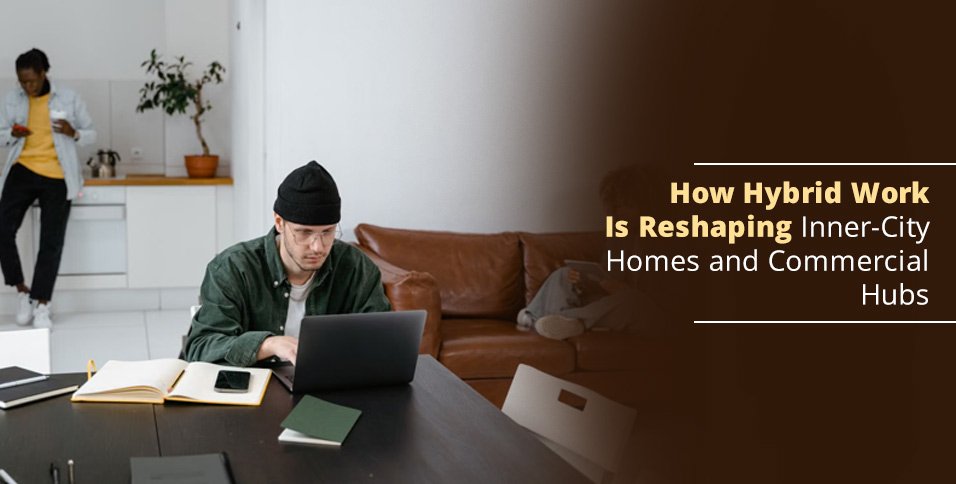
Walk through any inner-city neighborhood on a Tuesday morning and you’ll notice something odd. The coffee shops are packed at 10 AM, yet the commuter trains look half empty. Work didn’t disappear. It just packed its bags and moved into the spare bedroom, leaving both residential streets and commercial districts scrambling to catch up.
For decades, city planning operated on a predictable binary. You lived in a quiet residential pocket and commuted into a bustling business district from nine to five. That neat separation is officially dead. Today, homes need to function as high-output production studios, and offices have to justify why anyone should put on real pants to visit them.
The Death of the Cluttered Corner Desk
Remember when a “home office” meant shoving a cheap particleboard desk into the corner of a guest room? Those days are over. When two adults spend three or four days a week on back-to-back video calls, thin plaster walls become an immediate liability. Nobody wants their quarterly budget presentation interrupted by a blender or a barking dog.
Homeowners in established, older suburbs face a tough choice. Retrofitting a cramped, compartmentalized floor plan often costs almost as much as starting over, yet still leaves you with awkward room transitions and poor natural light. Because of this, many families are opting for a knock down rebuild to get acoustic privacy, dedicated dual workspaces, and zones that separate family life from professional demands.
Modern residential floor plans now treat acoustics like plumbing or electricity. Builders are installing solid-core doors, double-glazed windows, and staggered wall studs between work zones and living areas. Even natural light gets mapped differently. Architects position study windows to face north or south rather than west, preventing harsh afternoon glare from blowing out webcam feeds during late-day meetings.
Outdoor Living Pulls Double Duty
Screen fatigue is real, and staring at a monitor for eight hours inside a box makes people stir-crazy. Inner-city blocks rarely offer sprawling acreage, so designers are getting clever with micro-courtyards, rooftop terraces, and covered patios.
Weatherproof power outlets and mesh Wi-Fi extenders have become standard additions to backyard landscaping. A shaded deck isn’t just for weekend barbecues anymore. It’s a Tuesday afternoon reading nook for clearing out an inbox without feeling trapped indoors.
Commercial Hubs Become Destination Spaces
While homes are getting more structured, offices are loosening their ties. Commercial landlords realized quickly that rows of beige cubicles won’t lure remote workers away from their espresso machines and sweatpants. If a company wants staff to commute, the workspace needs to offer something a living room can’t.
Collaboration is the new currency. Commercial fit-outs are trading individual desks for modular lounges, soundproof phone booths, and café-style kitchens that encourage spontaneous brainstorming. When teams gather in person now, they aren’t sitting silently in front of spreadsheets. They’re whiteboarding, debating, and building camaraderie.
Foot traffic patterns in business precincts have shifted dramatically too. Mondays and Fridays look like ghost towns in many commercial corridors, while mid-week days see intense spikes in occupancy. Local cafés, gyms, and dry cleaners have adjusted their staffing and inventory around this three-day surge.
Hygiene and Air Quality Take Center Stage
Fluctuating headcounts create sneaky operational headaches for facility managers. A building might host fifty people on a Monday and four hundred on a Wednesday. Traditional, rigid maintenance routines either waste money cleaning empty rooms or leave high-traffic zones neglected during peak days.
Workplace hygiene also carries much higher stakes than it did a few years ago. Employees notice everything now, from air circulation to the cleanliness of shared touchpoints like meeting room tablets and kitchen handles. Commercial properties in thriving inner-city pockets rely on specialized office cleaning Abbotsford teams to match their schedules to actual building usage, focusing heavily on sanitization and indoor air quality right after peak mid-week surges.
Cleanliness isn’t just a background chore anymore. It’s a visible signal that an employer cares about staff wellbeing. Nobody wants to commute forty minutes just to sit at a dusty desk or use a neglected breakroom.
The Rise of the Twenty-Minute Neighborhood
Zoom out a bit, and you’ll see how these residential and commercial shifts feed into each other. When people split their week between home and headquarters, they spend far more money right outside their front doors. Suburban high streets and inner-city village strips are booming because workers grab lunch locally instead of buying salads near a downtown tower.
This shift has sparked a wave of mixed-use development. Ground-floor retail spaces, boutique fitness studios, and co-working hubs are popping up inside residential pockets that used to go quiet after dark. Commute times drop, local economies stay resilient, and neighborhoods feel alive all day long.
Designing for Whatever Comes Next
Flexibility is the golden rule for anyone buying, building, or leasing property right now. Rigid spaces age poorly. A spare room that can morph from a podcast studio into a nursery, or a commercial floor plate that expands and contracts with sliding glass partitions, holds its value far better than a single-purpose layout.
The line between where people live and where they earn a living will probably never snap back to its old boundaries. By rethinking acoustics at home and prioritizing human connection in commercial hubs, cities are quietly building a rhythm that actually fits how modern people work.