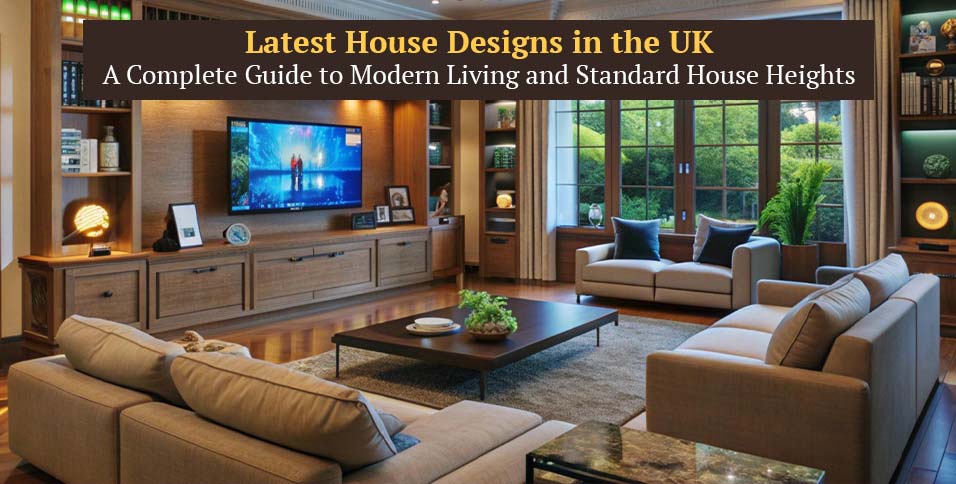
The UK housing landscape is undergoing a remarkable transformation. From sleek contemporary builds to eco-conscious dwellings, the latest house designs in the UK reflect a nation that values sustainability, smart technology, and architectural innovation. Whether you’re planning to build your dream home, renovate an existing property, or simply stay informed about current trends, understanding what’s shaping the UK housing market in 2025 and 2026 is essential.
At the same time, one of the most frequently asked questions among homeowners, builders, and property enthusiasts remains: how high is a standard house? Understanding the dimensions of a typical UK home is crucial for everything from planning extensions and loft conversions to choosing the right ladder for exterior maintenance.
In this comprehensive guide, we’ll explore the latest house designs sweeping across the UK and answer all your questions about standard house heights, building regulations, and what the future holds for British homes.
Part One: Latest House Designs in the UK
1. Sustainable and Eco-Friendly Homes
Sustainability is no longer a niche concern — it sits at the very heart of the latest house designs in the UK. With the UK government’s commitment to achieving net-zero carbon emissions by 2050, architects and developers are pushing boundaries to create homes that are as energy-efficient as they are beautiful.
Key features of sustainable UK homes include:
- Passivhaus design principles — These homes are built to an exacting standard that drastically reduces energy consumption. Triple-glazed windows, airtight construction, and mechanical ventilation with heat recovery (MVHR) systems are hallmarks of this approach. The UK has seen a significant rise in Passivhaus-certified homes, particularly in regions like Wales and the South West.
- Solar panel integration — Rather than being bolted on as an afterthought, solar panels are now being seamlessly integrated into roof tiles and building facades. Companies like Tesla and Marley have made solar roof tiles increasingly popular across the UK.
- Green roofs and living walls — Particularly in urban areas such as London, Manchester, and Bristol, architects are incorporating living greenery into building envelopes. Green roofs help with insulation, manage rainwater runoff, and improve air quality.
- Recycled and locally sourced materials — From reclaimed timber to hempcrete and rammed earth, there’s a growing emphasis on using materials with lower embodied carbon. Cross-laminated timber (CLT) construction is also gaining serious traction in the UK as a sustainable alternative to steel and concrete.
2. Modern Minimalist Designs
The minimalist aesthetic continues to dominate the latest house designs in the UK. Clean lines, open-plan living, and a “less is more” philosophy are defining a new generation of British homes.
What makes modern minimalist homes stand out:
- Open-plan kitchen-living spaces — The boundary between kitchen, dining, and living areas has effectively disappeared in many new builds. Large kitchen islands double as dining tables and social hubs, while bi-fold or sliding glass doors blur the line between indoor and outdoor living.
- Flat roofs and cubic forms — While traditional pitched roofs remain common, many contemporary UK homes now feature flat roofs, cubic silhouettes, and asymmetrical forms that create a striking visual impact.
- Neutral colour palettes — Whites, greys, warm beiges, and muted earth tones dominate both exteriors and interiors. These are often contrasted with natural wood accents, black metal frames, and textured stone or brick.
- Floor-to-ceiling glazing — Maximising natural light is a top priority in minimalist design. Expansive glass panels, skylights, and clerestory windows flood interiors with daylight, reducing the need for artificial lighting and creating a sense of spaciousness.
3. Smart Homes and Technology-Integrated Designs
The rise of smart home technology has fundamentally changed how UK homes are designed and built. The latest house designs in the UK almost always incorporate some level of home automation.
Popular smart home features include:
- Integrated home automation systems — Platforms like Google Home, Amazon Alexa, and Apple HomeKit allow homeowners to control lighting, heating, security, and entertainment from a single device or voice command.
- Smart heating and energy management — Devices like Hive, Nest, and Tado allow precise control over heating zones, helping homeowners reduce energy bills. Some new builds come with AI-powered energy management systems that learn household patterns and optimise energy usage automatically.
- Electric vehicle (EV) charging points — With the UK’s ban on new petrol and diesel car sales set for 2035, new homes are increasingly being designed with built-in EV charging infrastructure in garages and driveways.
- Smart security systems — Video doorbells, smart locks, CCTV systems, and motion-activated lighting are now standard features in many new UK developments.
4. Modular and Prefabricated Homes
One of the most exciting trends in UK house design is the rise of modular and prefabricated construction. These homes are manufactured in a factory setting and then assembled on-site, dramatically reducing build times and waste.
Why modular homes are gaining popularity:
- Speed of construction — A modular home can be built in a matter of weeks rather than months. This is particularly appealing in a market where there’s an acute housing shortage.
- Cost efficiency — Factory production allows for tighter cost control and less waste. For first-time buyers and those on a budget, modular homes offer an affordable pathway to homeownership.
- Design flexibility — Contrary to popular belief, modular homes are not one-size-fits-all. Companies like Ilke Homes, Facit Homes, and Nhouse offer a wide range of customisable designs, from contemporary townhouses to rural retreats.
- Sustainability — Factory construction generates significantly less waste than traditional building methods, and many modular homes are designed to exceed current energy efficiency standards.
5. Biophilic Design
Biophilic design — the practice of incorporating natural elements into the built environment — is one of the strongest emerging trends in UK architecture.
Elements of biophilic design in UK homes:
- Indoor gardens and courtyards — Many new homes feature internal courtyards, atrium spaces, or dedicated indoor planting areas that bring nature into the living space.
- Natural materials — Exposed timber beams, stone feature walls, cork flooring, and natural fibre textiles connect inhabitants to the natural world.
- Water features — From small indoor fountains to garden ponds visible from living areas, water is being used as a calming, sensory element.
- Abundant natural light and ventilation — Large windows oriented to maximise sunlight, along with carefully positioned openable windows for cross-ventilation, are central to biophilic design.
6. Multi-Generational and Flexible Living Spaces
The UK is seeing a significant shift towards homes designed for multi-generational living. Rising property prices, an ageing population, and changing family dynamics mean that more families are choosing to live together under one roof.
Design features for multi-generational homes:
- Self-contained annexes — Many new builds include a separate annexe or “granny flat” with its own entrance, kitchenette, and bathroom.
- Adaptable rooms — Home offices that can double as guest bedrooms, or playrooms that can be converted into study spaces as children grow, are increasingly common.
- Ground-floor bedroom suites — Designing a master suite or accessible bedroom on the ground floor ensures that the home remains suitable for older family members or those with mobility challenges.
- Separate entrances and zones — Thoughtful layout design allows different generations to share a home while still enjoying privacy and independence.
7. Heritage-Inspired Contemporary Homes
While cutting-edge modern designs are thriving, there’s also a strong trend towards heritage-inspired architecture that blends traditional British aesthetics with contemporary functionality.
Examples include:
- Modern barn conversions — The classic agricultural barn silhouette, reimagined with contemporary materials like Corten steel, zinc cladding, and large glazed panels.
- Updated Georgian and Victorian styles — New builds that draw on the proportions, symmetry, and detailing of Georgian or Victorian architecture but incorporate modern insulation, heating, and smart technology.
- Cottage-style homes with modern interiors — Externally, these homes evoke the charm of a traditional English cottage, but inside they feature open-plan layouts, underfloor heating, and high-spec kitchens.
Part Two: How High Is a Standard House?
Understanding house heights is essential for a wide range of practical purposes, from planning home improvements to understanding building regulations. Let’s break down the answer to the common question: how high is a standard house?
Standard Heights for UK Houses
The height of a standard house in the UK depends on the number of storeys, the roof type, and the specific architectural style. Here are the general guidelines:
- Single-storey (bungalow): A standard single-storey home in the UK typically stands between 2.5 metres and 4 metres from ground level to the ridge of the roof. The internal ceiling height is usually around 2.4 metres, with the roof adding additional height above.
- Two-storey house: The most common house type in the UK, a standard two-storey home measures approximately 7 to 8.5 metres from ground level to the roof ridge. Each storey typically has an internal ceiling height of around 2.4 metres, with the floor structure between levels adding roughly 0.3 metres, and the roof contributing additional height.
- Three-storey house: A standard three-storey home in the UK generally reaches between 10 and 12 metres in height. These are more common in urban areas and older Victorian or Georgian terraces.
Factors That Affect House Height
Several factors can influence how high a standard house actually is:
- Ceiling height — While 2.4 metres (approximately 7 feet 10 inches) is the standard ceiling height in most modern UK homes, older properties — particularly those built during the Victorian and Georgian eras — often have ceiling heights of 2.7 to 3.6 metres (9 to 12 feet). This significantly increases overall house height.
- Roof type and pitch — A steeply pitched roof adds more height than a shallow-pitched or flat roof. Traditional gabled roofs, common in the UK, typically have a pitch angle of 35 to 45 degrees, adding 2 to 3 metres above the eaves.
- Foundation and ground level — Some houses are built on raised foundations or sloping ground, which can increase the apparent height of the building.
- Floor thickness — The structural depth of each floor, including joists, insulation, and floor finishes, typically adds around 0.25 to 0.35 metres between storeys.
UK Building Regulations on House Height
Building regulations in the UK set out minimum and maximum standards for house heights:
- Minimum ceiling height — While there is no strict legal minimum ceiling height for habitable rooms in England and Wales, the recommended minimum is 2.1 metres for at least 50% of the floor area (particularly relevant for loft conversions). Most developers aim for 2.4 metres as the standard.
- Planning restrictions — Local planning authorities often impose height restrictions based on the character of the area. In conservation areas or near listed buildings, height limits may be stricter.
- Permitted development rights — Under permitted development rules, homeowners can add certain extensions without full planning permission, but there are strict height limits. For example, a single-storey rear extension must not exceed 4 metres in height at the eaves.
Why House Height Matters
Understanding how high a standard house is has practical implications for several common scenarios:
- Loft conversions — Knowing the ridge height and internal headroom is essential when planning a loft conversion. You typically need a minimum of 2.2 metres of head height at the highest point for a viable loft conversion.
- Extensions and renovations — Height restrictions play a major role in what you can and cannot build. Exceeding permitted heights may require full planning permission.
- Exterior maintenance — Knowing your house height helps you determine the correct ladder length for tasks like cleaning gutters, painting, or repairing roofing.
- Neighbour relations and right to light — The height of your property can affect your neighbours’ access to natural light. Understanding these dimensions can help avoid disputes and ensure compliance with planning regulations.
Comparison: UK House Heights vs. Other Countries
It’s interesting to note how UK house heights compare internationally:
| Country | Standard Ceiling Height | Typical 2-Storey Height |
| UK | 2.4 m (7’10”) | 7–8.5 m |
| USA | 2.7 m (9’0″) | 8–9.5 m |
| Australia | 2.7 m (9’0″) | 8–9 m |
| Germany | 2.5 m (8’2″) | 7.5–9 m |
| Japan | 2.4 m (7’10”) | 6.5–8 m |
As you can see, the UK tends to have slightly lower ceiling heights compared to countries like the USA and Australia, though this is gradually changing as homeowners increasingly demand taller, more spacious interiors.
The Trend Towards Higher Ceilings in New UK Homes
One notable trend in the latest house designs in the UK is the move towards higher ceilings. Many premium new-build developments now offer ceiling heights of 2.7 metres or even 3 metres on the ground floor. This creates a greater sense of space and luxury, improves natural light distribution, and allows for larger windows and doors.
Higher ceilings also have practical benefits for energy efficiency when combined with modern insulation and heating systems. Warm air rises, so taller rooms can feel more comfortable when properly ventilated, and they allow for the installation of ceiling fans or higher-positioned radiators.
Part Three: The Future of UK House Design
Looking ahead, several trends are set to shape the future of UK house design:
- Net-zero carbon homes — The Future Homes Standard, expected to be fully implemented by 2025, requires new homes to produce 75-80% less carbon emissions than those built under current regulations. This will drive innovation in insulation, heating, and renewable energy integration.
- 3D-printed homes — While still in its early stages in the UK, 3D-printed construction is showing tremendous promise. Several pilot projects have demonstrated that it’s possible to print the structural shell of a home in just a few days, potentially revolutionising affordable housing.
- Community-focused design — New developments are increasingly being designed with community in mind, featuring shared green spaces, communal gardens, co-working facilities, and pedestrian-friendly layouts.
- Adaptive reuse — Converting disused commercial buildings, churches, barns, and industrial spaces into residential homes is a growing trend that combines sustainability with unique architectural character.
- Health and wellness design — Post-pandemic, there’s a heightened awareness of how our homes affect our physical and mental health. Expect to see more homes designed with dedicated exercise spaces, meditation rooms, improved air filtration, and circadian lighting systems.
Conclusion
The latest house designs in the UK represent an exciting blend of innovation, sustainability, and thoughtful living. From eco-friendly Passivhaus builds and smart-technology-integrated homes to modular construction and biophilic design, British architecture is evolving to meet the demands of modern life while respecting the environment and honouring heritage.
Understanding practical fundamentals like how high is a standard house is equally important, whether you’re planning a renovation, building from scratch, or simply wanting to make informed decisions about your property. With standard two-storey homes typically measuring 7 to 8.5 metres in height and ceiling heights gradually increasing in premium developments, the UK housing market is literally reaching new heights.
If you’re looking for more expert guidance on home improvements, house design ideas, home décor tips, real estate insights, and all kinds of home improvement knowledge, Home Comfort Experts is an excellent resource to explore. Their website, homecomfortexperts.co.uk, is dedicated to helping homeowners across the UK make informed decisions about their properties. Whether you need inspiration for a complete home redesign, practical advice on renovations, tips on improving energy efficiency, or the latest real estate trends, Home Comfort Experts provides comprehensive, reliable, and up-to-date information to help you create the comfortable, stylish, and functional home you’ve always envisioned. Be sure to visit their site for a wealth of home improvement knowledge that can guide you through every stage of your property journey.
Whether you’re building, buying, or improving, staying informed about the latest house designs and understanding the fundamentals of house dimensions will empower you to make the best decisions for your home and your future.