For most homeowners, residential assets have long been managed in fundamentally reactive ways—often without realizing how much inefficiency that creates.
A home, no matter how advanced, still depends on periodic attention. Systems are maintained when something becomes visible, corrected when performance declines, and often overlooked until inefficiencies accumulate. While this approach works at a basic level, it leaves a significant gap between ownership and optimization.
That gap is now beginning to close.
The introduction of high-performance robotics into residential environments is not simply changing how tasks are performed—it is redefining how assets are managed.
From Reactive Pool Maintenance to Continuous Asset Oversight
Traditional home maintenance follows a predictable cycle.
A problem appears. It is addressed. The system returns to a temporary state of stability. Over time, conditions degrade again, and the cycle repeats.
This pattern is particularly evident in outdoor assets such as swimming pools.
For most homeowners, this usually becomes noticeable when weekend use starts depending on last-minute cleaning rather than being immediately ready.
Water clarity fluctuates. Debris accumulates unevenly. Surface conditions change depending on usage, weather, and time. Maintaining consistency requires repeated intervention, often at inconvenient times.
From an asset management perspective, this creates inefficiency.
Resources are spent reacting to issues rather than preventing them.
In residential pool environments, inconsistent maintenance can increase total upkeep time by 30–40% over a single season, especially in larger inground systems.
High-performance robotic systems introduce a different model—continuous oversight. Instead of waiting for visible degradation, these systems operate persistently, maintaining conditions before problems emerge.
This shift mirrors broader trends in enterprise asset management, where predictive systems replace reactive workflows.
The Emergence of Autonomous Operational Layers
In enterprise environments, effective asset management relies on layered systems.
Monitoring, analysis, decision-making, and execution are separated into distinct but coordinated functions. Each layer contributes to maintaining performance without requiring constant human involvement.
This same architecture is now appearing in residential technology.
Robotic systems no longer function as isolated tools. They act as operational layers embedded within the home environment.
They collect environmental data. They interpret changing conditions. They adjust behavior dynamically. And most importantly, they execute tasks without requiring direct supervision.
This evolution transforms maintenance from an activity into a system.
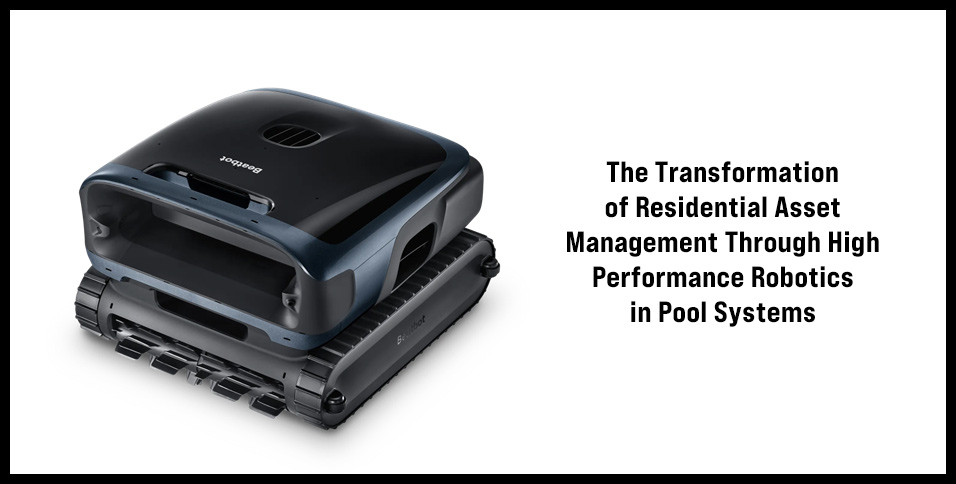
In this context, a system like the Beatbot AquaSense X robotic pool cleaner represents more than a cleaning unit. It functions as an autonomous layer within the broader residential ecosystem—capable of maintaining water conditions, adapting to environmental changes, and operating continuously without intervention.
Managing Complexity in High-Value Outdoor Assets
Not all residential assets are equal in complexity.
Outdoor environments, especially those involving water systems, present unique challenges. Variations in depth, material surfaces, debris distribution, and environmental exposure create a dynamic system that resists static solutions.
Inground pools, in particular, require precise and consistent maintenance to preserve both functionality and aesthetic value.
Corners accumulate debris. Sloped surfaces require stable navigation. Waterlines demand continuous attention. Without consistent management, these factors can degrade the asset over time.
High-performance systems are designed to address this complexity directly.
In real-world applications, the Beatbot Sora 70 In-ground pool cleaner system is engineered to navigate structural variation while maintaining consistent coverage. By adapting to depth changes, surface conditions, and debris patterns, it ensures that the asset remains stable across all areas—not just the most visible ones.
This level of adaptability is critical in maintaining long-term asset integrity.
Reducing Operational Load Without Sacrificing Control
One of the primary concerns in adopting autonomous systems is the perceived loss of control.
However, modern robotics addresses this not by removing control, but by redefining it.
Instead of direct intervention, control shifts toward system design and outcome monitoring. The user defines the desired state, and the system maintains it.
This reduces operational load while preserving accountability.
For homeowners, this means fewer manual tasks, fewer interruptions, and fewer instances of corrective maintenance. The system handles variability internally, allowing the asset to remain consistent without constant oversight.
From a management perspective, this is a shift toward efficiency.
Aligning Residential Assets with Modern Expectations
As technology continues to evolve, expectations around residential assets are changing.
Homeowners increasingly expect systems to operate reliably, adapt to changing conditions, and maintain performance without requiring ongoing attention. This expectation is already standard in indoor environments—heating, lighting, and security systems operate autonomously.
Outdoor assets are now following the same trajectory.
Robotic systems bring consistency to environments that were previously unpredictable. They reduce variability, stabilize performance, and align asset behavior with user expectations.
This alignment is what defines modern asset management.
The Long-Term Impact on Property Value
Asset performance is not only about immediate functionality—it also affects long-term value.
Consistent maintenance preserves materials, reduces strain on infrastructure, and prevents gradual degradation. Over time, these factors contribute to both usability and market perception.
A well-maintained pool is not just visually appealing—it signals reliability, care, and reduced future cost for potential buyers.
By maintaining stable conditions continuously, high-performance robotics contributes to this long-term value in ways that periodic maintenance cannot.
This positions robotic systems not as optional enhancements, but as integral components of asset strategy.
Conclusion
The transformation of residential asset management is being driven by a fundamental shift in how systems operate.
From reactive maintenance to continuous oversight, from manual intervention to autonomous execution, and from isolated tools to integrated operational layers, the change is both structural and experiential.
High-performance robotics sits at the center of this transition.
By enabling assets to maintain themselves, adapt to changing conditions, and operate without interruption, these systems redefine what ownership means in a modern residential context.
In the end, the value of an asset is not only measured by its design or location.
It is measured by how effectively it sustains itself over time. In practice, this shift is less about adopting new tools and more about reducing the ongoing effort required to maintain high-value residential assets.