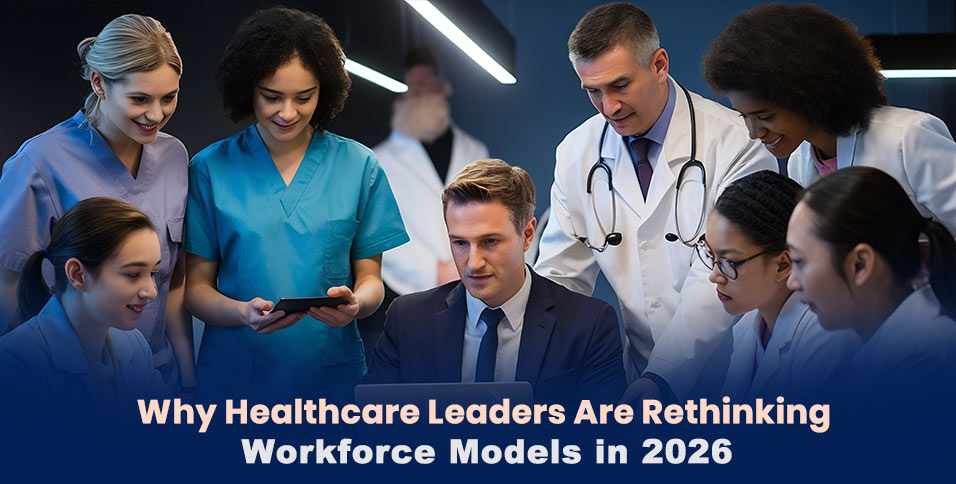
Hospitals and clinics are facing serious pressure. Labor is becoming expensive. Supplies cost more than ever. Budget constraints are not helping streamline operations. But at the same time, patient demand isn’t slowing down either. Now, add long working hours and tons of admin work, and you’ll understand why so many healthcare providers are burnt out.
The traditional workforce isn’t cutting it anymore. As we step into 2026, healthcare practices are no longer rethinking their practices, the way their workforce model works, and restructuring workflows.
The Traditional Workforce Model Is Breaking Under Operational Pressure
The traditional workforce model lacks the requirements of the modern world. The hospital practices that relied on traditional hiring processes are now facing operational gaps in running their practices.
On-site dependency
Many healthcare organizations are still relying on on-site staff to manage their clinical and administrative tasks. But this traditional workforce model makes the system less flexible.
It forces the hospital to struggle in managing a staff shortage due to an increase in patient volume. Appointments are delayed due to the absence of in-house staff. In this situation, doctors are expected to manage the front desk and scheduling. It wastes their time and increases patient wait time.
Administrative overload on clinicians
Healthcare clinicians such as doctors and nurses are highly skilled and trained to provide the best care possible for patients. However, these clinicians are often required to handle a significant amount of administrative work throughout the day.
Administrative work includes updating patient records, handling insurance claims, and scheduling appointments. These administrative burdens detract from clinical focus.
Inefficiencies leaders didn’t notice before
The traditional workforce model is showing inefficiencies that leaders may not have previously heard of. Tasks that are repetitive, time-consuming, and poorly coordinated are causing inefficiencies and operational weakness.
For instance, a patient’s information may be required to be filled out multiple times in different systems. This inefficiency may confuse and may have gone unnoticed until the operational pressure increased and revealed the traditional model’s weakness.
Why 2026 Is a Turning Point for Healthcare Workforce Strategy
During COVID-19, the workforce strategy was changed from on-site to online. It was just a temporary solution at that time. With the passage of time, it has made progress and introduced new ways for healthcare facilities to work efficiently.
Post-pandemic operational learning
After COVID-19, healthcare leaders recognized that many administrative and non-clinical tasks can be done remotely. Tasks such as patient scheduling, insurance coordination, and documentation do not need a physical office to operate.
This realization revealed a potential for hybrid and remote work models. These options can assist healthcare practices in focusing on looking after the patient and dealing with all the necessary work at practices.
Technology maturity
Post-COVID-19 technology maturity increased rapidly due to digital transformation. Advancements in platforms such as cloud-based electronic medical records and healthcare management software now make remote work practical and reliable.
These tools allow teams to track tasks, coordinate work, and maintain quality, even when staff are not physically present.
Acceptance of remote operational roles
Acceptance of remote support roles has provided ease to healthcare leaders in managing tasks. When teams are distributed, roles are defined, workflow streamlines, and the healthcare practices grow faster.
Remote operational roles are becoming essential in today’s world. This option creates numerous opportunities for healthcare professionals to maintain direct patient relationships while remote staff deal with non-clinical activities.
Emerging Distributed and Remote Support Roles in Healthcare
When physicians handle both clinical and non-clinical tasks themselves, they have less time to look after patients. It causes the workflow to slow down and creates delays. It also causes errors and staff burnout.
To address these challenges, healthcare practices are leveraging virtual healthcare assistants to maintain efficiency and reduce mistakes. They reduce clinician burnout and enhance patient satisfaction.
Operational Benefits Leaders are Seeing from Workforce Redesign
Healthcare leaders are already seeing the benefits of changing their workforce model approach. The following are the major advantages of workforce redesign:
Reduced clinician burnout: A shift in administrative tasks to remote support allows clinicians to have more time with their patients. This improves concentration and job satisfaction.
Fewer administrative errors: Chances of errors are reduced when dedicated people deal with documents. They also handle scheduling and follow-ups. In this way, errors are reduced, patient treatment is done on time, and organizations are saved from compliance risks.
Cost predictability and scalable staffing: Remote and hybrid models assist healthcare organizations in budgeting. They can scale teams up or down as needed. This method avoids the hiring of unnecessary staff.
Enhanced patient experience: Streamlined workflows and timely communication can make a huge difference. For example, accurate scheduling provides faster service, reduces delays, and delivers a smoother overall experience for patients.
The Future for Healthcare Organizations is a Hybrid Workforce
The future of healthcare operations lies in hybrid models. It is the combination of on-site clinical teams with remote operational support. This approach improves operational efficiency.
It also reduces physician burnout and allows healthcare facilities to hire staff on budget. This is why healthcare leaders are rethinking workforce models in 2026.