When you walk through a massive commercial building, a modern hospital, or a busy corporate headquarters, you usually notice the obvious things. You see the gleaming glass, the polished floors, and the bright lighting. What most people never think about is the massive invisible network keeping that entire ecosystem running behind the scenes. Buildings are a lot like living organisms. They breathe through HVAC systems, consume power through intricate electrical grids, and require constant care to avoid breaking down.
Keeping large facilities operational across decades is no small feat. Companies come and go, economic shifts wipe out household names, and technologies change overnight. That is why looking back at GDI Ainsworth’s 100-year history is so fascinating. Surviving a full century in business requires a rare kind of adaptability. It means rolling with industrial revolutions, surviving major global conflicts, navigating severe economic recessions, and constantly learning how to serve clients whose needs change every single year.
The Early Days of Industrial Support
Picture the business landscape a hundred years ago. The world was a much rougher, purely mechanical place. Factories ran on steam and heavy belts, commercial real estate looked completely different, and facility management as a modern concept did not even exist. Businesses that survived back then did so through sheer grit and deep technical competence.
Back in those early decades, building maintenance was mostly reactive. If a pipe burst or a massive industrial motor burned out, you called a local tradesperson and hoped they could fix it before the whole operation ground to a halt. There was no predictive maintenance, no smart building automation, and certainly no digital dispatching. Companies that laid the foundation for modern facility services had to build their reputations one wrench turn and one satisfied customer at a time. According to historical insights shared by the Smithsonian Institution, industrial growth during the early twentieth century relied heavily on localized craftsmanship and hands on mechanical innovation. Those early roots shaped a culture of reliability that modern enterprises still depend on today.
Scaling Up Through Decades of Change
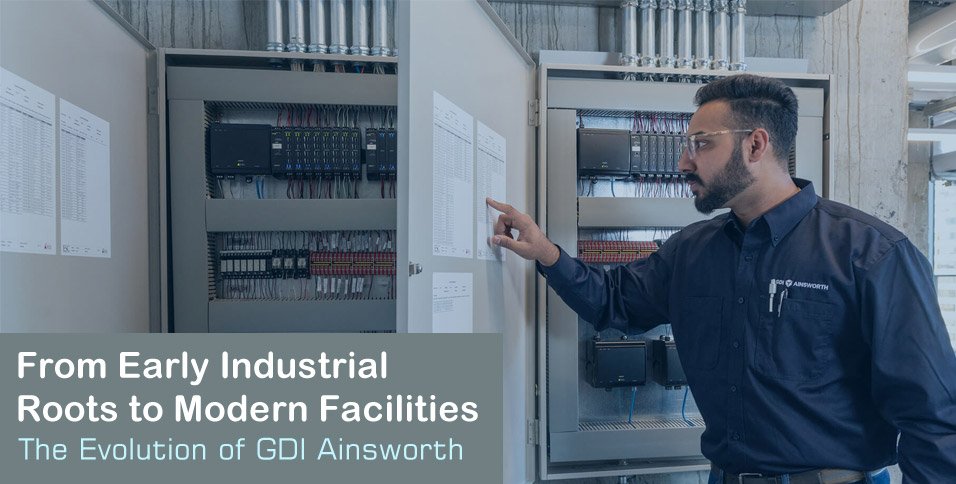
As decades rolled on, the demands placed on commercial buildings shifted dramatically. Office towers grew taller, shopping malls changed consumer habits, and healthcare facilities required hyper sterile environments with complex air filtration systems. A maintenance company that could handle a simple warehouse in the nineteen fifties suddenly had to understand computer rooms, chillers, and automated electrical panels by the nineteen eighties.
Growth at this scale never happens by accident. It requires leadership teams willing to invest in new tools long before competitors realize they are necessary. It also requires listening closely to clients. Whenever a major commercial tenant faced a new operational hurdle, successful service providers expanded their capabilities to solve it. Over many years, this organic expansion transformed simple repair crews into comprehensive facility management partners capable of handling multi site portfolios across entire nations.
The Human Element Behind the Machines
It is easy to talk about business longevity in terms of balance sheets, corporate mergers, and operational footprints. But at the end of the day, a service company is only as good as the people showing up on site. You can have the best diagnostic tools in the world, but you still need a skilled technician who knows how to track down a mysterious electrical fault in a basement at midnight.
Over a century of operations, thousands of tradespeople, supervisors, and support staff have carried the workload. These are the people who crawl through tight ceiling spaces, calibrate massive chillers in freezing winter weather, and ensure that office workers arrive to a warm and safe environment every single morning. Building a lasting legacy means creating a workplace culture that attracts dedicated professionals and keeps them around. When experienced technicians stay with a company for decades, that institutional knowledge gets passed down to newer generations, ensuring the quality of service never dips.
Adapting to Modern Sustainability Standards
We live in a very different era now. Modern facility management is no longer just about keeping the lights on and the floors clean. Today, business owners face massive pressure to reduce their carbon footprints, lower energy consumption, and meet strict environmental regulations. Buildings consume an enormous percentage of global energy, making them ground zero for sustainability efforts.
Companies with deep historical roots face a unique test when modern shifts happen. They have to blend decades of practical, hands-on experience with cutting edge green technology. Integrating energy management systems, optimizing HVAC schedules to save power, and switching to eco-friendly cleaning agents requires a complete shift in daily operations. The providers that thrive are the ones that treat these new demands not as chores, but as natural extensions of their core mission to protect and preserve client properties.
What a Century of Service Teaches Us
Looking at a hundred years of continuous operation gives you a unique perspective on the business world. It proves that lasting success does not come from chasing short term trends or cutting corners to save a quick buck. It comes from consistency, reliability, and showing up for clients when things go wrong.
Facilities will continue to evolve. Artificial intelligence, automated maintenance alerts, and advanced robotics will undoubtedly change how buildings are managed in the coming decades. Yet beneath all the new technology, the fundamental human need for trust remains completely unchanged. Business leaders want to partner with teams they can rely on implicitly. By respecting the past while aggressively embracing the future, companies with deep historical roots continue to set the gold standard for how modern commercial spaces are kept running smoothly, safely, and efficiently.