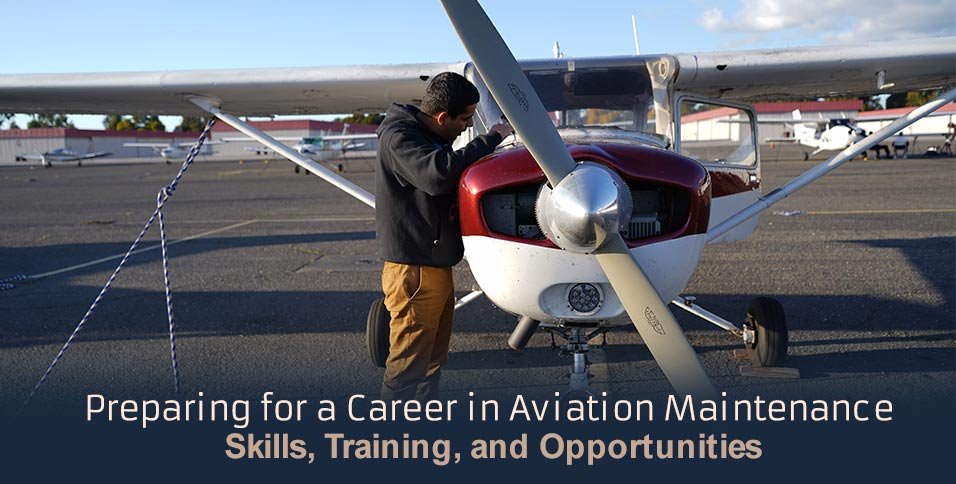
Have you ever stopped to think about who makes sure an aircraft is safe to fly before it takes off? While you may only think about the pilots, aviation maintenance specialists monitor everything to keep planes safe. There is a demand for such specialists.
According to the U.S. Bureau of Labor Statistics, employment of aircraft and avionics equipment mechanics and technicians is projected to grow by 5% between 2024 and 2034, with about 13,100 openings expected each year on average.
However, gaining entry into aviation maintenance requires more than an appreciation for airplanes. You need technical knowledge, practical experience, a keen eye for details, and sufficient training. The positive side is that such skills can be acquired over time. If you are interested in the occupation, here are some tips to help you prepare.
Understand What Aviation Maintenance Involves
Aviation maintenance is not just about the repair of an aircraft in case something goes wrong. It involves inspecting aircraft, performing the scheduled maintenance, troubleshooting problems, replacing the worn parts, and making sure of the functionality of systems.
Depending on the role, aviation maintenance can involve working with engines, electrical systems, hydraulics, landing gear, or avionic and flight control systems. Most of the work is done before problems arise.
Develop the Technical Skills You Will Need
Aircraft are some of the most sophisticated vehicles on the planet, making it necessary to have a sound technical background when dealing with them. However, you don’t need to enter school with an in-depth knowledge of engines and electronics.
You will learn all this during your training. However, being passionate about mathematics, physics, mechanics, and electronics can facilitate learning processes.
Choose Training That Goes Beyond the Classroom
One of the major decisions you’ll face in your aviation maintenance career is the choice of training. Look for an aviation maintenance training program that does not focus solely on theory. Besides the basic facts behind aviation systems, you should have the opportunity to work with different equipment.
A good training course should allow you to study various aspects of the field, such as aircraft structure, engines, electrical systems, avionics, hydraulics, and pneumatics. A practical component is crucial to your training, as aviation maintenance is hands-on work. It is one thing to read about an aircraft system and another to understand it when working with components.
Make sure to check whether the training course meets all requirements imposed by the law. For example, in the USA, the Federal Aviation Authority has different requirements for aircraft mechanics getting certification.
Avoid choosing an institution simply based on its proximity to your home or appealing tuition fees. It is significant to consider what you’ll learn from this educational facility, what equipment will be used, and how many practical hours are part of the program.
Problem-Solving Is Important
Imagine an aircraft system isn’t working properly. Your work is not taking a random guess at which component should be replaced. You will have to analyze the symptoms carefully, examine the system, do some tests, check some manuals, and consider several possible reasons before identifying the root cause of the problem.
The ability to solve problems can only be developed through hard work. The ability to remain patient can be very helpful as well, because some problems aren’t always obvious.
Get Comfortable With Hands-On Work
You can’t really benefit from sticking to your classroom only. Aviation maintenance requires people to use tools and perform different activities. The more opportunities you have to practice various aviation maintenance tasks in appropriate conditions, the better your abilities will be.
While you might understand how everything is supposed to work, you will face other difficulties once you start inspecting it, using tools, and finding out how to fix the problems. Therefore, every opportunity for practical experience should be valued.
Take Safety Seriously From the First Day
Safety is not just one part of the aviation maintenance profession. It is the foundation of the profession. An aerospace technician works on systems that directly affect an aircraft’s performance, and that means that sticking to the procedure is paramount.
Build uncompromising safety habits from your very first lab session. Get used to double-checking torque values, inspecting your tools before and after every job, and adhering strictly to written maintenance manuals without taking shortcuts.
Build Skills for Long-Term Career Growth
Succeeding in the aviation industry requires looking well beyond your entry-level job placement. Mastering foundational mechanics gets you through the door, but staying relevant means keeping up with composite materials, automated diagnostics, and next-generation avionics as technology evolves.
Focus on mastering the technical fundamentals, gaining hands-on shop experience, and acquiring your foundational FAA certifications. Once you build strong diagnostic habits and prioritize safety above all else, you can turn your training into a lifelong, rewarding career in aviation maintenance.