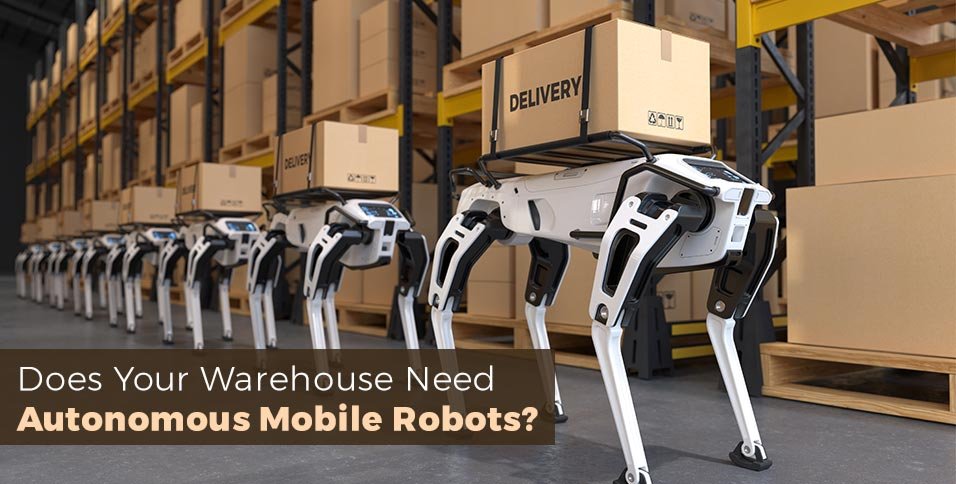
Early use cases of autonomous material handling equipment were reserved for the largest scale facilities. But, most warehouses today are prime candidates for some level of warehouse automation. Automated warehouse solutions can help in a handful of places, including labor costs, safety incidents, throughput bottlenecks, and staff turnover. If any of those are sore spots in your operation, it’s worth taking a closer look to see how autonomous mobile robots can improve your operational efficiency.
Loss in Productive Hours Due to Walking and Transporting
If your team is spending a meaningful chunk of their shift moving goods from one point to another rather than picking, packing, or handling quality control, that’s a strong signal. Time-motion studies in a lot of warehouses show workers spend far more time walking than most managers expect, and that time rarely shows up clearly on a productivity report until someone measures it directly.
Injury Rates Related to Material Handling Are Increasing
Repetitive lifting, pushing, and walking routes are a common source of strain injuries in warehouse environments. If your workers’ comp claims or near-miss reports keep pointing back to material transport tasks, automation can take that specific risk off the table without requiring a broader safety overhaul.
Struggle to Maintain a Full Labor Force
Warehousing has faced persistent labor shortages, and the roles hardest to fill are often the most physically repetitive ones. If turnover in transport and material handling roles is outpacing the rest of your workforce, that’s less a hiring problem and more a signal that the role itself may be better suited to automation.
Inconsistent Output of Manual Material Handling
Manual transport introduces variability. Different workers move at different speeds and make different prioritization calls at the moment. If your fulfillment times swing more than they should based on staffing changes alone, inconsistent manual handling is often part of the cause.
Bottlenecks In Scaling Operations
You want to expand business operations or output, but labor is falling short. Increased labor costs can make it hard to expand. In addition, determining how to grow efficiently while fitting the labor piece into the puzzle can create bottlenecks. Automation is a steady lever to help scale. Growing order volume means more transport trips that autonomous mobile robots are capable of handling at a steady and consistent pace, avoiding bottlenecks in your business operations as business becomes more demanding.
Evaluating Your Current Warehouse Operations
If you are committed to using autonomous mobile robots (AMRs) in your warehouse operations, there are a few considerations to make to determine how they will integrate. Determine where the repetitive, predictable trips are happening. Those are the tasks best suited to automation. A solution like an automated cart is built specifically to handle that kind of point-to-point transport, navigating dynamic warehouse layouts without requiring fixed tracks or a full facility redesign, which makes it a lower-risk way to test automation before committing to a larger rollout.
From there, a contained pilot in a single zone or task type gives you real data instead of assumptions. You’ll be able to see actual changes in labor hours redirected, throughput consistency, and safety incidents before deciding whether to expand further.