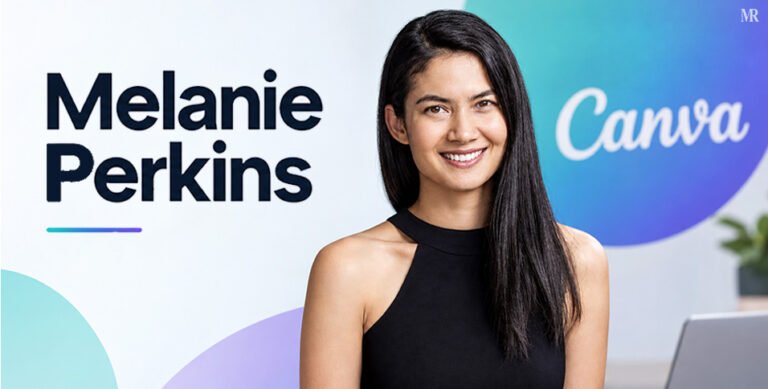
Ever wonder how someone can build a multi-billion-dollar empire before they even turn 30? It sounds like something out of a movie, right? But for Alexandr Wang, the founder of Scale AI, it’s very real. There’s even chatter that he could be heading to Meta as their chief AI officer in 2025—that’s how much of a mark he’s made! But let’s look beyond the buzz.
The story of Alexandr Wang’s net worth skyrocketing to an estimated $3.2 billion isn’t just about luck; it’s a mind-blowing tale of incredible vision, gutsy moves, and building something absolutely essential for the AI revolution. So, grab a seat, and let’s dive into the chronological journey of how a young prodigy built a company that’s now the backbone of the entire AI industry. It’s a story you won’t forget.
Let’s Explore Alexandr Wang’s Net Worth Journey
1. The Foundation: Early Life and Data Acumen
Picture this: a young Alexandr Wang growing up in Los Alamos, New Mexico. This wasn’t just any town; it was a place buzzing with science. His parents were both physicists at the legendary Los Alamos National Laboratory. Can you imagine the dinner table conversations? This environment was the perfect incubator, sparking his early passion for math and computer programming and planting the seeds for his future.
And boy, did he have a knack for it! As a teenager, he wasn’t just coding; he was dominating.
- He was a USA Computing Olympiad (USACO) finalist two years in a row (2012-2013).
- He snagged 10th place in the International Olympiad in Informatics (IOI) team selection in 2013.
- He also qualified for the Math Olympiad Program in 2013 and the US Physics Team in 2014. That’s super-impressive!
Before building his own company, he was already in the trenches, getting priceless real-world experience. At just 16, he landed a software programmer gig at Quora, quickly rising to Tech Lead. Working 12-hour days, he said, it transformed him from a “code monkey” into a true system architect. He also had stints as a software engineer at Addepar in January 2014 and as an algorithm developer at the high-frequency trading firm Hudson River Trading in January 2016. What a resume before even leaving his teens!
2. The Strategic Leap: MIT to Y Combinator
Next stop: the Massachusetts Institute of Technology (MIT), the holy grail for any tech enthusiast. Alexandr enrolled to study computer science and mathematics and, unsurprisingly, crushed his freshman year with perfect grades.
But here’s where the story takes a wild turn. After just one year, at the age of 19, he did the unthinkable: he dropped out.
Why? Because he saw the future. He realized that artificial intelligence was about to change everything, and he spotted a massive gap in the market: the desperate need for high-quality, well-organized data to train AI models. He later said he knew he would regret it forever if he didn’t take that entrepreneurial risk at that perfect moment. What a bet to make on yourself!
So, in 2016, he and co-founder Lucy Guo launched Scale AI. Their big break came almost immediately when they were accepted into the prestigious Y Combinator accelerator program, securing an initial $120,000 seed round. The rocket ship was officially on the launchpad.
2. The Genesis of Scale AI: Powering the AI Gold Rush
Alexandr had a brilliant and simple way to describe Scale AI’s mission. He said they were “selling the picks and shovels in the generative AI gold rush.” What an amazing analogy! While everyone else was chasing the flashy AI applications, he focused on building the essential infrastructure that everyone would need.
You see, for an AI model to learn anything, it needs huge amounts of accurately labeled data—what they call “ground truth.” This data labeling and evaluation is critical, and it’s exactly what Scale AI provides. They offer a whole suite of solutions, from fully automated to human-only labeling, ensuring top-notch quality.
Their products, like the Scale Data Engine and Scale GenAI platform, help companies gather, organize, and annotate their data to build powerful AI. And how do they do it? With a massive global workforce of over 100,000 contractors managed through their subsidiaries, Remotasks and Outlier. It’s a colossal human-and-machine engine powering the future of AI.
3. The Valuation Ladder to Billions
Once Scale AI started, its growth was simply explosive. Watching its valuation climb is like watching a skyscraper being built in fast-motion.
- Seed Round (Y Combinator): It all began in August 2016 with that initial $120,000 from Y Combinator.
- Series A, B, C (The Unicorn Round!): Things heated up fast. Accel led a $4.5 million Series A in May 2017. Then came an $18 million Series B led by Index Ventures in August 2018. The big one? A whopping $100 million Series C in August 2019, which included money from Peter Thiel’s Founders Fund. This pushed Scale AI’s valuation over $1 billion, officially making it a unicorn.
- Series D: In December 2020, they raised another $155 million, valuing the company at an incredible $3.5 billion.
- Series E (2021): Just a few months later, in April 2021, a massive $325 million Series E round sent the valuation soaring to over $7 billion (some reports say $7.3 billion). This was the moment that officially made Alexandr Wang, at just 24 years old, the world’s youngest self-made billionaire. Let that sink in for a moment.
- Series F (2024): And it didn’t stop. In May 2024, Scale AI raised a jaw-dropping $1 billion in a Series F round led by Accel. This funding round had some heavy hitters, including Meta, Amazon, and Nvidia, and doubled the company’s valuation to $13.8 billion.
4. Deconstructing Alexandr Wang’s Net Worth
So, how does all this translate to a personal fortune? As of recent estimates, Alexandr Wang’s net worth is around $3.2 billion, with some putting it as high as $3.6 billion by September 2025.
The bulk of this incredible wealth comes from his ownership stake in Scale AI, which is estimated to be between 14% and 15%. With the company valued at $13.8 billion in 2024, a 15% stake alone is worth about $2.1 billion. Wow!
Then, in June 2025, things got even wilder. Meta Platforms reportedly purchased a 49% stake in Scale AI for an eye-watering $14.3 billion. This deal more than doubled Scale AI’s valuation from around $14 billion to a staggering $29 billion. It also meant that money went to existing shareholders, possibly giving early investors and Wang himself a chance to cash in some of their shares.
On top of that, he’s also an angel investor, making four investments of his own, including a $105 million Series A in Reflection AI in March 2025.
6. The Wang Philosophy: Leadership and Strategic Acumen
What makes Alexandr tick? It’s a powerful combination of visionary thinking and an almost obsessive focus on the details.
He’s known for his relentless customer obsession, believing that “quality is fractal.” He was even personally quality-checking customer data long after the company had grown huge. He lives by the philosophy of doing “more than seems reasonable” and having an “insane work ethic.”
Instead of chasing trends, he focuses on monetizing “unsexy problems”—the fundamental, complex challenges that others might overlook. His operational mastery is clear in how he manages Scale AI’s massive global workforce. He truly understood that organized data was the bedrock of AI, and he positioned his company to be the one to provide it.
He doesn’t see AI as a replacement for people but as a tool for “human amplification,” making us all better. It’s all driven by a core belief he often repeats: “ambition shapes reality.”
7. Achievements & Awards
It didn’t take long for the world to sit up and take notice of this young innovator. The accolades started rolling in, and they haven’t stopped.
- He landed on Forbes’ prestigious 30 Under 30 list not once, but twice, in 2018 and 2021.
- He was also featured in Time’s 100 Next list in 2021 and the Time100 AI list in 2024.
- And of course, he holds that incredible title: the youngest self-made billionaire, a milestone he hit at age 24 in 2021.
8. Major Challenges & Criticisms
But the journey wasn’t without its bumps in the road. Building something so massive, so quickly, comes with serious challenges and scrutiny.
Scale AI has faced ethical controversies around what’s called “ghost work”—the often invisible human labor that powers AI. The company has been accused of underpaying its data annotators and misclassifying them as contractors instead of employees, which denies them basic protections. Workers, especially in the Philippines working for Remotasks, have reported issues with low and delayed pay. These practices have even led to lawsuits and attention from US lawmakers.
On top of that, the market is fierce. Scale AI competes with giants like Amazon Mechanical Turk and other major players like Labelbox and Appen. It’s a tough space to dominate. The company has also faced criticism over the complexity of its services and has had its own internal issues, like layoffs.
9. The Future Trajectory
Given his monumental impact, it’s no surprise that the biggest names in tech want him on their team. The speculation turned into reality in June 2025 when Mark Zuckerberg reportedly appointed Wang to lead Meta’s entire AI operation after that massive $14.3 billion investment.
This is a seismic shift. While he remains a director on Scale AI’s board, his new role as Meta’s first-ever Chief AI Officer is a game-changer. He now leads Meta Superintelligence Labs (MSL), shaping the company’s AI vision from the ground up and managing teams across research, product, and infrastructure. It’s a testament to his status as one of the most important figures in the AI landscape today.
10. “Vibe-Coding” Philosophy
So, what does the future of coding look like to a guy who’s building it? Wang has a fascinating take. He encourages young people to get into “vibe-coding.”
This is the idea of using AI tools to create code from simple, natural language commands. You don’t need to be a hardcore programmer to build things anymore. He predicts that within five years, AI will be able to generate “literally all the code” he’s ever written. He sees this as a radical shift, similar to the early days of personal computing when pioneers like Bill Gates got a massive head start just by playing with the technology. What an exciting vision for the future!
My Opinion
The story of Alexandr Wang is a masterclass in seeing a fundamental need and executing on it flawlessly. He grasped early on that “data is the new oil” for AI and built the machinery to refine it. His laser focus on this essential, underlying infrastructure allowed Scale AI to become a critical gear in the entire AI ecosystem. The incredible growth in Alexandr Wang’s net worth isn’t just a personal success story; it mirrors the explosive demand for the very services his company provides.
His ability to build and manage a massive human-in-the-loop operation, even with its criticisms, has been the key that unlocks cutting-edge AI for everyone else. His journey proves that the biggest innovations often come from solving the hard, unglamorous problems behind the scenes.
Here Are Some Lessons From Alexandr Wang’s Journey
- Find Gold in the ‘Boring’ Stuff:
Wang didn’t chase the flashiest AI app. He found a critical, overlooked need—high-quality data—and turned that “unsexy” infrastructure problem into a multi-billion dollar goldmine.
- Execution Is Your Best Defense:
In a competitive market, Scale AI’s real advantage has been its relentless ability to deliver accurate data at an immense scale. That operational excellence is harder to copy than any single idea.
- Bet on the Backbone:
Instead of building a house, he decided to supply the bricks and mortar to everyone. He understood that every single AI model would need a strong data foundation, making his company indispensable.
- Stay Obsessed with Your Customer:
His willingness to personally check data, even as a billionaire CEO, shows a deep commitment to quality and customer needs. That’s how you build a product people can’t live without.
- Take the Calculated Leap:
Dropping out of MIT was a huge risk, but it was perfectly timed. It shows that sometimes, seizing a real-world opportunity is more valuable than following the traditional path.
Did this incredible story light a fire in you? If this journey of vision, ambition, and execution left you inspired, share it with your friends and network. Let’s get the conversation started!