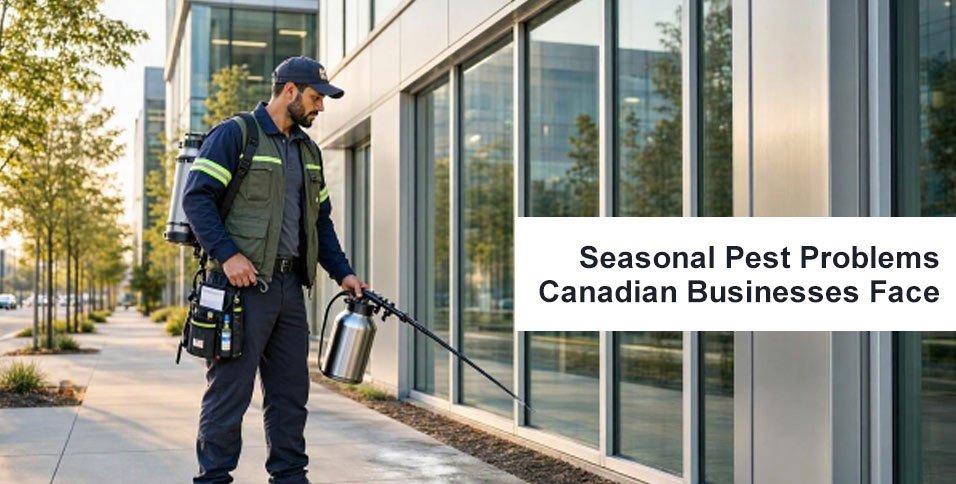
Pests do not take a break when the weather changes. They simply change their plans. In Canada, cold winters and short, hot summers push pests into very different habits through the year. A business that only reacts when it sees a problem is always one step behind.
This guide walks through what each season brings for restaurants, hotels, warehouses, offices, and other commercial properties. It also covers simple steps that help keep pests out all year long.
Why Pests Follow the Seasons
Pests want three things: food, water, and shelter. When outdoor conditions change, they go looking for whichever one is missing. A mouse that lives happily in a field in August will head for a warm building in October. A fly that was a minor annoyance in spring can become a serious problem in a busy kitchen by July.
Commercial buildings are especially attractive. They have heated spaces, food storage, waste areas, loading docks, and plenty of small gaps. Understanding the seasonal pattern gives you a head start on each stage.
Fall: Pests Move Indoors
Fall is the warning season, and it starts in much of Canada as soon as the nights turn cold. As temperatures drop, mice and rats look for warm places to nest. Even a small gap around a door, pipe, or vent can be enough for them to get inside.
Insects do the same thing. Cluster flies, boxelder bugs, stink bugs, and Asian lady beetles gather on sunny walls and slip into wall voids and attics to wait out the cold. Squirrels, raccoons, and skunks also start looking for dens, often around roofs and loading areas.
This is the best time to inspect the outside of your building and seal gaps. Once pests are inside, the job gets harder.
Winter: The Hidden Problems
Many people think winter means no pests. In reality, it is when the pests that got in during fall make themselves known. Rodents nest in walls and storage areas, chew on wiring and packaging, and leave droppings behind.
German cockroaches do not care about the cold outside. They thrive in heated kitchens, break rooms, and washrooms all year. Bed bugs also stay active indoors, which matters for hotels and other overnight properties. On warm winter days, overwintering insects can wake up and appear in offices and lobbies, which surprises staff and customers.
Why a Year Round Plan Works Better
Because pest pressure changes with the season, a single visit once a year rarely solves much. A steady program does a better job. It checks for problems before they grow, adjusts to each season, and keeps records of what was found and treated.
Many property teams now choose commercial pest control from Terminix Canada because the service is built around inspection, treatment, and ongoing monitoring rather than one off fixes. That approach suits businesses with several locations too, since national coverage with local teams means each site can follow the same standard. With 24/7 support available, urgent problems can also be handled quickly when they affect daily operations.
Spring: Pests Wake Up
As the snow melts, pests become active again. Ants start foraging, and carpenter ants may begin to appear near damp or damaged wood. Spiders come out, and queen wasps start looking for places to build nests under eaves and in sheltered corners.
Melting snow also leaves standing water around buildings, which can attract mosquitoes later in the season. Spring is a good time to check roofs, gutters, and drains, and to deal with any damage that winter left behind.
Summer: Peak Pressure
Summer is the busiest season for many pests. Flies increase around kitchens, dumpsters, and receiving areas. Ants head for food spills. Wasps and hornets grow their nests, and by late summer these nests are at their largest and most defensive. Patios, entrances, and service yards become common trouble spots.
Birds also nest on ledges, signs, and rooftops, which creates mess and maintenance work. For restaurants and hotels, even one fly in a dining room can hurt a reputation fast. Summer calls for frequent monitoring and quick action.
Prevention Basics Every Business Can Use
Good prevention is the same in every season. The Canadian Food Inspection Agency publishes pest control guidance for food businesses, and many of its points apply to any commercial property. It recommends keeping buildings insect and rodent proof, fitting overhead doors tightly, screening air intakes and vents, and keeping waste containers covered.
Its guidance also stresses keeping the area around a building clear of debris and vegetation, and checking regularly for warning signs such as droppings, chew marks, and dead pests. These habits cost little, and they make it much harder for pests to settle in.
Keep Records and Review Often
A good pest program is more than treatments. It also includes clear notes on who is responsible, which areas are checked, how often, and what was found. Written records help you spot patterns, such as a loading dock that has trouble every fall or a kitchen that struggles each summer.
Review the program at the change of each season. Ask what happened last time and what needs to change before the next one.
Getting Ready for the Next Season
Pest problems in Canada follow the calendar, and businesses that plan around it have fewer surprises. Seal gaps in fall, watch for hidden activity in winter, prepare for nesting in spring, and stay alert in summer. With a steady plan and good records, your property can stay protected through every season.