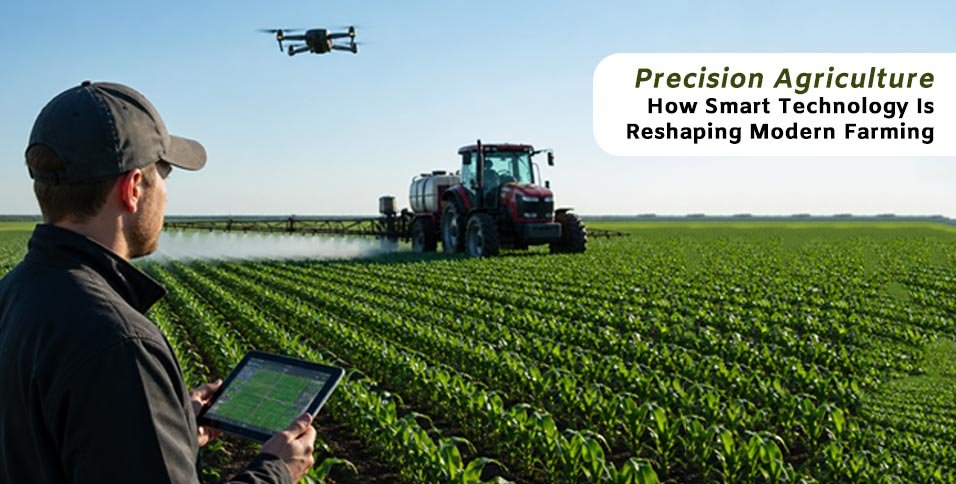
The agricultural landscape is undergoing a fundamental transformation as farmers embrace digital tools that allow them to manage their land with unprecedented accuracy. This shift toward data-driven decision-making represents more than just an incremental improvement in farm management—it marks a complete reimagining of how we approach food production. Modern precision agriculture combines sensors, GPS technology, and sophisticated software platforms to optimize every aspect of crop production, from seed placement to harvest timing. By moving away from blanket field treatments toward targeted interventions, farmers can reduce input costs while simultaneously improving yields and environmental outcomes.
The Foundation of Variable Rate Application
At the heart of precision farming lies the recognition that agricultural fields are rarely uniform. Soil composition, drainage patterns, and nutrient availability can vary dramatically within a single field, yet traditional farming methods treated entire fields as homogeneous units. This one-size-fits-all approach inevitably meant that some areas received too much fertilizer while others received too little. The solution emerged through variable rate technology explained as a system that adjusts input application rates automatically based on precise location data. Rather than applying the same amount of seed, fertilizer, or pesticide across an entire field, variable rate systems modulate application intensity in real-time, responding to the specific needs of each management zone within the field.
This technology relies on detailed field mapping that identifies zones with distinct characteristics. Soil sampling, yield monitoring from previous seasons, and remote sensing imagery all contribute to creating prescription maps that guide equipment through the field. When a planter or sprayer equipped with variable rate capability moves across the field, it continuously references its GPS position against the prescription map and adjusts its output accordingly. The result is a level of precision that was unimaginable just two decades ago, with some systems capable of changing application rates multiple times per second as equipment traverses different soil types or topographical features.
Equipment Evolution and Agricultural Sustainability
The machinery that makes precision agriculture possible has evolved dramatically from the simple mechanical implements that dominated farming for centuries. Today’s agricultural equipment incorporates sophisticated electronics, hydraulic systems, and computational power that rivals consumer electronics. These advances haven’t occurred in isolation—they reflect a broader recognition that equipment matters for sustainable agriculture outcomes. The right tools enable farmers to implement conservation practices that would be impractical or impossible with older technology, from controlled traffic farming that minimizes soil compaction to targeted weed control that reduces herbicide use by identifying and treating only problem areas.
Data Integration Challenges
While the hardware components of precision agriculture have matured considerably, farmers still face significant challenges in managing the vast amounts of data these systems generate. A single planting season can produce terabytes of information about soil conditions, plant health, weather patterns, and equipment performance. Making sense of this data deluge requires software platforms that can integrate information from multiple sources, analyze patterns across seasons, and translate complex datasets into actionable recommendations. Many farmers find themselves overwhelmed by the technical complexity, particularly when different equipment manufacturers use proprietary data formats that don’t communicate seamlessly with each other.
The industry has responded by developing cloud-based farm management platforms that serve as central repositories for agricultural data. These systems allow farmers to track field operations, monitor crop development through satellite imagery, and generate reports for agronomic analysis or regulatory compliance. However, questions about data ownership, privacy, and long-term access remain contentious issues. Farmers rightfully worry about who controls the information generated on their land and how equipment manufacturers or software providers might use that data for competitive advantage.
Reimagining Agricultural Machinery
Some innovators are pushing beyond incremental improvements to existing equipment designs and proposing radically different approaches to mechanized farming. Concept vehicles that challenge conventional wisdom about tractor design have garnered attention for their potential to address longstanding problems in agricultural production. Alternative equipment configurations promise benefits like reduced soil compaction through improved weight distribution, enhanced maneuverability in field operations, and the possibility of year-round field access regardless of soil moisture conditions. While such innovations remain largely theoretical or limited to prototype stages, they illustrate the agricultural community’s willingness to reconsider fundamental assumptions about how farming should be mechanized.
Economic Considerations for Farm Operations
The adoption of precision agriculture technology requires substantial capital investment that can be difficult to justify, particularly for smaller farming operations. A complete precision farming system—including GPS guidance, variable rate controllers, prescription mapping services, and data management software—can easily exceed six figures in cost. Farmers must carefully evaluate whether the expected benefits in reduced input costs and improved yields will generate sufficient return on investment to justify these expenditures. The economic analysis becomes more complicated when considering that precision agriculture often requires multiple growing seasons to generate comprehensive baseline data before its full potential can be realized.
Despite the upfront costs, numerous studies have documented measurable financial benefits from precision agriculture adoption. Farmers typically see reductions in fertilizer and pesticide expenses ranging from fifteen to thirty percent, as targeted application eliminates the waste inherent in uniform field treatments. Fuel savings also contribute to improved economics, as optimized field operations reduce unnecessary passes and eliminate overlapping coverage. Perhaps most significantly, precision agriculture helps farmers manage risk by providing better information about crop conditions throughout the growing season, allowing for timely interventions when problems emerge.
HR Agri Power: Supporting Technological Advancement in Agriculture
Agricultural equipment dealers play a crucial role in facilitating the transition to precision farming by providing not just machinery sales but ongoing technical support and training. Companies that understand both the technological and agronomic aspects of modern farming help bridge the gap between equipment capabilities and practical field application. This support infrastructure proves essential for farmers navigating the learning curve associated with new technologies, offering troubleshooting assistance during critical planting and harvest windows when equipment downtime can result in significant losses.
Environmental Benefits Beyond the Farm Gate
The environmental advantages of precision agriculture extend far beyond individual farm boundaries to benefit entire watersheds and ecosystems. By applying fertilizers and pesticides only where needed and in appropriate quantities, farmers dramatically reduce the potential for chemical runoff into streams and groundwater. This targeted approach addresses one of agriculture’s most persistent environmental challenges—nutrient pollution that contributes to algal blooms and dead zones in downstream water bodies. Precision agriculture also supports soil health by enabling practices like zone-based tillage that preserves soil structure in areas where intensive cultivation isn’t necessary.
Climate change mitigation represents another important environmental dimension of precision agriculture. More efficient use of nitrogen fertilizers reduces nitrous oxide emissions, a potent greenhouse gas that agriculture contributes significantly to atmospheric concentrations. Optimized field operations that minimize unnecessary tractor passes reduce diesel fuel consumption and associated carbon emissions. As agriculture faces increasing pressure to reduce its environmental footprint while feeding a growing global population, precision technologies offer a pathway toward more sustainable intensification of food production.
Looking Forward: The Next Generation of Precision Agriculture
The future of precision agriculture likely involves even greater automation and artificial intelligence integration. Autonomous equipment that can operate without human supervision promises to address labor shortages while enabling operations that would be impractical with manned machinery, such as continuous crop monitoring or targeted interventions at any hour. Machine learning algorithms trained on vast datasets of crop imagery and yield outcomes could provide predictive recommendations that anticipate problems before they become visible to human observers. The challenge will be developing these advanced systems in ways that remain accessible and economically viable for the diverse range of farming operations that constitute modern agriculture, from small family farms to large-scale commercial enterprises.