Documentary editing often involves hours of footage, repeated takes, interviews, and many small decisions before the final story takes shape. AI agents can reduce the repetitive parts of editing by reviewing footage, finding key moments, organizing sequences, and preparing a timeline that editors can refine. The goal is not to replace creative judgment, but to give editors more time for storytelling.
Documentary editors often face the same challenge: the best story is hidden inside hours of raw footage. Interviews may contain repeated answers, important moments may appear minutes apart, and supporting visuals need careful organization before the final cut comes together.
This is where using AI to edit videos can change the editing process. Instead of spending most of the day searching clips, comparing takes, and handling repetitive tasks, editors can use AI agents to support the workflow and keep their focus on narrative choices.
The scale of modern video production makes this challenge even bigger. According to Wikipedia, more than 500 hours of video content have been uploaded to YouTube every minute, showing how much video material creators and teams are managing today.
AI-powered editing does not remove the need for human decisions. Documentary editing still depends on emotion, pacing, context, and storytelling. The role of AI is to handle time-consuming execution so editors can spend more energy shaping the story.
How does AI simplify documentary editing?
AI agents simplify documentary editing by handling repetitive tasks such as footage review, take selection, cleanup, and first timeline assembly. They help editors move from raw footage to a workable edit faster, keeping every decision visible and adjustable.
Documentary projects usually begin with unorganized material. There may be hours of interviews, location footage, B-roll, and multiple camera angles. Before an editor can focus on storytelling, they often need to understand what exists.
AI agents can help by analyzing footage, identifying scenes, finding spoken moments, and creating a clearer starting point. This approach is useful for projects where the creative direction is already clear, but the manual preparation takes significant time.
For documentary editors, this means more attention can go toward questions like:
- Which interview creates the strongest emotional connection?
- How should the story build tension?
- Which moments deserve more screen time?
- How should different perspectives connect?
The technology supports the process, but the editor remains responsible for the final story.
What role does AI play?
AI for editing videos helps documentary teams manage large amounts of footage by assisting with searching, organizing, cutting, and refining edits. It works as an editing partner that handles operational tasks while creators maintain control over the final timeline.
Traditional editing tools give professionals precise controls for cutting, sound, color, and effects. AI editing adds another layer by allowing editors to assign certain tasks instead of completing every step manually.
For example, an AI editing agent can help review interview footage, locate specific topics, remove unnecessary pauses, and create an initial sequence. The editor can then review the result, make creative choices, and continue refining the project.
This approach is especially useful for documentaries because the first challenge is often understanding the footage itself. Before building emotion and structure, editors need a complete view of the available material.
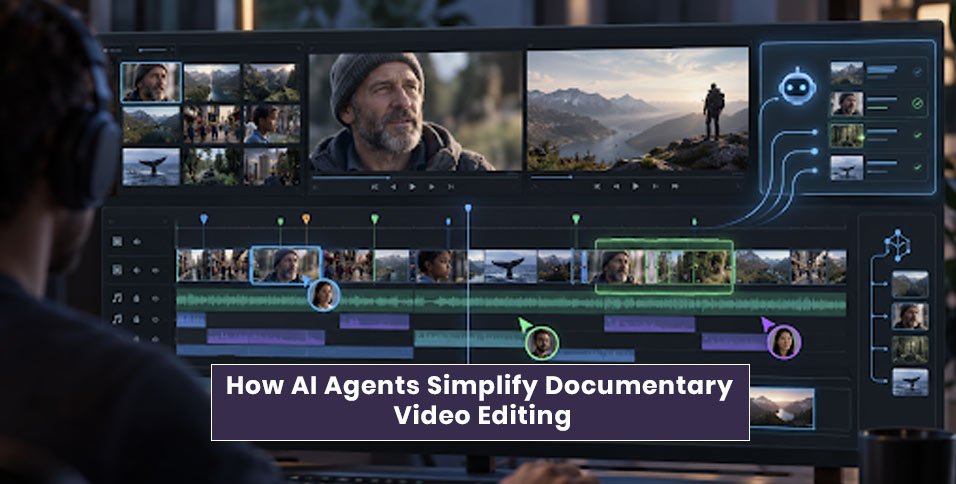
An agentic video editor works differently from a simple automation tool. The agents can understand project context, complete multiple editing steps, and return changes inside an editable timeline.
Building a faster workflow from raw footage
Documentary editing usually involves several stages before the final version is ready. These stages include reviewing footage, selecting interviews, arranging scenes, improving sound, matching colors, and creating different versions.
AI agents can support each stage by reducing repetitive work.
A typical workflow may look like this:
- Upload raw footage from interviews, events, or field recordings.
- Let AI review clips and identify useful sections.
- Create a first assembly based on direction or available transcripts.
- Review the timeline and adjust the story manually.
- Refine visuals, audio, and pacing.
Invideo Editor follows this agentic editing approach by combining AI editing agents with a professional timeline. Editors can assign work such as footage review, take selection, cleanup, and assembly, then inspect the results and continue editing.
The benefit is not only speed. It is also visibility. Every agent change stays inside the project, allowing editors to understand what changed and decide what stays.
How does AI video edits support editors?
AI video editing supports editors by reducing manual tasks like finding clips, comparing takes, removing filler, and creating early cuts. This allows professionals to spend more time on creative decisions instead of managing repetitive editing operations.
Documentary teams often work with different footage types. A single project may include interviews, multiple cameras, archive material, and location recordings.
AI agents can help with tasks such as:
- Selecting cleaner interview takes.
- Finding specific people, actions, or moments.
- Syncing multicamera footage.
- Removing pauses and repeated sections.
- Creating shorter versions for different platforms.
A strong AI editing workflow also needs professional controls. Editors still need tools for color correction, audio mixing, keyframe adjustments, and timeline control.
The best systems combine automation with manual editing. AI handles the parts that consume time, and humans handle the parts that require taste and judgment.
Agentic Editing with Invideo Editor
An agentic editing workflow is designed around collaboration between the editor and AI agents. The editor provides direction, and the agents complete assigned tasks inside the project.
Invideo Editor brings this approach into a browser-based editing environment. It combines AI editing agents with a professional timeline, allowing creators to work with footage review, assembly, audio improvements, color adjustments, and version creation in one place.
For documentary workflows, one useful capability is agentic assembly. The system can review footage, select usable takes, remove repeated material, and create an editable base cut from the editor’s direction.
The workflow is designed for different types of documentary footage:
- Interview projects with multiple responses.
- Multicam recordings with several angles.
- Long-form stories requiring structured assemblies.
- Projects needing shorter versions after the main edit.
The browser-based setup also makes collaboration easier. Teams can work from different devices without installing editing software. Editors can open the project from a desktop, laptop, tablet, or phone and continue from the same place.
Creators looking to edit videos online can explore the invideo editor that combines timeline control, collaboration, and AI-assisted workflows without depending on a single machine.
Why AI agents matter for documentary teams
AI agents matter because documentary editing is not only about making cuts. It is about managing a large amount of information before those creative decisions happen.
An editor may know the exact feeling they want from a scene, but finding the right moments can take hours. AI agents reduce that search process and help editors reach the creative stage sooner.
Regarding the role of AI in video production, AI is becoming part of modern video workflows by helping creators manage production tasks more efficiently.
The future of documentary editing is likely to be a partnership between human creativity and AI assistance. Editors will continue making the important storytelling decisions, but AI can help remove the repetitive steps around those decisions.
Choosing the right AI editing workflow
The best AI editing workflow depends on the type of documentary being created. A short interview project may need simple organization tools, but a long documentary may require deeper footage understanding and timeline support.
When evaluating AI editing tools, consider:
- Does it understand full projects instead of isolated clips?
- Can you review and change AI decisions?
- Does it support professional editing controls?
- Can teams collaborate in the same project?
- Can you export the project when needed?
A useful AI editor should make the process faster without limiting creative freedom.
Conclusion
AI agents are changing documentary video editing by taking care of repetitive work such as footage review, take selection, cleanup, and early assembly. This gives editors more time to focus on storytelling, emotion, and creative direction.
The most effective approach is not replacing editors with automation. It is giving editors tools that reduce manual effort while keeping control over every creative choice.
As documentary projects continue to grow in size and complexity, AI-powered editing workflows can help teams move faster without losing the human perspective that makes documentaries meaningful. Try an AI-assisted editing workflow and see which parts of your process can become simpler.
Frequently Asked Questions
Can AI edit documentary videos automatically?
AI can assist with many parts of documentary editing, including footage review, searching clips, selecting takes, and creating early timeline assemblies. Human editors still guide the story, pacing, and final creative decisions.
Is AI video editing useful for professional editors?
Yes. AI video editing can support professional editors by handling repetitive tasks such as organizing footage, removing unwanted sections, and preparing first cuts. Editors can then focus on storytelling and creative refinement.
How do AI editing agents work?
An AI editing agent receives direction from the editor, understands the project context, completes assigned editing tasks, and returns changes inside an editable timeline. This keeps the editor involved throughout the process.
Can editors still control AI-generated edits?
Yes. Modern AI editing workflows are designed to keep human control. Editors can review changes, adjust sequences, replace clips, and refine the timeline manually after AI completes assigned tasks.
What makes an agentic video editor different from regular AI tools?
An agentic video editor can handle multi-step editing tasks instead of only completing one action. It can review footage, assemble sequences, and support the editing process inside a professional timeline that editors can continue shaping.