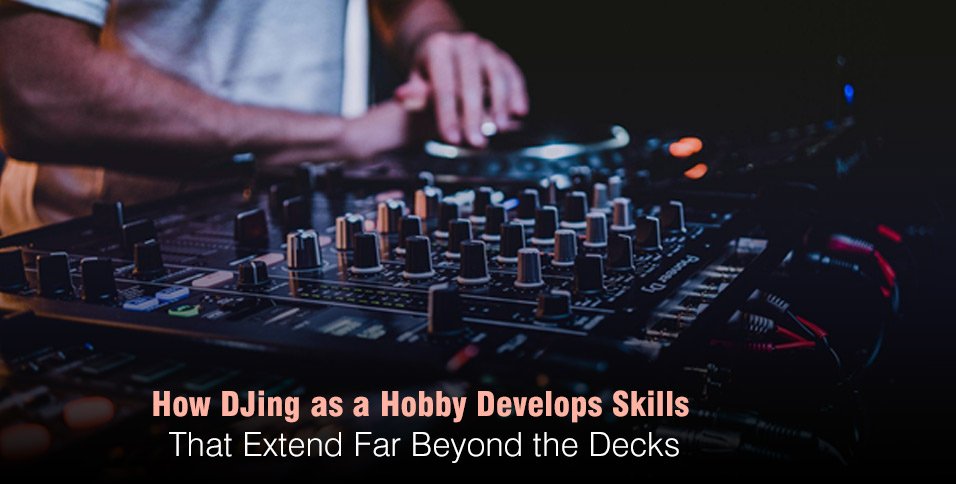
Learning to DJ is a way to perform music for other people without an instrument. Less widely understood is the extent to which the discipline of serious hobby DJing builds musical and technical skills that transfer directly to every other musical pursuit the practitioner takes up. First and foremost, high-quality equipment is important. Reputable brands like Korg DJ equipment provide novices with a platform whose responsiveness and dependability promote real skill development. Music is perceived differently by the ear trained behind a DJ controller, and this distinction has benefits that go far beyond the decks.
Music Theory Through Practice Rather Than Study
DJs learn music theory skills by doing, not studying. The ability to determine which tracks can be mixed requires an intuitive grasp of key relationships, similar to those used in chord progressions in composition and arrangement. Phrase awareness is the same structural listening skill that songwriters and producers use to determine when a chorus should land or when a breakdown should occur. These are not “metaphors” for music theory; they are music theory, learned through listening and doing rather than through a book.
Rhythm and the Development of an Internal Clock
Beatmatching, which is matching the tempos of two pieces of music so that they play in sync, is something that few musicians can learn through methods other than DJing. A DJ who has spent hours listening to determine whether two tracks are running at the same speed and making micro-adjustments by ear to get them in sync has developed a rhythmic awareness that is instantly transferred to ensemble playing, recording, and production. One of the most practically useful musical skills musicians can have is the internal clock that beatmatching develops, and DJing is one of the most direct ways to develop it.
Listening Skills and the Ability to Hear Detail
DJing requires the ability to pay attention to several layers of audio at once: the track playing through the main speakers, the track being cued in the headphones, the tempo and key of the two, and the reaction of the audience or the room. That multi-layered listening is a kind of attention that extends directly into the realm of recording and production. It is one of the more advanced skills that sets good producers apart from the less experienced.
Technical Creativity Within Constraints
A lesser-known skill that DJing teaches is creativity within a set. The DJ is not always creating new material but rather working with existing material, which means the creative decisions are made from a set of materials given to him, not from a blank page. This ability to discover unexpected connections, to use material that isn’t meant to be performed in order, and to manipulate the energy of a room through selection and arrangement is a kind of curatorial creativity that can be directly transferred to the creation of playlists, compilation and production arrangement.
The Ear That DJing Builds for Sound Quality
When listening to audio regularly through high-quality headphones and speakers and deciding whether two tracks are in sync or a mix sounds correct, DJs can develop an acute sensitivity to audio quality, frequency balance, and dynamic range. A good DJ can hear compression artefacts, frequency clashes between layered tracks, and the unique qualities of each playback system, whereas the casual listener cannot. That listening acuity is directly applicable to mixing, mastering assessment, and the critical evaluation of recorded sound.
From the Decks to Every Other Discipline
Novices lack the ear skills, rhythmic awareness, and structural listening abilities of a musician who takes DJing seriously before picking up an instrument, going into production, or composing. A DJ who is already proficient on an instrument discovers that the musical theory developed through DJing relates to the instrument in ways that enhance understanding of harmonic and structural concepts. The crossover is truly fruitful in either way, as the abilities developed behind the decks continue to benefit all subsequent musical endeavours.
The Value of Taking It Seriously
The true learning potential of DJing as a musical experience can only be realised if the DJ is more than a mere button-pusher. Rhythm training, harmonic awareness, critical listening, and creative constraint work are all fruits of deliberate practice, which is the attempt to mix well, listen critically, and improve. When a hobby DJing practice is approached with that intent, the level of musical development achieved is consistently underestimated at the start and consistently recognised, sometimes with some surprise, when it is looked back on and reviewed in terms of overall musicianship development.