Mirror Review
July 20, 2026
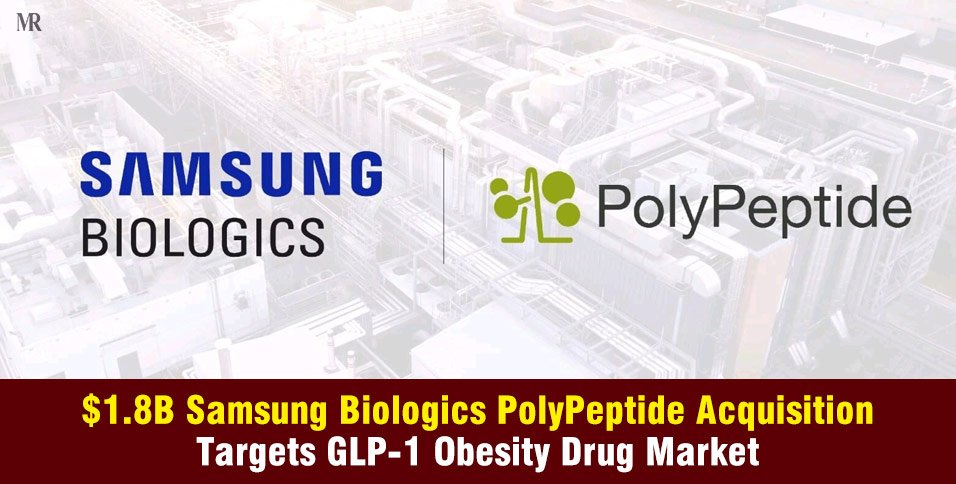
South Korean contract manufacturer Samsung Biologics launched an all-cash public tender offer to acquire 100% of Switzerland’s PolyPeptide Group for approximately 1.46 billion Swiss francs, or $1.81 billion. This transaction marks the largest biopharmaceutical merger and acquisition deal in South Korean history.
The Samsung Biologics PolyPeptide acquisition expands the company’s production capabilities beyond antibodies into peptide therapeutics to capture the rapidly growing weight-loss and diabetes treatment sectors.
The companies expect to finalize the tender offer by the end of 2026, creating a major shift in global contract manufacturing.
What Are the Core Details of the Samsung Biologics PolyPeptide Deal?
According to official corporate statements, Samsung Biologics offers PolyPeptide shareholders CHF 44.31 in cash for each outstanding share. This price represents a significant 40% premium over the undisturbed closing share price of CHF 31.65 recorded on April 10, 2026, right before market rumors regarding a potential takeover emerged. It also delivers an 11.6% premium compared to the 60-day volume-weighted average share price.
The transaction carries strong institutional backing. The independent and non-conflicted members of the PolyPeptide Board of Directors unanimously recommend that shareholders accept the public tender offer.
Furthermore, PolyPeptide’s largest shareholder, Draupnir Holding, which controls approximately 55.65% of the outstanding shares, signed an irrevocable undertaking to tender all of its shares. Draupnir Holding operates under the Cryosphere Foundation, an entity tied to Swedish billionaire Frederik Paulsen.
To complete the transaction successfully, the offer must satisfy a minimum acceptance threshold of two-thirds, or 66.⅔%, of all fully diluted PolyPeptide shares.
Following the regulatory approvals and the formal closing, Samsung Biologics plans to squeeze out any remaining minority shareholders and delist the company from the SIX Swiss Exchange, turning it into a wholly owned subsidiary.
How Does the PolyPeptide Group Acquisition Accelerate the Multi-Modality Strategy?
The major motivation behind the PolyPeptide Group acquisition by Samsung Biologics centers on expanding manufacturing modalities.
Historically, Samsung Biologics built its reputation as a dominant force in manufacturing monoclonal antibodies, boasting a massive total capacity of 845,000 liters across its Bio Campus facilities in South Korea and its facility in Rockville, Maryland.
By incorporating PolyPeptide, the company expands its industrial reach into complex peptide-based active pharmaceutical ingredients.
Peptides are short chains of amino acids that require highly specialized, automated synthesis equipment and purification processes.
PolyPeptide brings a rich 70-year heritage in commercial manufacturing, having produced more than 1,000 distinct therapeutic peptides to date.
John Rim, Chairman and CEO of Samsung Biologics, noted in the official PR announcement that this acquisition reinforces their long-term growth strategy by broadening their service portfolio with modality expansion into peptides, while boosting their geographic reach and proximity further within the US, Europe, and India.
The integration creates a true end-to-end contract development and manufacturing organization platform capable of supporting everything from early-stage discovery to large-scale commercial packaging.
Why is the GLP-1 Drug Market Driving This Record-Breaking Takeover?
The primary commercial reason for the Samsung Biologics PolyPeptide Acquisition is the surging demand within the global GLP-1 drug market.
Glucagon-like peptide-1 receptor agonists mimic natural metabolic hormones to reduce appetite, manage blood sugar levels, and reduce body weight.
The market faces a severe global supply shortage as manufacturing capacity struggles to keep pace with the massive consumer and clinical demand for obesity and diabetes treatments.
By securing established, Good Manufacturing Practice-certified peptide production lines, Samsung Biologics positions itself to absorb substantial outsourced contract work from global pharmaceutical brands.
Beyond metabolic diseases, the therapeutic application of peptides is expanding rapidly into other therapeutic fields, including:
- Oncology: Advanced peptide-receptor radionuclide therapies and targeted cancer vaccines.
- Immunology: Novel peptide formulations aimed at treating complex autoimmune disorders.
- Cardiovascular Health: Peptide therapeutics designed to manage blood pressure and protect cardiac tissue.
Peter Wilden, Chairman of the Board of Directors of PolyPeptide, highlighted the scale of this opportunity, noting that the deal represents a transformational opportunity to accelerate their strategic ambitions at a scale they could not reach alone, creating a stronger global partner for customers.
What Global Assets Does the Samsung PolyPeptide Acquisition Include?
The Samsung PolyPeptide Acquisition grants immediate access to an operational footprint across major international pharmaceutical hubs.
PolyPeptide manages an integrated network of six GMP-certified manufacturing sites, research labs, and corporate offices.
| Region | Asset Functions and Capabilities |
| Switzerland (Zug/Baar) | Corporate headquarters and administrative hub |
| France (Strasbourg) | Dedicated Innovation Center and development laboratory |
| United States | Commercial GMP manufacturing and R&D facilities |
| Europe (Sweden, BE) | Core production plants for peptide APIs |
| India | Scaled manufacturing and chemical processing units |
This geographic distribution helps mitigate supply chain risks. Drug innovators prefer working with contract manufacturers that possess production redundancies across different continents to avoid regulatory blocks or local disruptions.
This international presence allows the South Korean parent company to build closer ties with Western biotech firms located in Europe and the United States.
Future Outlook of the Samsung Biologics Acquisition 2026?
Samsung Biologics originally entered the market focused on high-volume antibody production. However, as the global pharmaceutical pipeline diversified into newer modalities like mRNA, cell therapies, and advanced peptides, relying solely on antibodies presented long-term growth limitations.
Financial analysts view this move as a calculated bet to shorten the years of development required to build specialized, beneficial peptide manufacturing lines from scratch.
Building, validating, and obtaining regulatory approval for a new peptide factory typically takes five to seven years.
Buying an existing player with over 1,000 proven therapeutic molecules gives the firm an immediate, dominant position in the sector.
The transaction timeline moves forward quickly. The formal tender offer prospectus will publish by the end of August 2026.
Following a mandatory ten trading-day cooling-off period required under Swiss takeover law, the offer will remain open for at least twenty trading days on the SIX Swiss Exchange.
If the two-thirds acceptance threshold is met, the parties expect to close the deal by the end of December 2026.
End Note
The $1.8B Samsung Biologics PolyPeptide Acquisition is a major deal in the biopharmaceutical manufacturing industry.
By successfully executing this transaction, the South Korean CDMO giant diversifies its core capabilities, adding extensive peptide expertise to its established antibody manufacturing dominance.
This combination allows the company to meet the unprecedented global demand currently reshaping the GLP-1 drug market.
As the PolyPeptide acquisition transaction moves toward a successful close in late 2026, the combined entity stands ready to serve as a primary manufacturing partner for next-generation metabolic, oncological, and immunological treatments worldwide.
Maria Isabel Rodrigues