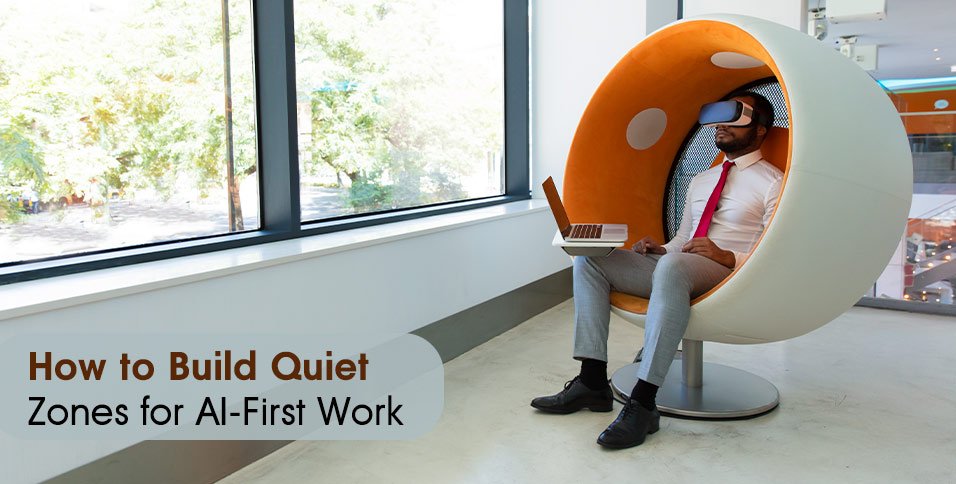
Quiet zones support your employees’ productivity and allow them to focus in an AI-first work environment. Audit the noise levels and identify where sound spreads or interrupts work. You can then combine sound control and smart workplace systems to reduce distractions.
How will your employees produce high-quality AI-assisted work when distractions are coming from every direction? AI-driven work environments demand focus, clarity, and fast thinking.
If you have an open-plan office or one near a construction zone, your employees may find it hard to focus. Creating a designated area where they don’t have to worry about background noise boosts their efficiency.
What Are Quiet Zones?
Structured spaces you can use to reduce noise and visual clutter. The target is typically a noise criterion (NC) of 30-35. Employees use these zones to avoid:
- Conversations with other employees
- Overhearing phone calls
- Frequent movement
Instead of forcing concentration in a noisy environment, employees will simplify by avoiding distractions.
Why Do Quiet Zones Exist?
To support longer thinking sessions and allow employees to focus. A single distraction can break focus and force someone to restart their thinking process. It will slow down work and make tasks feel more tiring than they should.
When in a quiet zone, your employees work without constantly switching attention.
Building Quiet Zones for AI-First Work
If you want quiet zones to be practical in an AI-first workplace, design the space while considering the nature of your work. You can also ask for your employees’ input during the design process.
Design a Hybrid Office Workspace for Focus
A hybrid office space lets you mix open collaboration areas with enclosed focus pods. You can use the open areas for teamwork or tasks requiring employees to move around the office constantly. Enclosed pods will be ideal for areas where employees need full focus.
Turnkey micro-rooms offer a ready-made, enclosed space. Instead of redesigning an entire office or constantly adjusting layouts, you can install these compact rooms. They’ll create private, quiet areas within your hybrid office workspace.
Compare Acoustic Choices
Sound control influences how useful a quiet zone feels once employees start using it. Stand in different spots during peak hours and listen. Note the sections where voices carry farther or where the noise builds up. You can then adjust the physical setup based on the findings.
Use acoustic panels where sound bounces too much. Add glass partitions if you need separation but still want visibility. Ensure you use appropriate sealing materials to prevent sound from entering through gaps.
Add Power, Ventilation, and Occupancy Sensing in Quiet Zones
Quiet zones only work when you have basic systems to support long, uninterrupted focus. Without proper planning, a well-designed quiet area becomes uncomfortable and underused.
Create a simple power setup close to where employees sit. If they have to frequently leave their stations to charge a laptop or plug in a device, their focus breaks.
Enclosed or semi-enclosed spaces can quickly become warm or stuffy without proper air circulation. Use efficient ventilation solutions to create a comfortable environment even if employees stay in there for long sessions.
Occupancy sensing makes quiet zones efficient and ready to use. Sensors detect when someone enters or leaves, then automatically adjust lighting and airflow. Add these to reduce your energy use while keeping the space usable when needed.
Set Rules and Work Signals Inside Quiet Zones
After creating quiet zones, define when your employees should use them. Ensure they don’t occupy the areas when working on tasks requiring:
- Frequent group chats
- Minimal focus
- Fast responses from other employees
Having clear boundaries in your modern workplace ensures you avoid noise in the designated quiet zones. You should also add simple signals to guide your employees.
For example, you can use visual cues like lighting changes or signage. Ensure each zone also has clear entry points to signal a shift from active space to focus space.
When employees understand the area’s purpose, they’ll adjust without needing reminders.
Building Quiet Zones for Modern Workplaces
Workplaces that require the use of AI tools for many daily tasks need to have quiet zones for employees to focus. Without an intentional design, your workers will become less productive due to interruptions. Assess your current layout to determine which zones would work best in quiet areas.
Compare various acoustic materials based on your needs and goals. You should also add the resources your employees need in the designated areas, so they feel comfortable and focused.