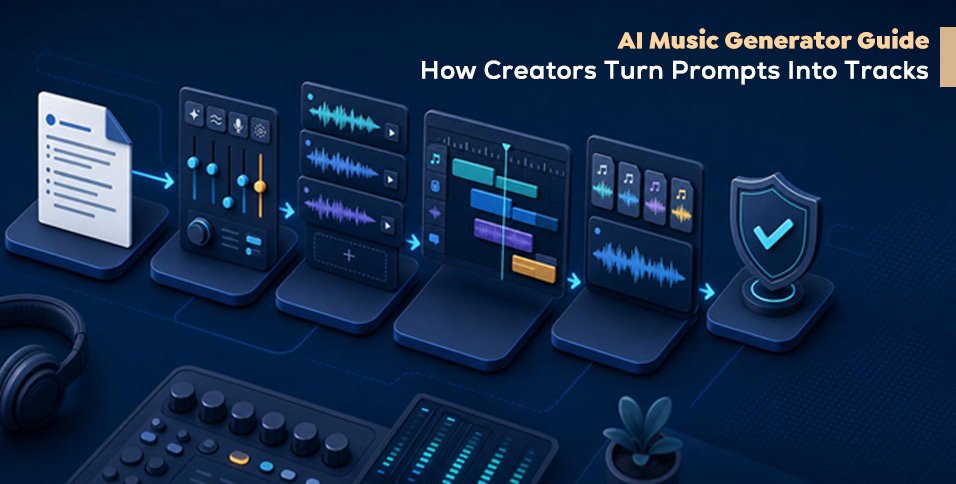
Marketing and content teams can now use generated music the way they use generated images or copy: as a fast draft that still needs direction, review, and rights checks. A short prompt can return a stereo track shaped by mood, tempo, length, and whether the piece should include vocals.
This guide explains how text-to-music works and gives you a practical workflow for turning a brief into a usable track.
How Text-to-Music Works
An AI music generator maps a written prompt to musical choices such as style, rhythm, harmony, instrumentation and vocal treatment. The model then renders audio that you can review, edit and export.
Most tools ask for the same core inputs: genre, mood, tempo, length, language and whether the result should be vocal or instrumental. The clearer those inputs are, the easier it is to compare versions.
Length and fidelity vary by platform. Stable Audio 2.0 can generate coherent multi-minute instrumentals, up to three minutes, at 44.1 kHz stereo from a single prompt.
A Six-Step Prompt-to-Track Workflow
A repeatable AI music generator workflow helps you avoid random results. Use this sequence whether you need a short social bed, a podcast intro, or a longer track.
1. Write a creative brief. Note the purpose, audience and reference energy. A line or two is enough to guide later choices.
2. Draft a first prompt. Include genre, mood, tempo, length, language and vocal or instrumental direction. Be clear about the role the music should play.
3. Generate two to four versions. Compare options before refining. Pick the direction that best fits the brief, not just the most polished output.
4. Iterate with timing edits. Adjust length targets, add tempo or BPM hints and call out section cues such as intro, chorus, bridge, or ending.
5. Export stems or a full mix. Stems give you more control in editing. A full mix is faster when you only need a background bed.
6. Run a rights and disclosure check. Confirm commercial use terms, download limits, ownership language and any labeling needs before publishing.
Prompt Patterns That Work
- Video ad bed: uplifting indie pop, 108 BPM, 30 seconds, instrumental bed under narration, gentle intro, soft stop near the end.
- Podcast intro: warm lo-fi hip-hop, 85 BPM, 60 seconds, loopable bed, low vinyl crackle, no lead vocal.
- Full song with vocals: include language, theme and structure tags such as Verse, Chorus and Bridge to guide lyric timing.
Timing and Control Tips
A few habits make output more predictable across tools. If audio and visual work happen in the same creative workspace, a prompt-based option such as Getimg’s AI Music Generator can be evaluated against the same genre, mood, tempo and track length controls.
- When you need speed, start with 30-second clips, then extend the strongest option.
- Use explicit tempo words or a BPM value.
- State the target length in the prompt. Many tools respond well to 30, 60, 120 and 180 second targets.
- For vocals, add language and mood. For instrumentals, specify the role, such as bed, stinger, or loop.
Licensing and Compliance in Two Minutes
Rights handling is part of the workflow, not an afterthought. Start with the labeling rules that apply in the markets where you publish.
Under the EU AI Act, Article 50 transparency obligations for AI-generated content labeling and marking apply from August 2, 2026. U.S. teams publishing to EU audiences should plan for that requirement.
On ownership, the U.S. Copyright Office’s AI Report Part 2, published January 29, 2025, addresses copyrightability of outputs created using generative AI.
Terms vary by tool. AIVA’s Pro Annually plan says copyright is owned by the user and lists 33 euros per month billed annually, with up to 300 downloads and a 5:30 duration limit.
SOUNDRAW describes its service as a copyright-safe AI music generator trained on its own in-house catalog and offers perpetual commercial use under paid plans.
The consumer text-to-song market is still changing. The Los Angeles Times reported on June 24, 2024 that major labels, through the RIAA, sued Suno and Udio over alleged copyright infringement. AP News later reported that UMG and Udio settled litigation and that downloads from Udio were disabled during the transition to a licensed platform.
Tools That Slot Into a Prompt-to-Track Workflow
For instrumentals and sound design, Stable Audio 2.0 handles multi-minute output at 44.1 kHz. For composer-style control, AIVA offers style models and MIDI, with copyright owned by the user on its Pro plan.
For creators who prefer in-house licensed training, SOUNDRAW provides stems and perpetual commercial use under paid plans. For consumer text-to-song, Suno and Udio are options to review carefully in light of the licensing context above.
If your team wants a prompt-based option that handles vocals or instrumentals and lets you set genre, mood, tempo and track length beside visual work, use the same evaluation criteria for fit, rights and workflow handoff.
From Brief to Export: A Quick Run-Through
For a brand Reel, start with a 30-second instrumental bed under narration, compare a few versions, then extend the best one into a 60-second loop. When the cut is ready for EU audiences, add the required label.
If the Reel also uses motion graphics, script the visuals first. The broader AI video context should cover shot pacing, asset prep and where the music needs to rise or stay quiet.
FAQ
Can teams use generated music commercially?
Only after checking tool terms, paid-plan rights and labeling rules.
What should a prompt include?
Genre, mood, tempo, length and vocal direction.
A Simple Closing Checklist
Keep the process simple: brief, prompt, compare, iterate, export, then label where needed.
Before publishing, confirm commercial use, download limits, ownership and any disclosure rule that applies to your audience or region.