Mirror Review
May 14, 2026
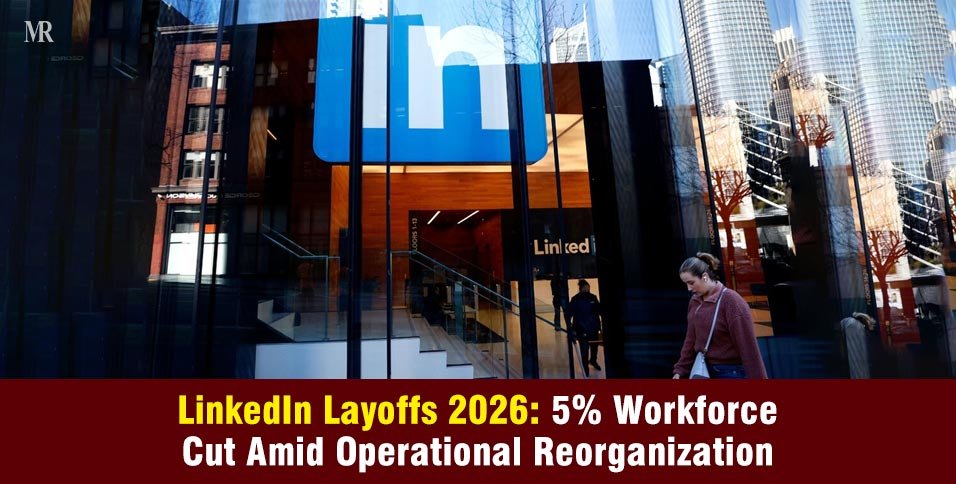
LinkedIn is cutting approximately 5% of its workforce, impacting over 800 employees globally as part of a major operational reorganization. This LinkedIn layoffs decision comes after the company has decided to restructure to prioritize artificial intelligence and agile team models. Despite a 12% increase in revenue during the most recent quarter, the company is simplifying its management layers to focus on high-growth areas like AI-powered hiring tools.
LinkedIn’s Focus on AI Efficiency
The recent LinkedIn Layoff news is not a result of AI replacing human workers, according to internal sources. Instead, the company is changing its organizational structure to better use new technology that allows teams to ship products faster.
Chief Product Officer Hari Srinivasan noted that the fastest-moving teams have fewer layers and use AI to maintain a competitive pace.
This reorganization aligns LinkedIn with its parent company, Microsoft.
Microsoft has also been removing management layers to create “tighter, more accountable squads” that can operate with increased speed.
- Key Changes in LinkedIn Operations
LinkedIn is evolving its operating model in three specific areas:
- Product Organizations: Creating agile teams with fewer management layers to speed up development.
- Design and Research: Centralizing user experience (UX) resources into a shared service. This allows product teams to handle routine tasks while expert researchers focus on complex problems.
- Content Production: Shifting from large-scale in-house production to a model where instructors monetize content directly on the platform.
Impact of LinkedIn Layoffs 2026 on Learning Content
A significant part of the restructuring involves LinkedIn Learning.
The company is moving away from producing original content in-house, which it describes as no longer being the most cost-effective method. The new model encourages instructors to build their own voices and license their teachings directly on the site.
“The current model is no longer the best model to keep up with what learners want or the most cost-effective way to create all our content,” said Hari Srinivasan, Chief Product Officer.
By moving to this creator-led model, LinkedIn aims to keep its content fresh and timely while focusing its internal team on “high-impact, differentiated learning experiences”. As part of these changes, the company will also close its physical office in Graz, Austria.
LinkedIn Earnings and Financial Context
The LinkedIn Job cuts come at a time when the company is showing strong financial momentum. In the third quarter of fiscal year 2026, the platform saw significant growth across several metrics.
| Metric | Growth / Value |
| LinkedIn Earnings (Revenue) | 12% Year-over-Year |
| Agentic Hiring Products | $450 Million Annual Run Rate |
| Original Posts | 14% Year-over-Year increase |
| Paid Video | 30% Year-over-Year growth |
| Total Membership | Over 1.3 Billion members |
Despite this growth, rising infrastructure costs associated with delivering “more intelligent products” require the company to make hard trade-offs.
Broader Tech Sector Trends
The Microsoft LinkedIn layoffs are part of a wider wave of workforce reductions in 2026.
Industry trackers have already recorded over 103,000 job cuts this year, which is nearing the total of 124,000 seen in all of 2025.
Other companies like Meta, Block, and Cisco have also announced significant reductions recently as they reshape their businesses around AI.
While some fear that AI will displace workers, many industry executives argue the technology is altering the nature of work.
At LinkedIn, the focus remains on using AI to improve match quality for recruiters and help members find economic opportunities more efficiently.
End Note
The LinkedIn Layoffs 2026 is a decision to prioritize a leaner, more AI-centric future. By reducing its headcount by 5% and centralizing resources, the company expects to overcome the high costs of AI infrastructure while remaining agile.
Although the loss of over 800 employees is a difficult transition, LinkedIn leadership believes these changes are necessary to position the platform for long-term success in a rapidly changing technological sector.
LinkedIn continues to grow its member base and revenue, suggesting that the core business remains strong even as its internal structure undergoes a major shift.
Maria Isabel Rodrigues